







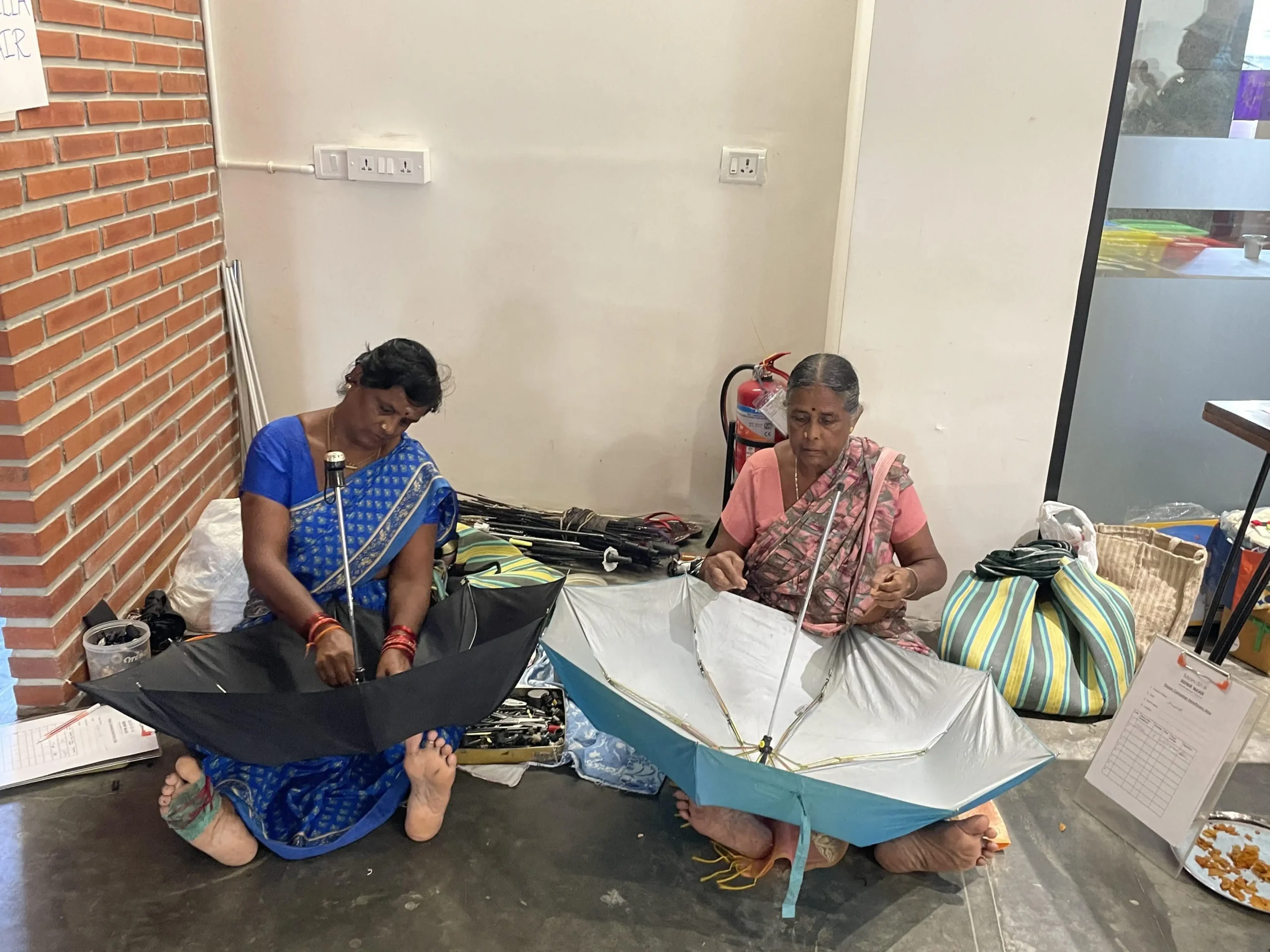
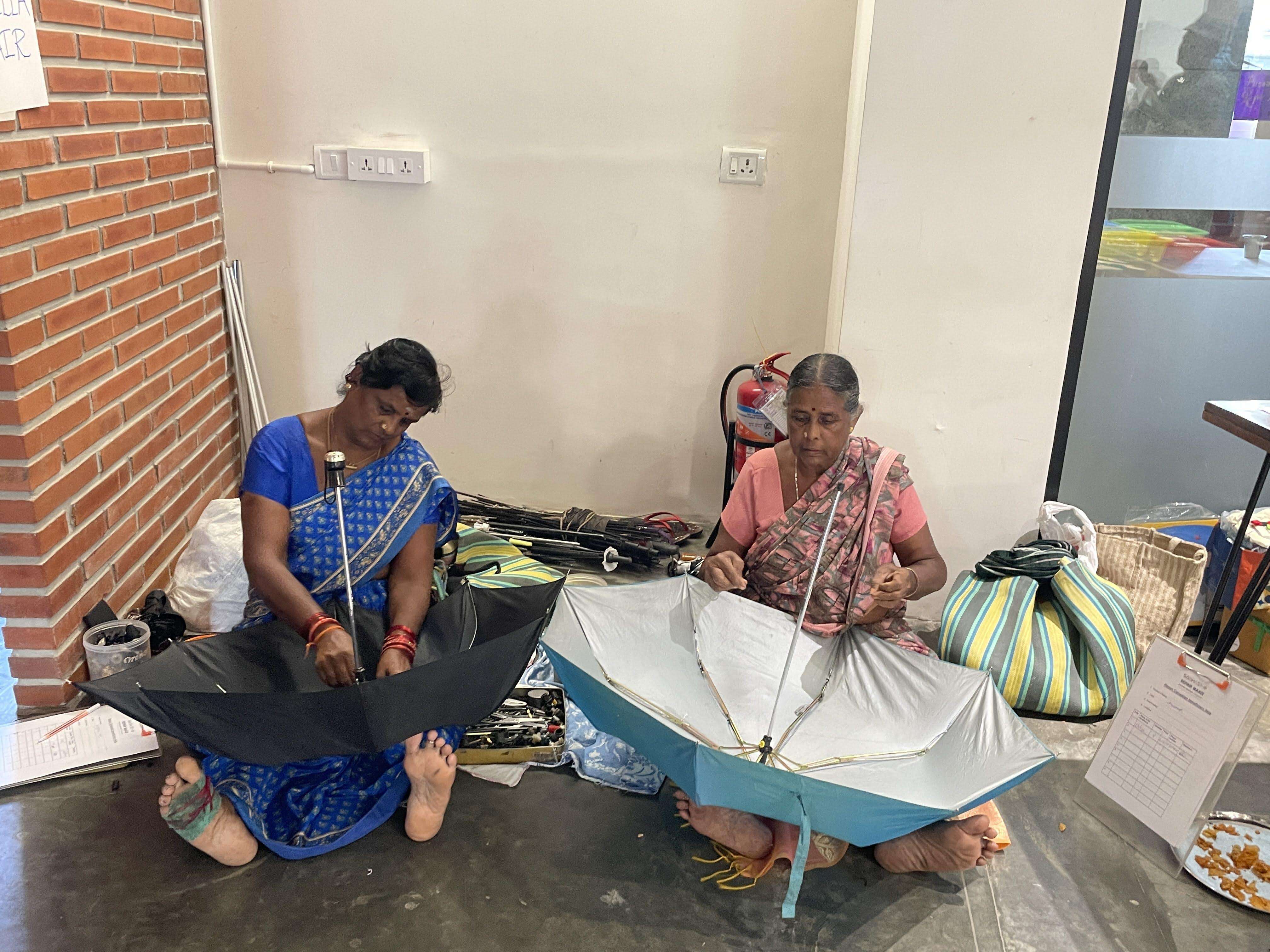
Bengaluru: Every morning at 7, sisters Selvi and Amaravathi set out from their Jayanagar home, boarding a bus with a bag full of umbrella repair tools. They travel through the streets of east Bengaluru, mending broken umbrellas and keeping an age-old craft alive in a world increasingly driven by overconsumption and throwaway culture.Selvi, 52, and Amaravathi, 60, moved to Bengaluru from Tamil Nadu with their parents nearly 40 years ago. “My entire family repaired umbrellas — my parents, brother and about 20 others. My sister and I would follow them through the streets, watching and learning the craft. Decades later, we are the only ones left carrying on the trade,” Selvi said.Her son, too, chose a different path, moving to Kuwait for work rather than learning the trade.The sisters travel by BMTC bus to areas such as Shivajinagar, Koramangala and Ulsoor, walking the streets with a pre-recorded audio message advertising their services. They carry spare parts, including pipes and handles, balanced carefully on their heads.Are there still enough customers in a city like Bengaluru who want their umbrellas repaired? “Plenty,” says Selvi, adding: “People who buy umbrellas for Rs 100-200 tend to discard them when they break. But someone who has spent Rs 500 on a good folding umbrella is less likely to throw it away. Some umbrellas also have sentimental value. Just the other day, a woman brought six or seven umbrellas gifted to her by her late mother and grandmother. She wanted to preserve them as family memories.”The sisters repair handles, pipes and ribs, replace fabric, and fix patches and caps. Depending on business, they earn between Rs 500-600 and Rs 1,000-1,500 a day. Daily expenses amount to around Rs 200-300, while every two months they set aside Rs 10,000 to buy spare parts from KR Market.“About 25 years ago, we worked longer hours, from 6am to 9pm, but earned less. Expenses were also lower, around Rs 25-30 a day. Now, we work until 1 or 2pm and earn more, but our expenses have risen too,” Selvi says.For Selvi and Amaravathi, however, the trade is about more than money. “I educated my children with what I earned from this work. Today, I don’t want to sit at home doing nothing. We want to honour the profession that gave us our livelihood. That is why we continue to walk the streets,” Selvi says.Will the trade survive after them? Selvi is doubtful. “I don’t think it will. This is not a skill you can simply teach someone. You have to develop it by observing others.”