







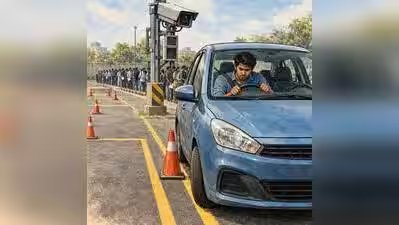
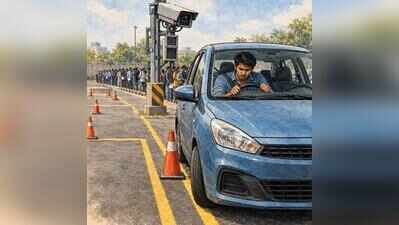
Gujarat’s AI driving tests have left thousands of aspiring motorists with two problems: failing the test and waiting nearly two months to try again. With the failure rate touching an alarming 80%, the transport department is now planning to ease the rules and make the software less unforgiving before the waiting list grows even longer.The department plans to give applicants a chance to get acquainted with the AI examiner before facing it on test day. Under the proposal, AI-based testing tracks will be opened for paid practice sessions on holidays, when regular tests are not conducted. Applicants will be able to practise on the actual tracks, familiarise themselves with the yellow lines, parking dimensions, turns and signals, and book sessions for a fee, subject to the rules.Other proposed changes include placing cones along the parallel-parking stretch, slightly widening the parking area and tweaking the software to give applicants the benefit of the doubt in borderline cases. Result display boards will also be shifted to the front of the track to prevent applicants from overshooting the finish line. Officials said the proposed changes have been sent to state govt and final approval is awaited.Transport commissioner Rajender Kumar said, “We are planning to put up cones along the parallel-parking stretch and increase the parking space so that applicants find it easier to clear the test. The pass percentage has been on the lower side.”Parallel parking has emerged as the biggest stumbling block for aspiring four-wheeler drivers, accounting for nearly 80% of failures in Ahmedabad. Even a slight touch or crossing of the yellow boundary line results in an automatic failure, leaving little room for mistakes that might otherwise have been excused.Officials said the cones would make it easier for applicants to judge the parking boundaries, while the additional space would give them more room to manoeuvre. The department is also looking to rationalise the software so borderline errors do not automatically cost applicants their chance of passing.Another change involves the result display boards, which are currently positioned along the side of the track. These will be moved to the front so applicants can see their results without losing sight of the finish line. Officials said some candidates overshoot the line while looking at the boards.The move comes amid growing waiting lists at RTOs across Gujarat. In Ahmedabad, applicants seeking four-wheeler driving tests face a wait of 50-55 days, while the waiting period in Rajkot has reached 45-51 days. Applicants in Surat have to wait 35-45 days, while in Vadodara, the wait has stretched to nearly two months.Ahmedabad’s AI-based track currently conducts around 100-110 four-wheeler tests and 160-180 two-wheeler tests every day. The high failure rate has added to the rush for appointments as unsuccessful applicants return for retests and compete for slots with fresh applicants.To ease the pressure, the department is planning a second AI-based driving test track at Subhash Bridge RTO in Ahmedabad, which is expected to become operational in about eight months. Additional testing facilities are also being planned in Rajkot and Surat.During the first month of AI-based testing in Ahmedabad, nearly 80% of light motor vehicle applicants failed, compared with 30% of two-wheeler applicants. Officials estimate that failure rates in AI-based driving tests are around 80% in urban areas and 75% in rural areas across Gujarat.