







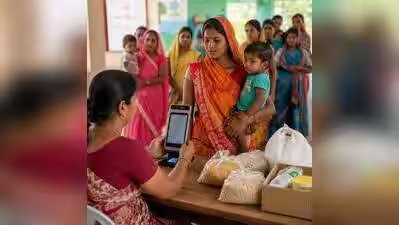

Pune: The Maharashtra govt has ordered a statewide inspection of all 1,10,625 anganwadi centres by Nov 20 to verify whether the infrastructure provided to them actually exists, is functional, or remains only on paper.“The idea is to physically verify whether the infrastructure is present and in working condition. For example, if a centre has been provided with a television set, it must also have an active electricity connection. We need to identify where the shortfalls are and then improve on them. Inspections of kitchen sheds within the anganwadis and operations run by self-help groups (SHGs) have already been completed over the last couple of months,” said Madhavi Sardeshmukh, commissioner, integrated child development scheme (ICDS), Maharashtra.Sardeshmukh added that specific instructions have been issued to project officers and local administrations to prioritise allocation of water tankers and other critical resources to anganwadis within their respective areas.The comprehensive audit will cover eight primary facilities: electricity connections, television sets, drinking water pipeline connections, reverse osmosis (RO) purification systems, kitchens, toilets, growth-monitoring devices, and kitchen gardens.A govt resolution (GR) issued earlier this month noted that while anganwadis receive infrastructure upgrades through various funding avenues—including central and state schemes, district annual plans, district council funds, and the 15th Finance Commission—several discrepancies have come to light. Some facilities were found to be completely non-functional or lacking the basic supporting infrastructure required to operate them. Consequently, the state govt has decided to cross-verify the data recorded on the digital Poshan Tracker dashboard. The resolution mandates that this extensive verification exercise be conducted twice a year.Anand Khandagle, district programme officer for women and child development (WCD) department in Pune, stated that the district has 6,094 anganwadis spread across rural and urban pockets. “Almost 95 per cent of anganwadis in rural areas face no physical infrastructure issues because they are built on ample land owned by the centers themselves, allowing for every facility to be set up. The real problem arises in urban centers where land is scarce and property rents are significantly higher than the budgetary allocations provided by the central govt,” Khandagle said.The state currently operates 449 rural and 104 urban projects under which these anganwadi centres function. These hubs provide vital health, nutrition, and early education services to children aged six months to six years, pregnant women, lactating mothers, and adolescent girls.