








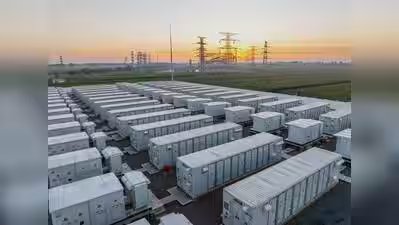
Ahmedabad: Amid an unprecedented surge in electricity demand and efforts to rationalise power consumption, the Gujarat Electricity Regulatory Commission (GERC) has notified a comprehensive regulatory framework for grid-connected Battery Energy Storage Systems (BESS), aimed at reducing renewable energy wastage and improving the availability of stored power during peak hours.The regulations, notified on Oct 16, establish rules for the development, ownership, procurement, scheduling, operation and commercial arrangements of battery storage projects. The framework is expected to facilitate greater integration of solar and wind power while strengthening grid stability.
regulatory framework for grid-connected Battery Energy Storage Systems (BESS)
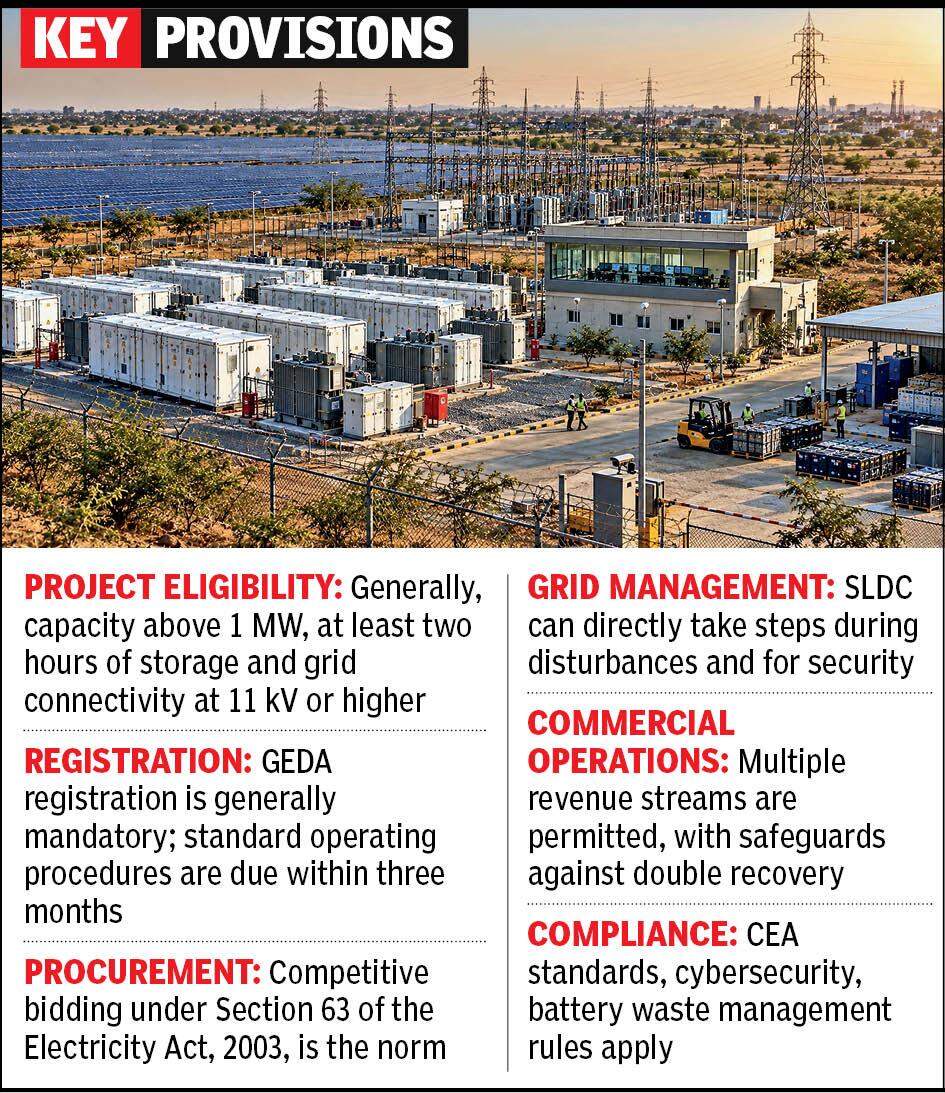
Gujarat’s electricity demand touched an all-time high of 29,822 MW on Oct 16, marking a 36.6% increase over the corresponding period last year. The state has ordered power cuts to rationalise supply, while chief minister Bhupendra Patel has chaired two high-level meetings over the past week to review the situation. The Union coal ministry has also assured a supply of 10 to 11 coal rakes daily until Nov.A senior state power department official said, “With this notification, Gujarat now has a clear and bankable pathway for storage procurement and operation, which will help utilities and developers scale BESS in a disciplined manner and make solar power more reliable during peak hours.”The regulations generally cover grid-connected projects above 1 MW, with a minimum storage duration of two hours and connectivity at 11 kV or above, subject to specified exceptions. Registration with the Gujarat Energy Development Agency (GEDA) will generally be mandatory. GEDA has been directed to issue a standard operating procedure covering registration, documentation, testing and commissioning within three months.The framework provides for multiple storage models, including battery systems co-located with renewable and conventional power plants, standalone storage facilities, transmission-linked projects to ease congestion, distribution-linked systems for peak management, and consumer-level storage, including electric vehicle-linked applications and vehicle-to-grid integration.Co-located battery systems will generally be scheduled alongside their associated generating stations, while standalone projects will be scheduled independently.The State Load Dispatch Centre (SLDC) will retain overriding authority to issue dispatch instructions during grid disturbances and curtail or reschedule battery operations when required to protect grid security. It must also develop procedures for scheduling and sharing transmission-linked costs within two months.The regulations mandate compliance with Central Electricity Authority standards, cybersecurity requirements and battery waste management rules.A senior official associated with grid operations said, “By defining scheduling, metering and SLDC’s grid-security prerogatives upfront, the regulations reduce operational ambiguity and enable storage to provide firming, balancing and ancillary support alongside solar and wind growth.”Kunj Shah, chairman of the energy committee of Gujarat Chamber of Commerce and Industry (GCCI), said the framework could reduce uncertainty for private investors and accelerate renewable energy projects.“GERC’s BESS regulations bring long-needed clarity on procurement, scheduling and revenue stacking—reducing avoidable losses and uncertainty for private players. With a predictable framework in place, we expect faster solar-plus-storage deployments and a fresh cycle of investment across Gujarat’s renewable ecosystem,” Shah said.