








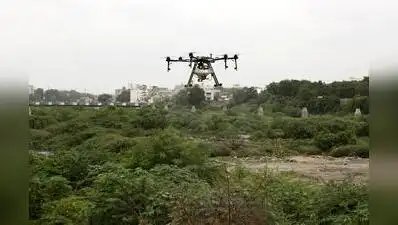
Rajkot: Rajkot Municipal Corporation (RMC) has identified 15,377 potential mosquito breeding sites using drones and artificial intelligence-based surveillance as part of its efforts to curb mosquito-borne diseases such as dengue, malaria and chikungunya.According to the RMC health department, the drone survey covered 130.59 sq km of the city’s total area of 161.85 sq km as of Oct 14. Of the potential breeding sites identified, field teams covered 8,680 for insecticide spraying and source-reduction measures to eliminate mosquito breeding.RMC launched its AI- and drone-based mosquito-control programme on Aug 25, using technology to map breeding hotspots across approximately 162 sq km and facilitate targeted larvicide spraying to prevent the spread of vector-borne diseases.The civic body also conducted 236 hours of insecticide spraying using drones. The technology complements conventional mosquito-control measures and is particularly useful in locations where traditional spraying methods are difficult to deploy or pose risks to workers.Drone operations cover waterlogged areas, drains, riverbeds, pits, depressions and other locations where stagnant water can create favourable conditions for mosquito breeding. Data gathered through the surveys are verified by health department personnel in the concerned wards and health centres, who carry out spraying and source-reduction measures wherever necessary.Alongside the technology-driven initiative, RMC has intensified routine vector-control activities. Between Oct 8 and 14, field workers, urban Asha workers and multipurpose health workers conducted anti-larval operations in 93,686 residential units. Fogging was carried out in 602 units during the same period.Vehicle-mounted fogging machines are also being deployed in areas with high mosquito density, including sensitive residential societies, public roads and locations witnessing large public gatherings, the civic body said in a statement.As part of its dengue-prevention drive, the health department inspected 317 non-residential premises, including construction sites, schools, hospitals, hotels, industrial units, hostels, commercial complexes, scrap yards, marriage halls, religious places, petrol pumps and govt offices.The civic body also issued notices to 274 residential premises and 59 commercial establishments in connection with mosquito breeding.RMC said the integrated use of drone technology, AI-based surveillance, field inspections and insecticide spraying forms part of its ongoing efforts to control mosquito-borne and water-borne diseases. It also emphasised that public cooperation is essential to prevent the spread of these illnesses.