







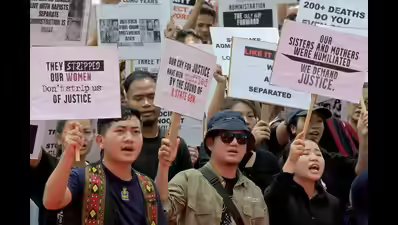
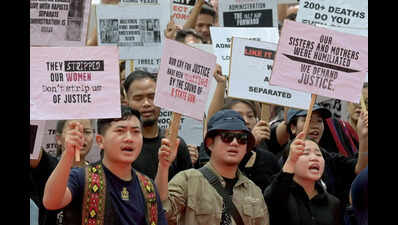
New Delhi: In the last week of April 2023, Nenghoikim thought she was simply heading home to Churachandpur after work in Imphal. The schoolteacher remembers the roads feeling tense and unfamiliar. A drive that usually took an hour stretched into three.Back home, however, there was reason to celebrate. Her niece had just been born on April 30.But before the newborn could even receive proper care, Manipur changed overnight.As ethnic violence between Meitei and Kuki groups intensified, her brother, sister-in-law, mother, and the three-day-old baby fled their home in Kongsai Veng, moving from a school shelter to a church as neighbourhoods came under attack. “A baby that small needed medicines, rest and safety. Instead, they were just trying to survive,” Nenghoikim recalled, her eyes welling up while narrating the ordeal.Days later, on May 4, her brother was allegedly killed in front of his wife, infant daughter and mother.Three years later, many like Nenghoikim say they are still waiting for justice.That sentiment was echoed by many at Jantar Mantar on Saturday as student organisations representing several indigenous hill tribes marked three years of the Manipur ethnic violence with a protest. They alleged “ethnic cleansing” and demanded justice, rehabilitation and accountability for the violence since May 3, 2023.At the protest site, the anger and grief were hard to miss. Posters and banners carried figures that protesters said reflected the scale of the violence, including “229 deaths”, “360-plus churches and synagogues burnt” and “200-plus villages destroyed”.Placards reading “No justice, no peace”, “Tribal lives matter”, “Stop ethnic cleansing” and “We need a solution” were held up during the demonstration. Speakers recounted stories of displacement, loss and trauma that continue to shape their lives three years later.Among the protesters was one of the organisers, Kuki Students’ Organisation president Nengneiting Khongsai, who was in Delhi when the violence broke out in Manipur. Back in her native village in Sugnu, she said, people believed they would remain safe because of the area’s history of coexistence.“In the 1990s, when the situation was tense, a Meitei MLA had protected our village. Because of that, our area remained peaceful for a long time even when other places were witnessing tension,” she said.But that changed overnight.“One gunshot was heard. Nobody knew where it came from, but suddenly accusations started flying. Meiteis said it was us. My brother called and said things were turning bad. Then, overnight, the village was burnt,” she said.Khongsai said the loss of her home still haunts her. “I was numb. That is the only word for it,” she said, adding that her family received no compensation or meaningful support. “We lost property worth lakhs. The emotional trauma has stayed.”At the protest, organisers demanded an expedited tripartite dialogue with the Kuki National Organisation (KNO) and United People’s Front (UPF) under the Suspension of Operations framework, seeking a separate administration for the hill tribes in the form of a Union territory with a legislature. Protesters also called for an investigation into the role of former Manipur chief minister N Biren Singh in the violence, justice and compensation for internally displaced persons, and a probe into looted arms and ammunition from state armouries.According to the groups, around 45,000 people remain displaced and continue to live in relief camps three years after the violence. “Separation from the Meitei-dominated valley is our only hope now,” a protest organiser said.