








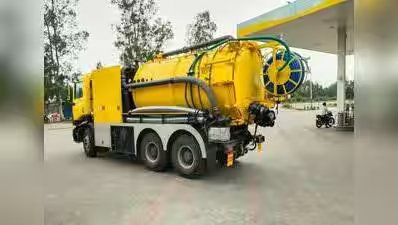
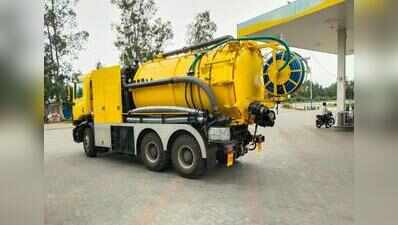
Chandigarh: Neither the Chandigarh municipal corporation (MC) nor the UT administration’s engineering department owns a super suction machine to clean storm water drains, an inquiry under the Right to Information (RTI) Act has revealed.The revelation highlights a key maintenance gap explaining recurring waterlogging across Chandigarh during heavy monsoons, as civic bodies rely on manual cleaning that only clears superficial debris while leaving deep silt and compacted blockages intact.Environmental activist L R Budhania, who filed the RTI application, noted that while one MC wing previously hired a super sucker on rent, its operation was restricted to a small portion of a single sector. “Both the administration and civic body lack the proper system to clean up the drainage, particularly the deeper parts. Manual cleaning can only clear the superficial portions, resulting in frequent waterlogging,” Budhania said.The lack of high-pressure equipment has repeatedly left the city vulnerable to intense rain events, such as a recent spell where 72.4 mm of rainfall in two hours inundated roads, disrupted traffic, and damaged key stretches including Madhya Marg. Water entered basements, showrooms, and residential units in areas like Sector 16, Sector 22 market, and the Sector 26 grain market.“While intense rainfall puts pressure on the drainage system, the RTI findings point to a potential gap in the equipment available for its maintenance. The findings have renewed the focus on whether the MC and the UT administration need to strengthen their mechanised drain-cleaning capacity to improve the city’s preparedness for the monsoon and reduce the risk of waterlogging,” Budhania added.