





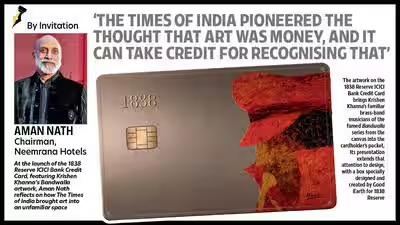
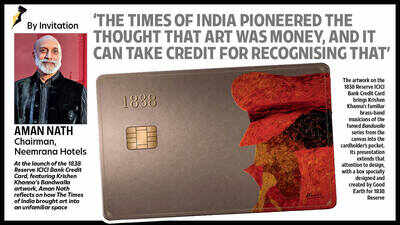
At the launch of 1838 Reserve ICICI Bank Credit Card, a card featuring Krishen Khanna’s Bandwalla artwork, I found myself thinking about another moment when The Times of India brought art into an unfamiliar space. This time, it was a pocket. Back in 1989, it was an auction room, where Indian society was beginning to discover that a painting could be both a thing of beauty and an investment.The name 1838 takes us back to the beginning of The Times of India. Over the years, its circulation grew beyond that of a city newspaper, and the newspaper became the largest-selling English daily in the world. Its pages followed political events, social tastes, sporting trends and spiritual musings, absorbing the contradictions of a country forever negotiating between its past and its future.
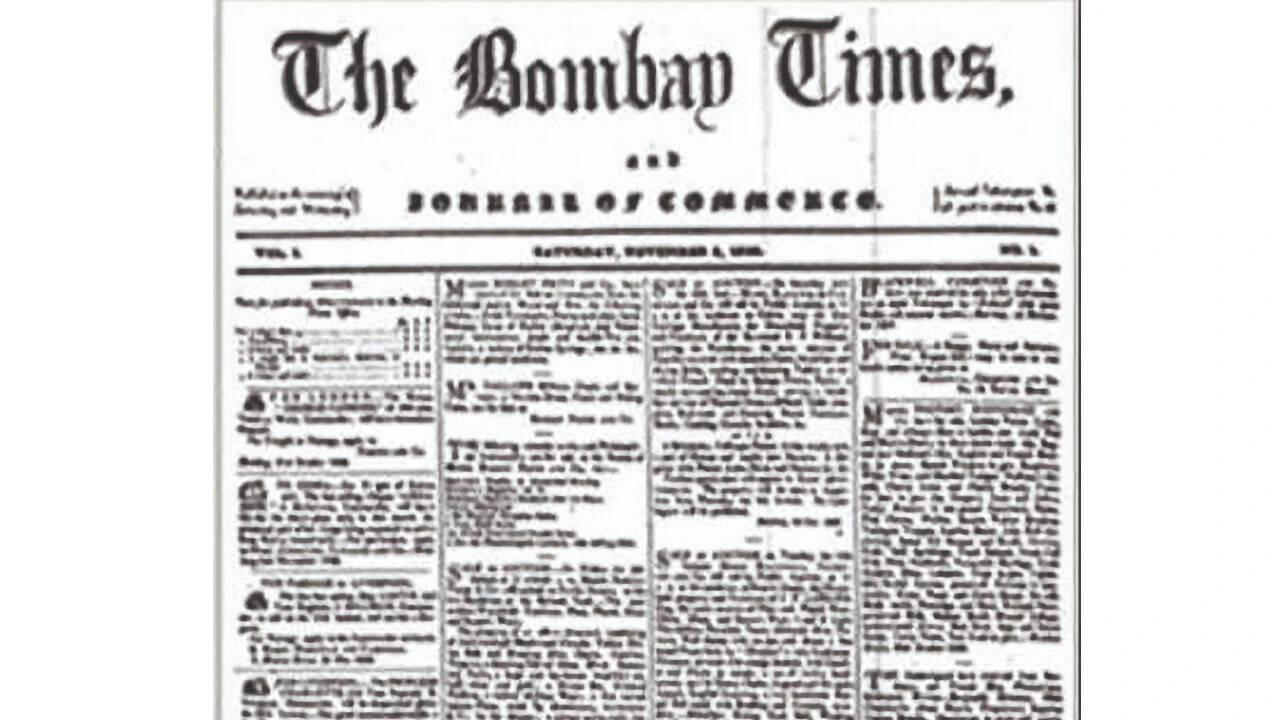
An archival picture of the first printed edition of The Times of India from November 3, 1838. It was called The Bombay Times and Journal of Commerce then
When India was young and dreamingIn 1988-89, when The Times of India celebrated its sesquicentennial anniversary with nationwide celebrations, I was naturally involved. As a polyglot creative, I moved comfortably between the arts, advertising, design and music, though not gastronomy or gluttony. My simple eating habits were something I shared with the Ashok Jain family. Those celebrations were also when The Times of India showed its class to its contemporaries.At Vigyan Bhavan, the then Prime Minister, Rajiv Gandhi arrived amid the literati, glitterati and chatterati. There was a general euphoria in the hall. He made it roar with laughter when he began by saying he was delighted to be at the ‘sexy-centennial.. oops! The sesquicentennial celebrations’. His friend Mani Shankar Aiyar (former diplomat and politician) had written the speech!India was young, dreaming of shedding the burdens of servitude and underdevelopment so that it could fly. A pilot gave us hope, and the newspaper became the anarchic script in which India was old and young, wise and foolish, eastern and western. It absorbed medieval and modern dichotomies with such ease that evenFellini could not have fitted those anomalies into a single frame.Aroon Purie’s observation that all governments have an 18-month honeymoon began to play out. The newspaper, meanwhile, went from strength to strength.When ₹10 lakh was a headlineAs part of those celebrations, The Times of India collaborated with Sotheby’s to conduct an international art auction in 1989. It was a pioneering step towards internationalising Indian art. Before the auction, an extensive campaign in The Economic Times introduced readers to the value of art. It explained how works that an artist could not sell in his lifetime could later become million-dollar investments. Seven advertisements that I had made explored this idea, including how an investment in art could yield more than one in land. People read them carefully. India read and registered.The auction was famously hosted aboard a ship (training ship Jawahar) in Mumbai. Stilettos and low necklines accompanied bidding paddles that were, in fact, table-tennis racquets of wealth. A new Indian society was announcing its arrival. That was when MF Husain first broke the ₹10 lakh mark, a milestone in the art world. A painting selling for more than a lakh was difficult to believe. It made headlines because art was not yet in that league.Today, when a Ravi Varma sells for more than ₹100 crore, it makes headlines. Back then, ₹10 lakh was the shocking figure. The Times of India was pioneering the thought that art was money, and it can take credit for recognising that possibility. Having eyes into the future is a large part of understanding art.Twenty-two lakh, doubledOn the day of the auction, I was having lunch with the The Times of India team at the Taj Mahal Hotel. Samir Jain told us that they had put in ₹22 lakh to buy the works. The artists wanted their works bought for the auction; they did not want to bear the risk themselves.“I really hope you recover the money,” he said to me. I assured him that he would. In fact, I said, he would get ₹44 lakh. Everybody laughed.After the auction, when the proceeds from all the paintings were totalled, the figure was an unbelievable ₹44 lakh.These sound like such small sums today. Yet they capture the scale of a moment when Indian art was entering a new world of recognition and value. Seeing Khanna’s work on the 1838 Reserve card brought that memory back: Another encounter between art and everyday life, with a newspaper’s long history running through it.1838 Reserve credit card: Culture, Travel Community & MoreWith maestro Krishen Khanna’s iconic Bandwalla artwork on its metal body and a name that recalls the year The Times of India first went to print, the 1838 Reserve ICICI Bank Credit Card is a unique blend of art, heritage and luxury. Launched on Monday at an evening hosted by Samir Jain, Vice Chairman, BCCL, and Satyan Gajwani, Vice Chairman, Times Internet Ltd, it is a premium, invite-only credit card and the first in India on Visa Infinite Privilege – Visa’s highest tier.Access to culture, community and travelThe 1838 Reserve ICICI Bank card opens doors to a world of culture, community, sport, travel and exceptional experiences, bringing together thoughtfully curated privileges from India and around the world. Cardholders enjoy membership of The Quorum for as long as they hold the card, joining a community of founders, investors, creators and cultural leaders.
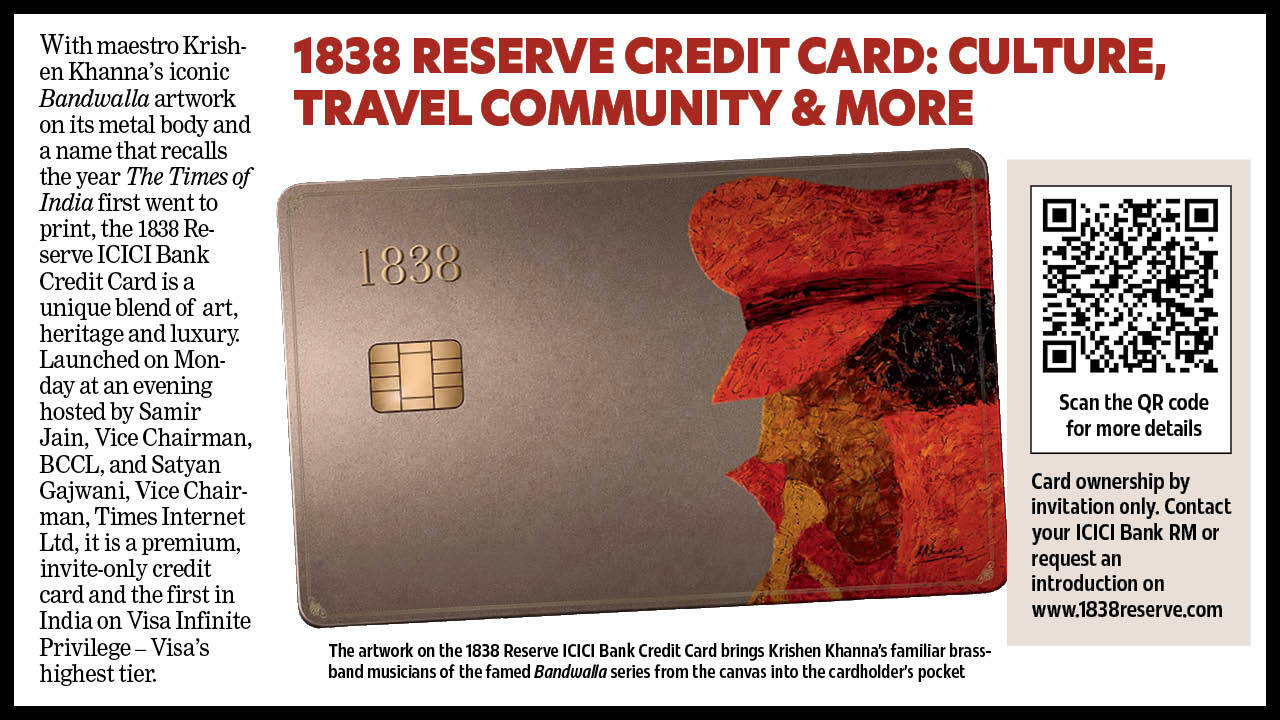
1838 Reserve credit card: Culture, Travel Community & More
Journeys become more effortless with at-home visa biometrics, fast-track security and immigration, international airport transfers and zero forex markup. From stays at Lohono Platinum Villas to Accor Explorer membership, every privilege offers another way to explore the world with greater ease.