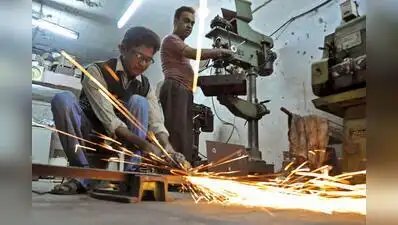









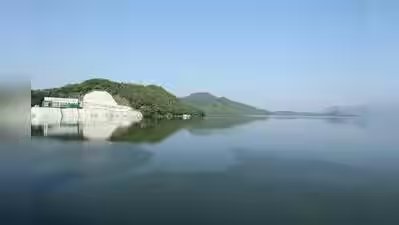
Gandhinagar: With at least 15,000 million cubic metres (MCM) of water flowing into the Arabian Sea every year after Narmada, Ukai and Kadhana reservoirs fill to capacity during the monsoon, the Gujarat govt has launched an exercise to find ways to conserve and utilize this excess water, particularly to meet the growing needs of industries.The move is significant as the state expects industrial water demand to rise further with the expansion of water-intensive emerging sectors such as semiconductors and data centres. Officials said industrial demand for water has traditionally exceeded the state’s supply.“Every year, a very large amount of water is wasted as it overflows from dams and flows into the Arabian Sea. The state govt has embarked on an exercise to better utilize this excess water and make provisions for additional water to industries,” said a senior official in the govt.According to govt estimates, around 9,500MCM of water overflows from the Narmada dam into the sea every year, while the corresponding figures for Ukai and Kadhana are more than 3,000MCM and over 2,200MCM respectively.“These are conservative estimates. The actual amount of water that is lost is much more than these figures,” said a source.The govt is examining two broad options to conserve excess water. “One is to increase the water-holding capacity of the reservoirs through measures such as dredging and other activities. The second is to identify existing waterbodies that can receive and store water diverted from dams when they overflow,” said an official.The exercise comes against the backdrop of projections that Gujarat’s water requirements will rise sharply in the coming decades. A recent study by the water resources department estimated the total water demand at 8,804 million litres per day (MLD) in 2024.This is projected to rise by 32% to 11,642MLD by 2030. By 2050, the demand is expected to reach 18,927 MLD — an increase of 114% over the 2024 requirement.