






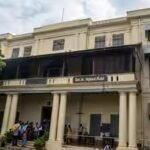




Bengaluru: Nearly three decades after Karnataka Public Service Commission (KPSC) recruitment triggered a political storm in Karnataka, a Bengaluru court has brought the curtains down on the controversy. It acquitted former KPSC chairman HN Krishna and five others, citing lack of credible evidence in the 1998 gazetted probationers selection case.First additional chief judicial magistrate Manjunatha KP in his order on April 30 observed that the prosecution failed to establish the charges despite a lengthy trial and voluminous records.Krishna was named as prime accused, along with two candidates — Asha Parveen and Salma Firdosh — and three KPSC staff members, K Narasimha, P Gopi Krishna and MB Banakaar. The case was registered based on allegations that deserving candidates were denied posts while others were favoured using forged caste and income certificates submitted beyond prescribed deadlines. CID filed its chargesheet in 2012, accusing the trio of manipulating the selection process. The prosecution stated that certain candidates were wrongfully selected, at the expense of meritorious candidates HG Prabhakar, KS Hanumantharayappa and Allabaksh.However, the trial exposed significant weaknesses in the case. A total of 41 witnesses were examined and 71 documents submitted by the prosecution, while the defence produced 81 documents. The court noted that much of the evidence only established the official roles of the accused and not any wrongdoing. A key setback for the prosecution was that several crucial witnesses, including the alleged victims, either turned hostile or contradicted their earlier statements. For instance, witnesses admitted they had either not submitted required documents during interviews or were unsure of their earlier claims. The court also flagged inconsistencies in documentary evidence and investigation by CID. It noted gaps such as missing pages in exhibits, discrepancies in records, and conflicting forensic reports on caste certificates. Investigators themselves admitted to not conclusively verifying which documents were genuine in some cases. Further, testimonies indicated that the responsibility for verifying documents lay primarily with KPSC staff and the scrutiny process, while the selection committee’s role was largely limited to conducting interviews and awarding marks. Some witnesses also stated that they did not observe any irregularities during the selection process.The court observed that simply presenting a large number of witnesses and documents — described during the trial as “a trunk full of records” — was not sufficient without clear proof of intent to cheat or manipulate. It emphasised that there was no convincing evidence to show that the accused had knowingly forged documents, misused them, or acted with dishonest intent. In its final analysis, the court held that the prosecution failed to prove that any candidate was illegally favoured or that any official deliberately caused loss to others. With key allegations remaining unsubstantiated and evidence lacking consistency and reliability, the court concluded that the case had not been proven beyond doubt. Accordingly, all the accused were acquitted, bringing an end to one of Karnataka’s most debated recruitment controversies linked to the KPSC. ————— HN Krishna was SIC when arrestedRecruitment irregularities in KPSC’s gazetted probationer selections of 1998, 1999 triggered a major controversy in Karnataka. HN Krishna, who served as a KPSC member and later its chairperson during the controversial years, was arrested by the CID in 2011. At the time of arrest, Krishna was serving as state information commissioner. Along with aspirants Asha Parveen and Salma Firdosh, CID had accused KPSC staffers K Narasimha, MB Banakar and P Gopi Krishna, who was the personal assistant of Krishna, in the case. A forensic report by a Hyderabad laboratory had flagged discrepancies in caste certificates. While Asha Parveen was selected as tahsildar, Firdose was selected as assistant sub-registrar.