









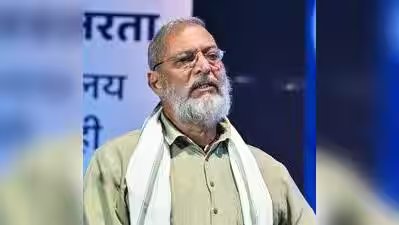
Mumbai: “I don’t know whether I will be here tomorrow,” he said at an event in Goa, days before his unexpected passing. “We all have to go someday. That time comes in the life of everyone. But before that time comes… we have to think… am I able to do what I want to do? Have I made the effort?”In Vishwanath ‘Nana’ Patekar’s case, the legacy bears out the effort. His screen presence rarely depended on conventional heroism. His strength lay in making characters feel unpredictable, wounded, volatile or quietly dangerous, often within the same scene. Over a career spanning nearly five decades in Hindi and Marathi cinema, Patekar moved effortlessly between rage and restraint, menace and vulnerability, theatricality and deadpan humour.On Thursday, the voice that had championed the cause of the underdog on screen and oppressed farmers in real life was stilled. Patekar (75) was declared dead at 5.20 am Oct 8 after having suffered a heart attack in Goa’s Dona Paula. He was found lying on the floor and taken to Manipal Hospital where doctors tried unsuccessfully to revive him. He had reached out to a friend after experiencing discomfort around 2.30 am but his message went unseen till an hour or so later.Patekar’s remains were later transported to Donje village, Pune, where he was cremated on the grounds of his own farmhouse.Born on New Year’s Day Jan 1, 1951, Nana Patekar came from a working-class Maharashtrian family of Murud-Janjira. He had to shoulder the burden of earning a livelihood at the age of 13. Despite his sunburnt upbringing, his fondness for art prompted him to enrol at JJ School of Applied Art in Mumbai.He had recalled in an interview how he would paint posters and occasionally even zebra crossings on the road to supplement his income. Nana worked in advertising for two years before making his way into theatre, onward to cinema. On stage he found a fitting mentor in director Vijaya Mehta. His play Purush ran for 16 years.He made his film debut in Muzaffar Ali’s ‘Gaman’ (1978) which was followed by the success of Jabbar Patel’s ‘Sinhasan’ (Marathi, 1979). Nana’s career took flight with impressive performances in Salaam Bombay, Ankush and Parinda.Awards and accolades followed with Krantiveer, Prahaar (which he directed), Yashwant, Ghulam E Mustafa and Tirangaa. His popularity grew through a screen persona that blended street angst with neo-nationalism. His personal reputation as a short-tempered artist with a mercurial temperament often fed into the public image. Occasionally, Patekar would break out of the mould to do a quirky, witty film like Raju Ban Gaya Gentleman or Thodasa Roomani Ho Jaaye.The actor lived out the slogan ‘Jai Jawaan Jai Kisaan’ issued by former PM Lal Bahadur Shastri. Nana joined the Territorial Army as a captain in 1988, underwent training for his film Prahaar, and later served with the Maratha Light Infantry during the Kargil War. The public-spirited actor also instituted the NAAM Foundation to help tackle rural distress in Maharashtra.Yet the ‘angry young man’ did face a few controversies, mainly allegations of sexual harassment levelled by actress Tanushree Dutta during the MeToo movement. Nana subsequently steered clear of the limelight for a few years. In later years, he made a comeback with films like Raajneeti, Natsamrat and Kaala with Rajinikanth.He is survived by his wife Neelakanti and son Malhar.(With inputs by Aarushi Mehrishi)