








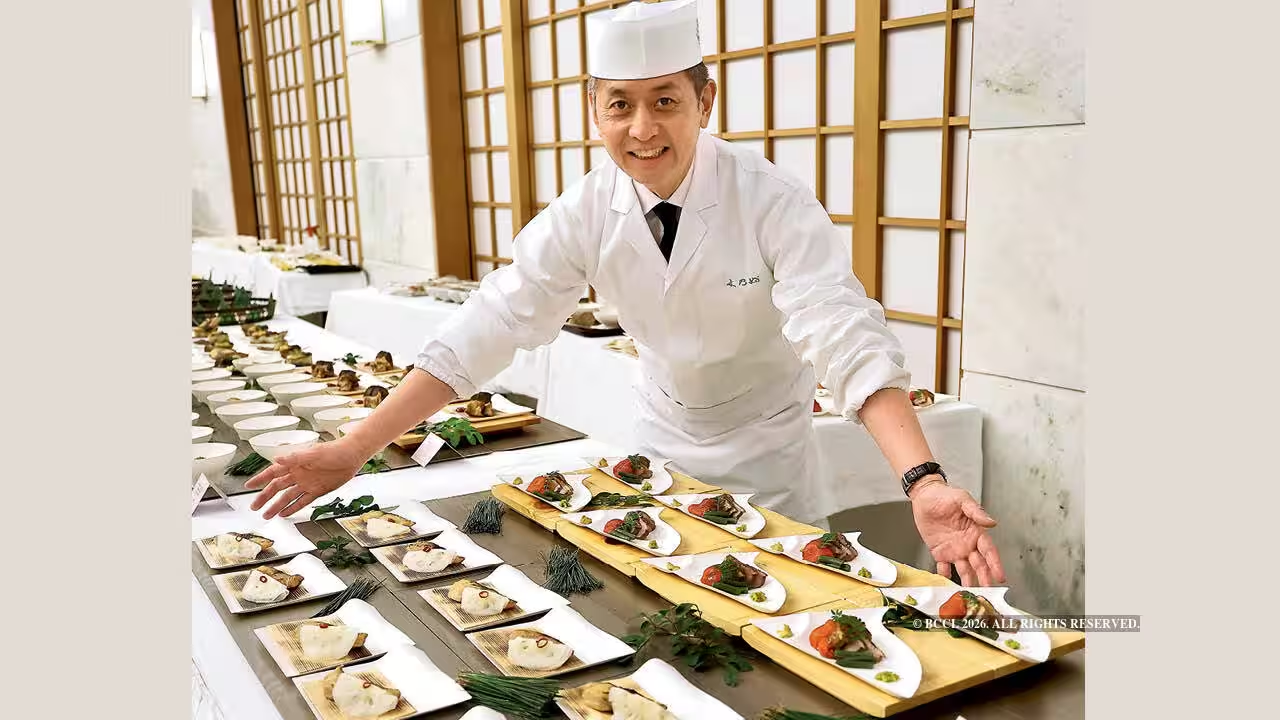
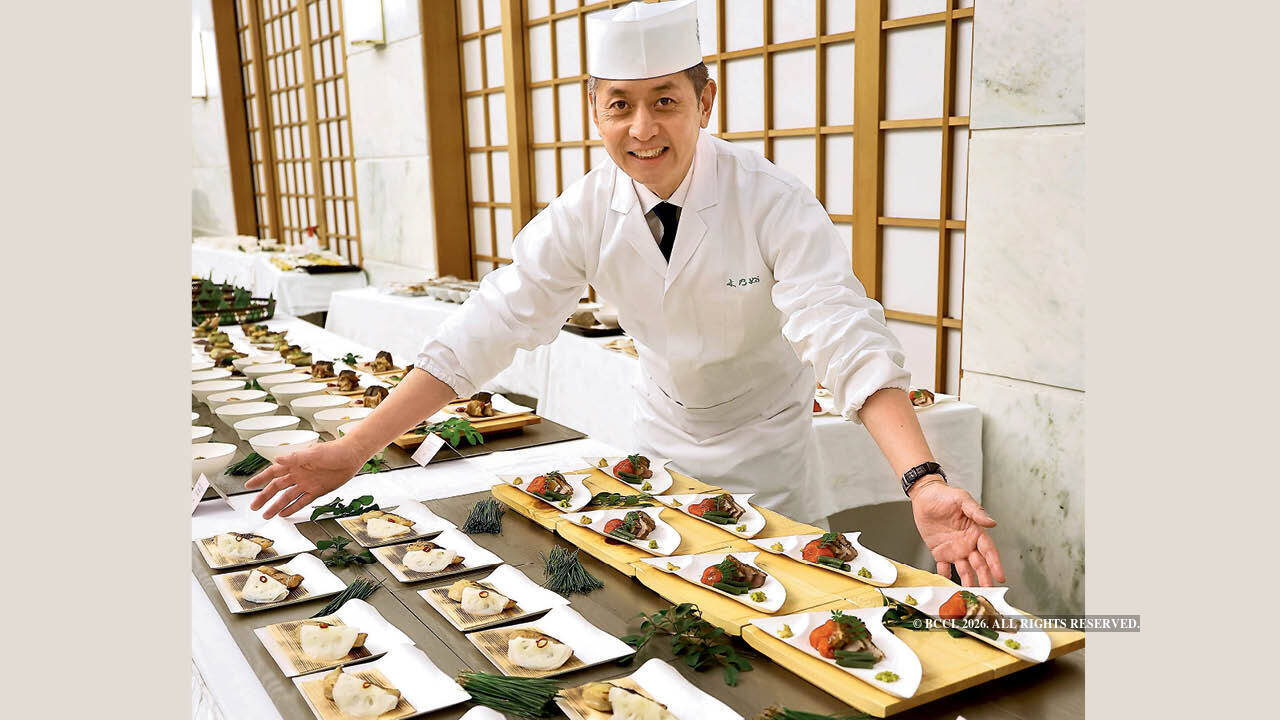
From miso-glazed eggplant and chilled noodles with sea urchin and abalone to seafood salad sushi rolls, the Embassy of Japan organised a special evening, the Japanese Culinary Reception, featuring Kyoto’s renowned Chef Takahashi Takuji, who presented the quintessence of Japanese cuisine as part of Japan Month.Guests sampled various dishes and flavours the chef brought from Japan, including Japanese chestnut rice, cedar-plank grilled lotus root and conger eel, paired with sake.Japanese Ambassador Ono Keiichi welcomed the guests and shared, “It is my great pleasure to welcome top chef Takahashi Takuji. He has travelled all the way from Japan to be here with us tonight. Japanese cuisine is a food culture that reflects the four seasons and values the essence of each ingredient.”The essence of Japanese cuisineSpeaking to us, Master Chef Takuji Takahashi, CEO and Chef of the Michelin-starred Kinobu Restaurant in Kyoto, said, “I prepared several dishes that I regularly serve, including kaiseki ryori as well as shojin ryori, which is vegetarian cuisine that does not use fish or meat. Japanese cuisine is, in many ways, a cuisine that can be enjoyed by many different kinds of people. Fundamentally, we place great importance on the umami of kombu and bonito flakes. In ordinary Japanese cooking, we use bonito and kombu as the base, while in shojin ryori, kombu is used as the base to bring out the natural flavours of vegetables. We also combine it with grains, dried ingredients, nuts and other ingredients to create the dishes. What I hope to communicate through this event is simply what is good and distinctive about Japanese cuisine.”India and Japan: A culinary connectionIndia and Japan have very different culinary traditions, yet both place importance on seasonality, ingredients and technique. Explaining the strongest connection between the two, Chef Takahashi said, “One connection I see is that both countries have regions where rice is the main staple and regions where wheat is more central. In Japan, we eat rice, but we also eat noodles made of wheat. Depending on the region, the thickness and firmness of the noodles can be different. India and Japan therefore use many of the same basic ingredients, such as rice and wheat, but the ways in which we use them are completely different. I find it very interesting that the same ingredients can develop into such different forms depending on the region and the food culture.”The importance of kombu and bonitoThe chef also told us that whenever he travels overseas to cook, he always carries kombu and bonito flakes with him. “I also bring aromatic ingredients such as wasabi and yuzu. As long as you have the umami from kombu and bonito flakes, creating Japanese cuisine becomes relatively easy. Whether you are working with meat, vegetables or grains from almost any country, you can use those elements to turn the ingredients into something recognisably Japanese,” he added.