








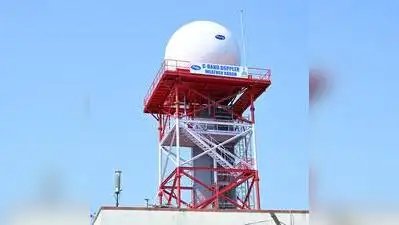
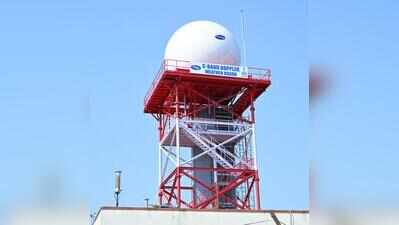
Chennai: The S-band Doppler weather radar at Chennai Port, which has been working for more than two decades, will be replaced in 2027 even as it has been restored and kept operational ahead of the Oct-Dec northeast monsoon. India Meteorological Department, in collaboration with the state govt, will install four new Doppler weather radars in interior Tamil Nadu to strengthen coverage.IMD director general of meteorology Mrutyunjay Mohapatra said an order to replace the ageing radar was placed six months ago. “The existing one is fixed and is currently working. We can turn it on whenever we want. We will manage with it until we replace it,” he said.Imported from Germany, the Port radar has been operational since 2002 and has faced mechanical problems, including wear and tear in its antenna system and pedestal. Its bull gear, which rotates the antenna, had to be replaced, with Isro helping refurbish it as spare parts for the phased-out model were unavailable. The radar used to earlier be operated for a few hours when required because of these issues.The S-band radar has a range of about 500km and is important for tracking cyclones and other large weather systems, besides monitoring rain-bearing clouds. It provides information on rainfall structure, precipitation accumulation, wind speed and direction, cloud development and movement, and wind shear. A Doppler weather radar transmits electromagnetic waves and measures energy backscattered by water or ice particles in the atmosphere.Mohapatra said radars at Karaikal, Sriharikota and Thiruvananthapuram can provide coverage over Tamil Nadu if the Port radar fails, providing redundancy. The city also has an X-band radar at the NIOT campus in Pallikaranai, with a range of about 150km, used mainly for localised weather monitoring and nowcasting.“You cannot assure that all radars will work well. Every time 30% radars will be down. There will be some problems. But we should have redundancy that we are ensuring,” he said.The four new radars will be installed in Yercaud, Trichy, Kanyakumari and Ramanathapuram, according to IMD. The expansion is part of a national plan to add 16 radars by March 2027, taking the network from 52 to 68, Mohapatra said. About 91% of the country is covered so far.“The focus is on ensuring redundancy, while creating a denser radar network along the coast and strengthening coverage in hilly and urban areas,” he said.