







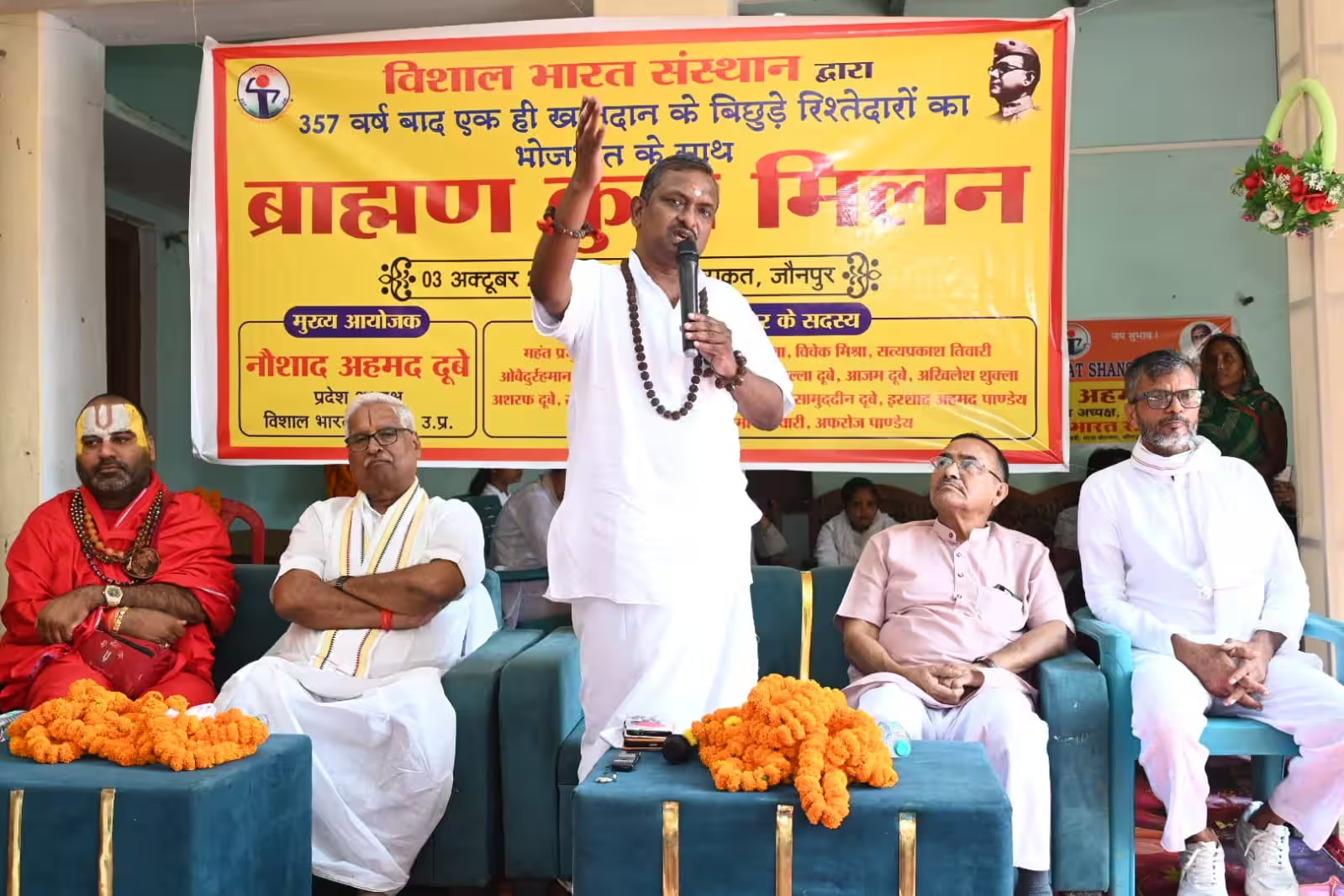
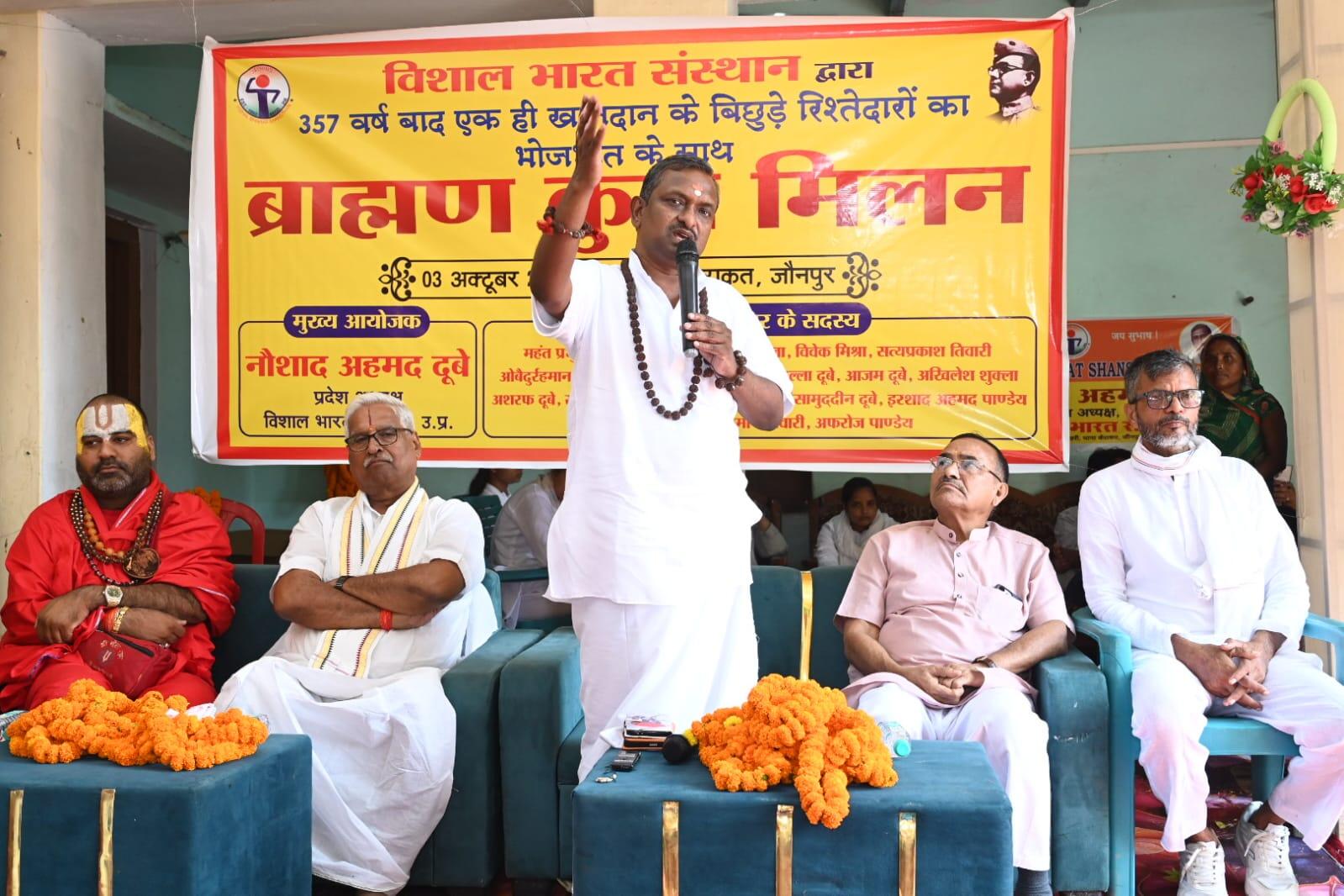
Varanasi: Separated when Aurangzeb ruled. Reunited over 350 years later.Dehri village in UP’s Jaunpur played host Saturday to descendants of a family believed to have gone their separate ways during the reign of the Mughal emperor. Titled “Brahmin Kul Milan”, the gathering brought Brahmins from Kashi and Jaunpur under one roof at the residence of Naushad Ahmad Dubey, state president of an NGO called Vishal Bharat Sansthan.According to family accounts, Naushad’s ancestor Lal Bahadur Dubey lived in Rani Ki Sarai in Azamgarh eight generations ago. During Aurangzeb’s rule, he is said to have converted to Islam and later settled in Dehri village, where he became a zamindar after purchasing land from an erstwhile feudal chief.Other members of Lal Bahadur’s family and their relatives are believed to have left Azamgarh’s Rani Ki Sarai and dispersed across Jaunpur and other parts of UP’s Purvanchal. As generations passed, the families gradually lost touch, and their once-close ancestral connections faded with time.For the descendants, Saturday’s event occasion was more than a reunion—it was a journey through generations, marked by shared memories, ancestral stories and the rediscovery of long-lost family connections.The long-lost family connection resurfaced when Naushad — who is a Muslim — used the surname “Dubey” on his daughter’s wedding invitation card, drawing widespread attention. The reference to Lal Bahadur prompted several scattered relatives to trace their roots. The efforts revealed previously unknown links between Naushad’s kin and several Hindu Brahmin families.For instance, Shailendra Shukla of Jaunpur found that Naushad is related to him through his paternal aunt. For Vivek Mishra of Varanasi, Naushad eventually turned out to be his maternal uncle.Rajiv Sriguruji, national president of Vishal Bharat Sansthan and a historian, played a key role in the reunion. His research team spent four years identifying ancestors and relatives linked to Naushad across the region.As part of the reunion, Naushad hosted a traditional “Bhoj-Bhat” feast, a Purvanchal custom associated with bringing relatives together. Relatives sat in a row while Naushad’s family served food. The gathering was described as a message of unity against divisions based on Hindu and Muslim identities. Everyone embraced after the feast and pledged not to separate again.Senior RSS pracharak and central functionary Vijay Sharma was invited by Naushad to the event. He inaugurated a gaushala (cowshed) established by Naushad in the name of his gotra (lineage) and visited Lal Bahadur Dubey Marg, a village road named after his ancestor.Vishal Bharat’s national president Sriguruji emphasised the importance of reconnecting with one’s roots, saying it helped people rediscover long-lost relatives and strengthened the social fabric of the country. He declared that his organisation would continue efforts to trace and reunite such families.