



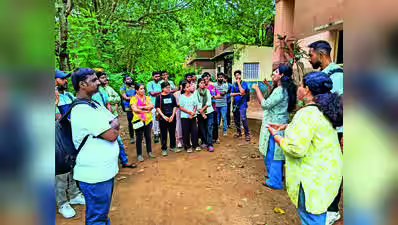
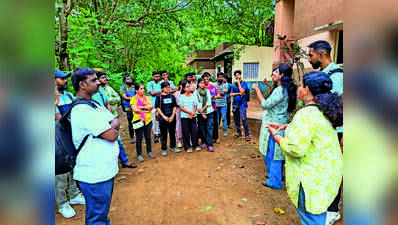
“Tt is so quiet out here,” was what one of the hearing impaired participants observed, on taking a walk through Nanmangalam forest. It was 7am and there was just the chirping of birds and insects to be heard. “For people with hearing impairment who use hearing aids, the urban soundscape can sometimes become overwhelmingly loud,” says Anjana Venkatecan of Care Earth Trust, which collaborated with the Deaf Artists Collective (DFC) to conduct the nature walk recently, along with the Tamil Nadu forest department. “Being able to access a peaceful place and experience the sounds of nature was a big deal for them,” she says.DFC, a creative community initiative under Madras Photo Bloggers, aims to bridge the accessibility gap by creating meaningful and dignified opportunities for deaf people to explore various spaces. Though they have had photo walks before, this is the first exclusive nature walk for the deaf to be conducted with their communication needs in mind. “When it is primarily a photo walk, participants may be more interested in photography than in learning about the environment,” says Anjana. “Having sign language interpretation and a deaf-friendly environment made it easier for them to participate, learn, connect with others and enjoy the experience without worrying about communication barriers.”Srivatsan Sankaran, founder of Madras Photo Bloggers, says many deaf people do not always get opportunities to experience and capture nature because of communication and accessibility barriers. “Most outdoor activities and nature experiences are designed around hearing-based communication. Information may be given verbally, instructions may be announced without visual alternatives, and sign language interpretation may not be available. We wanted participants to explore and experience nature through photography.”Nanmangalam is a forested area and so spotting birds was difficult, says Anjana. “That gave us an opportunity to talk more about its flora. The walk was more geared towards insects. We saw a lot of butterflies, stick insects, weaver ants and other insects.”The sign-language interpreter is crucial to the experience. “From our side, we had to slightly change our approach to accommodate the interpretation, slow down and factor in the additional time required for signing,” says Anjana.DFC will continue creating more of such inclusive nature walks and photography experiences for the deaf community in different environments, says Srivatsan.