








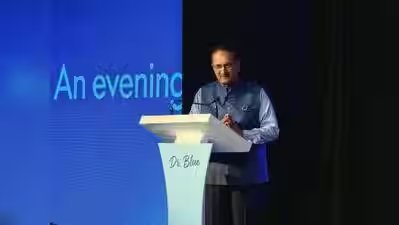
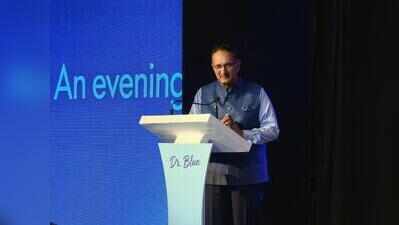
Mumbai: Medicine risks losing its human touch as healthcare becomes increasingly driven by technology, scans and commercial health checks, said veteran cancer surgeon Dr P Jagannath, who has spent four decades in medicine and is credited with helping establish hepatopancreatobiliary (HPB) surgery in India.“We have to make medicine patient-centric,” Jagannath said during the launch of his memoir on Friday.Actor Amitabh Bachchan, who was operated on by Dr Jagannath for diverticulitis in 2015, was present along with poet and lyricist Gulzar, who was also a patient of the doctor. Cricketer Sachin Tendulkar, whose mother was operated on by Jagannath, was also present.Jagannath, who worked at Tata Memorial Hospital for decades, told TOI there is an urgent need to make medicine noble again. “Human touch is the most important thing in medical practice,” he said.His mother’s cancer journey, he said, changed him. Seeing cancer from a caregiver’s perspective made him realise how patients feel and suffer.“It made me realise that whatever we were doing in medicine was not enough. We needed to go beyond treatment,” he said.That belief led to India Cancer initiative, aimed at providing people with reliable information and support. In Telangana, his team is taking disease screening to people’s homes, using technology to identify those at risk of diabetes, hypertension and cancers of the breast, cervix and oral cavity. ASHA workers use a smartphone application to capture images that can assist in cancer detection.Jagannath also cautioned against the growing trend of indiscriminate health check-ups.“A battery of investigations is not necessarily the ideal way to stay healthy,” he said. While people with symptoms need appropriate evaluation, asymptomatic individuals should follow age- and risk-appropriate, evidence-based screening protocols rather than undergo dozens of tests.“We need to be much more scientific than commercial about preventive healthcare,” he said.“We need to be proactive and aware of our bodies. The body always tells you something. We need to listen to it,” he said.“I want to see healthcare move from being treated as a business back to being regarded as a profession — a global profession, and the profession it should be.”