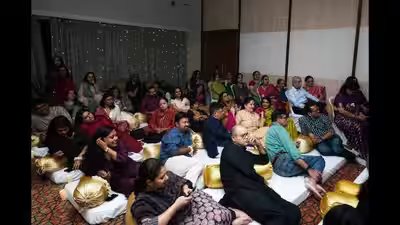







Times News NetworkBengaluru: Illustrators are no longer just the people behind the pictures. With picture books, comics and graphic novels gaining traction in India, illustrators are increasingly being recognised as storytellers in their own right. The shift was evident at the ongoing Neev Lit Fest 2026 at Neev Academy, Yamalur, where illustrators were celebrated alongside authors.“It is the best time to be an illustrator. Graphic novels have made a serious arrival in India. The quantity is not yet there, but the quality is extremely good,” said Kavitha Gupta Sabarwal, co-founder, NLF. She, however, pointed to the high production costs involved in graphic novels and picture books, particularly when creators choose not to use AI-generated art.India is also seeing a surge in picture books, but the genre faces challenges ranging from production costs to perceptions about the value of visual storytelling. Unlike in several other countries, where writers often illustrate their own books, Indian publishing largely continues to separate the roles of writer and illustrator.“Ten years ago, the illustrator was always treated as someone who creates some drawings. Today, people see the value in illustrations. But it is still not enough,” Kavita said.Graphic novelist Charbak Dipta said comics in India are still in a “blossoming state”, with growing interest among both children and adults. “The common perception is that comics are for children. But it is a very powerful medium of storytelling,” he said.Dipta also called for greater institutional support, including a national comic award, saying it could encourage creators and give the medium greater recognition.The growing demand for visual storytelling comes amid another debate — the role of AI in illustration. Author-illustrator Angie Kand said AI-generated imagery strips away the human process behind art.“The beautiful part of making art is trying to process something through your own understanding and lived experiences. AI strips all of that away,” she said.Illustrators at the festival said they do not use AI in their work, arguing that doing so would take away the creative process that makes illustration rewarding.For publishers, however, economics remains a major hurdle. Duckbill Books co-founder Anushka Ravishankar said rising input costs, including the impact of GST on materials and services used in book production, have pushed up prices.“Books are exempt from GST, and we could not get input credit. So we were hit from both sides and had to increase prices,” she said.Anushka also pointed to a deeper cultural challenge — the tendency to value words over visual art. “There is this notion that words are more respectable than pictures. Therefore, it has been hard to get picture books to have the importance they need to have,” she said.Yet, she argued, picture books remain crucial to developing a reading culture among children. “For a child getting into reading, you have to start with the picture book because that is when they learn to love the printed page and the whole process of reading,” she said.The economics also affects illustrators, who, Anushka said, remain underpaid. One possible model, she suggested, is royalty-sharing, though that shifts some of the commercial risk to illustrators if a book does not sell.The lit fest will conclude Sunday.Yet, she argued, picture books remain crucial to developing a reading culture among children. “For a child getting into reading, you have to start with the picture book because that is when they learn to love the printed page and the whole process of reading,” she said.The economics also affects illustrators, who, Anushka said, remain underpaid. One possible model, she suggested, is royalty-sharing, though that shifts some of the commercial risk to illustrators if a book does not sell.The lit fest is being held on Saturday and Sunday.ends