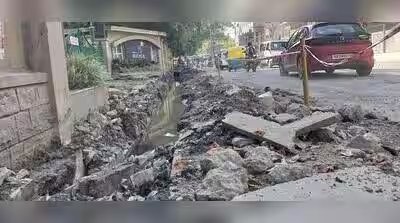







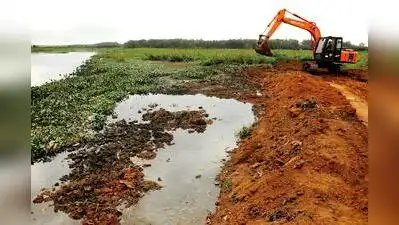
Bengaluru: Have you ever seen a motorcycle digging up a lake? An autorickshaw hauling silt? A car doing the work of an excavator or a backhoe? Well, it may sound impossible on the ground. But on paper, this is apparently possible, thanks to state govt officials.In a startling finding that raises questions over the monitoring of Karnataka’s lake rejuvenation programme, a Comptroller and Auditor General of India (CAG) report tabled in Karnataka Assembly on Monday has uncovered vehicle registration numbers of two-wheelers, autorickshaws and cars in records submitted for lake desilting works claimed to have been executed using backhoes and excavators. The report has also flagged probable embezzlement of ₹3.22 crore.The irregularities came to light during an audit of the Kere Sanjeevini Yojana, launched by Karnataka govt in January 2018 to rejuvenate and desilt lakes across the state. The Karnataka Tank Conservation and Development Authority (KTCDA) oversees the scheme, under which desilting works are entrusted to implementing agencies, including Minor Irrigation Department, Tank Users Groups and Shri Kshetra Dharmasthala Rural Development Project.According to the CAG report, 44,583 tank desilting works were executed between 2020-21 and 2022-23, for which ₹19.32 crore was paid by KTCDA. However, scrutiny of records in March 2024 exposed glaring discrepancies in 137 works. CAG cross-checked the registration numbers of JCBs and excavators mentioned in contractors’ bills and logbooks against Transport Department’s database — and the results were startling.Several registration numbers shown in the records as belonging to JCBs or excavators actually belonged to two-wheelers, autorickshaws, motor cars and other classes of vehicles. Despite this, the works were certified as having been carried out using JCBs or excavators, and payments were released to contractors.“The cross-check of the registration numbers of excavators/JCBs mentioned in the bills and the log sheets attached to those bills with the VAHAN database revealed that these registration numbers were not of the JCBs/excavators and pertained to other classes of vehicles such as two-wheelers, autorickshaws, motor cars, etc. The works were claimed to have been executed using these vehicles, and payments were made accordingly by the KTCDA,” the report said.CAG said this pointed to a serious failure of due diligence and supervision by the implementing authorities, which were responsible for examining logbooks, conducting check measurements and certifying bills before payments were made. Under Karnataka PWD Code, field engineers are required to ensure that measurements of works conform to sanctioned plans, estimates and prescribed specifications. The code also warns that false certification by field engineers or assistant executive engineers could amount to an attempt to fraudulently claim payment from the govt. The scheme specifically required payments to be calculated based on JCB/excavator working hours recorded in logbooks.‘Clerical error’?CAG questioned how such glaring discrepancies escaped detection at multiple stages. However, the state govt, in its November 2024 reply, attributed some discrepancies to clerical errors, saying registration numbers of JCBs had occasionally been entered incorrectly in logbooks. It also provided instances where there were minor variations between the numbers recorded and those in the vehicles’ registration certificates.CAG accepted such explanations only where the differences involved minor errors, such as the interchange or omission of a single digit or alphabet. However, it rejected the explanation in the 137 cases flagged for serious discrepancies, noting that the vehicle numbers in the logbooks were entirely different and bore no resemblance to the JCB numbers subsequently furnished by the govt.The audit concluded that the lack of due diligence and supervision had resulted in irregular payments for works whose actual execution was doubtful, putting ₹3.22 crore of public funds at risk. CAG has recommended a detailed enquiry into possible embezzlement of public funds and action against the officials responsible.