









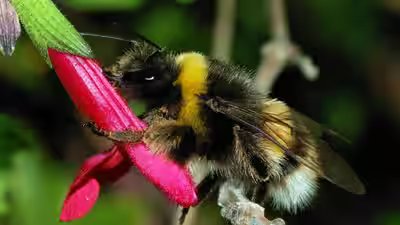
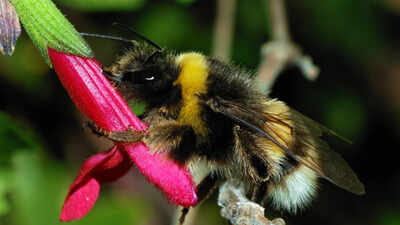
For years, Ann Hammond worked to transform her 12-acre Iowa property into a welcoming place for native plants and wildlife. The effort eventually brought an extraordinary visitor to her flowers: a rusty patched bumblebee, a species listed as federally endangered in the United States. As reported by Iowa Public Radio, Hammond noticed the rare pollinator in 2021, several years after beginning her habitat restoration work. The sighting was more than a memorable moment in her garden. It suggested that carefully restored private land can provide valuable shelter and food for species that have disappeared from much of their former range. The rusty patched bumblebee has declined sharply across the Midwest, Northeast and Canada, but Hammond’s experience offers a hopeful reminder that conservation can begin in an ordinary backyard.A rare visitor among the flowersWhen Hammond first saw the rusty patched bumblebee visiting her flowers, she may not have known that her property had become part of a much larger conservation story.The 12-acre property had not been restored overnight. It took years of planting native species, managing the land and allowing habitat to develop. The changes created a landscape that could provide nectar and pollen for bees, butterflies and other insects throughout the growing season.For Hammond, the work was likely rooted in a simple desire to care for the land. But the appearance of a federally endangered species showed that the benefits could reach much further.Rusty patched bumblebees need more than a single flowering plant or a small patch of lawn. They depend on connected habitat that offers food, shelter and suitable places to establish nests. A property with native prairie plants, woodland edges and undisturbed ground can provide several of those needs in one place.The bee’s appearance did not prove that Hammond’s property alone had restored the species. However, it showed that private land can form an important part of a wider network of habitat across Iowa.The rusty patched bumblebee’s declineThe rusty patched bumblebee has been listed as endangered since 2017. Once common across large areas of the United States and Canada, it has disappeared from most of its historical range.Researchers estimate that the species now occupies only a small fraction of the area where it was previously found. Its decline reflects the many pressures facing native pollinators, including habitat loss, pesticide exposure, disease, invasive plants and climate-related changes.The species gets its name from a distinctive reddish-brown patch on the back of worker and male bees. That marking can help people identify it, although recognising the bee in the field is not always easy.Rusty patched bumblebees are important pollinators. Like other bumblebees, they can perform a behaviour known as buzz pollination, in which the bee vibrates its flight muscles to release pollen from certain flowers. This makes bumblebees valuable to natural ecosystems and agriculture.They are also important for their conservation, since a healthy pollinator community supports many other species. Native bees help plants reproduce, while flowering plants provide food and cover for insects, birds and other wildlife.Habitat restoration requires patienceRestoring native habitat is more than just planting a few flowers. Landowners may need to remove invasive species, reduce the spread of non-native grasses, manage weeds and select plants that are suited to local soil and weather conditions.The native habitat may look different than a conventional lawn or ornamental garden. It can consist of tall grasses, seed heads, wildflowers and patches of bare ground. Those features can appear untidy to some observers, but they create important resources for wildlife.For bumblebees, the timing of flowering is especially important. Colonies need food from spring through autumn, when queens emerge, workers forage and new queens prepare to survive the winter. A property that offers only one short period of flowering may not meet those needs.Bumblebees also require nesting and overwintering sites. Unlike honeybees, which live in managed hives, bumblebees usually nest in small underground colonies. They may use abandoned rodent burrows, dense grass or other sheltered spaces.A restored property can therefore support pollinators in several ways. Flowers provide food, vegetation offers protection and undisturbed areas may provide nesting opportunities.A hopeful sign in eastern IowaHammond’s sighting was not the only recent record of a rusty patched bumblebee in eastern Iowa. In 2021, a wildlife expert photographed one in Ames. In 2024, a conservationist discovered an entire nest in her Iowa City backyard.The United States Fish and Wildlife Service considers many parts of eastern Iowa high-potential zones for the species. These are areas where environmental conditions and remaining habitat make sightings more likely.The records suggest that rusty patched bumblebees may still be present in places where suitable habitat remains. And they say if people know what to look for and report what they see, the researchers may find more people.However, a sighting does not necessarily mean a population is secure. A bee may travel considerable distances while searching for food, and one observation cannot show whether a stable colony exists nearby.That uncertainty makes each confirmed sighting valuable. It gives scientists information about where the species is surviving and where conservation work may be having an effect.Another discovery brings fresh encouragementA recent sighting at Monarch Research in Marion has added to the growing evidence that habitat restoration can help the endangered bee.Danielle Holthaus, the organisation’s research station manager, noticed a bumblebee near a patch of flowers while finishing routine work at the station. Because she had previously helped survey Iowa for rusty patched bumblebees, she suspected that the insect could be significant.Even with that experience, Holthaus did not rely on an immediate visual identification. She photographed the bee and sent the image to the Iowa Department of Natural Resources for confirmation. Officials verified that it was a rusty patched bumblebee.The record was especially meaningful because it was Monarch Research’s first confirmed sighting of the species. The organisation works to incorporate native habitat into both rural and urban settings, with benefits for monarch butterflies and many other pollinators.Holthaus said the sighting suggested that the habitat created by the organisation was attracting and supporting the bees. She also believes it is unlikely to be an isolated occurrence, although finding a nest would be considerably more difficult.Why private land mattersLarge protected areas are important for endangered species, but they cannot provide all the habitat wildlife needs. Private gardens, farms and small conservation sites can help connect larger natural areas.When many landowners restore even part of their properties, the combined effect can create a patchwork of habitat. Pollinators can move between these areas as they search for flowers, nesting sites and shelter.This approach is particularly useful in landscapes where much of the original prairie and woodland has been replaced by agriculture, roads or development. Small restored areas may not replace a large natural ecosystem, but they can still provide essential resources.Hammond’s property illustrates how conservation does not always begin with a government programme or a large organisation. It can start with one person deciding to plant native species and care for a piece of land over time.The results may take years to become visible. In Hammond’s case, the reward came in the form of a rare bee moving among the flowers.The importance of looking closelyHolthaus has encouraged people who create native habitat to spend time observing what visits it. A species may be present without being noticed, especially if people are not familiar with its appearance or behaviour.Careful observations can help conservationists understand where endangered pollinators are living. Photographs, dates, locations and descriptions can provide useful information for wildlife agencies and researchers.“People shouldn’t be trying to screw with the bees or messing with the bees. The best approach is to observe from a safe distance and report a suspected sighting through an appropriate conservation or state wildlife programme.A confirmed record can help to understand the species better. It may also help researchers decide where to conduct surveys and which habitats deserve additional protection.In the case of the rusty patched bumblebee, every detection is important because the species is so rare across its former range.A small bee with a larger messageThe appearance of a rusty patched bumblebee on Hammond’s restored property does not erase the threats facing the species. The bee remains federally endangered, and its populations are still vulnerable.But the sighting offers an encouraging message. Habitat restoration can create opportunities for wildlife even on private land. A 12-acre property may seem small compared with a national park or nature reserve, yet it can still become part of a functioning ecological network.The story also highlights the value of patience. Native habitat may take years to establish, and success may not be obvious at first. The arrival of a rare pollinator can show that the work is beginning to make a difference.For Iowa’s rusty patched bumblebee, the future remains uncertain. However, sightings at Hammond’s property, Monarch Research and other locations give conservationists more information and communities more reason to act.A garden filled with native flowers may look like a quiet corner of land. To an endangered bumblebee, it can be a place to feed, shelter and continue the species’ struggle for survival.