







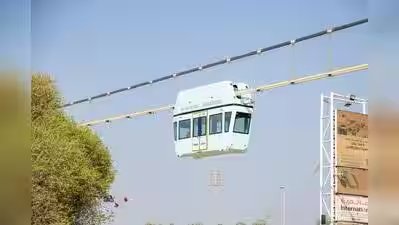
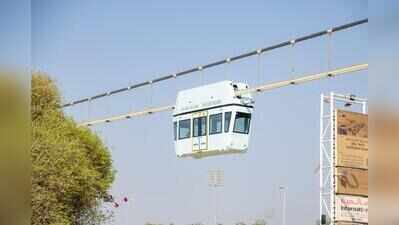
Bengaluru: From the ancient ruins of UNESCO World Heritage site Hampi to Karnataka’s scenic and popular hill stations and sprawling tourist hubs, the state could soon be looking at a futuristic way of moving tourists — elevated pods gliding above the ground instead of vehicles battling for space on roads in and around these tourist attractions.Keeping in mind Karnataka’s growing popularity as a domestic tourism destination, the state government is exploring the possibility of introducing an elevated pod-based transport system at select tourism destinations. As part of this effort, a delegation inspected the famous ‘String Transport’ system being operated in Sharjah, as the government looks for alternatives to conventional roads and transport infrastructure that often require valuable land.A delegation of government officials led by Energy and Tourism Minister KJ George, which is currently in Sharjah to study the technology, is examining the transport system — from its engineering and passenger capacity to its safety systems, operations and the amount of ground space required. “Our objective is to ensure a transport network that moves above the ground while leaving the land below largely free. Such a system could potentially provide seamless movement within vast tourism zones, besides offering last-mile connectivity and reducing the pressure to acquire large tracts of land for roads and associated infrastructure,” explained a senior official from the Tourism Department.
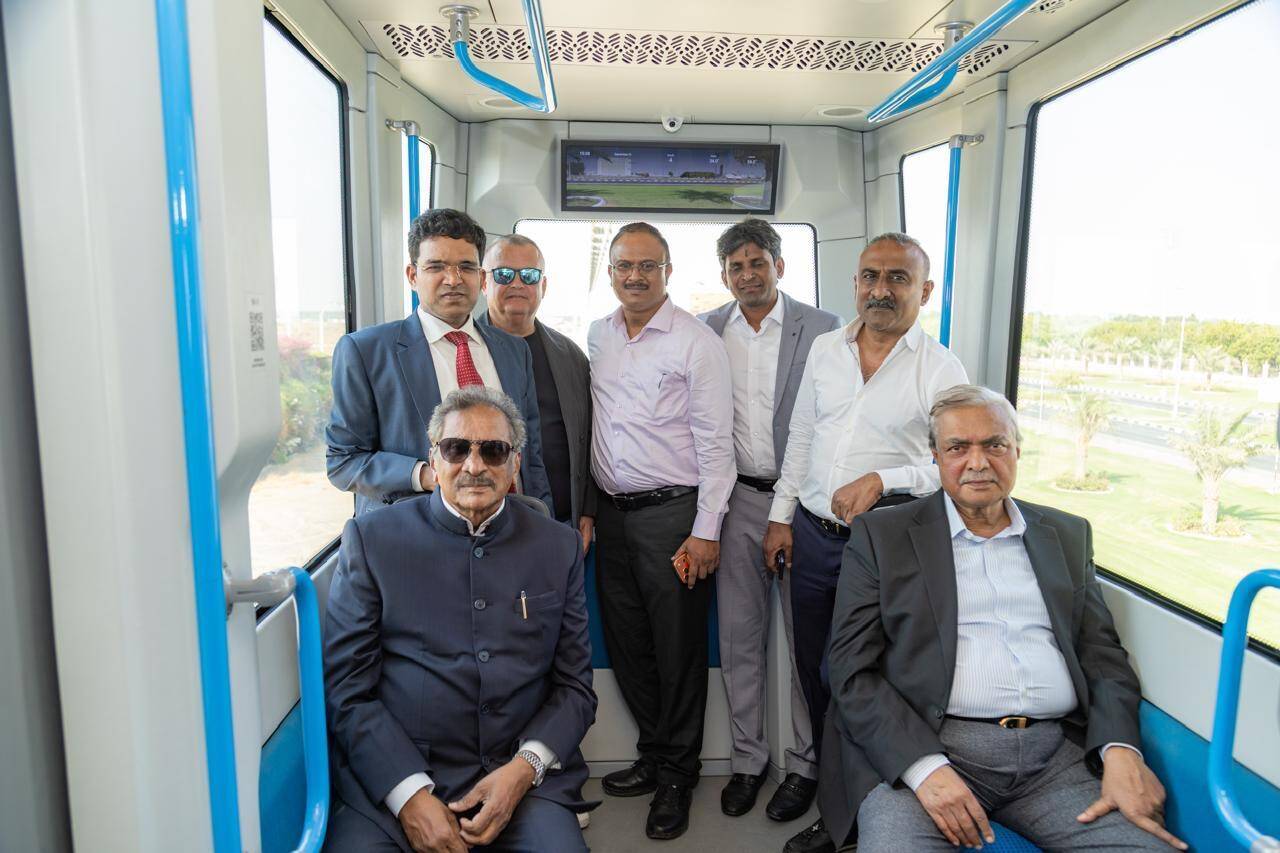
Karnataka Tourism Minister K.J. George-led delegation experiences a ride on Sharjah’s elevated ‘String Transport’ system during its visit to study the technology and assess its potential for tourism mobility in the state.
The Tourism Department is now examining whether the concept could work in Karnataka’s unique tourism landscape. Tourist destinations such as Hampi, which is spread across several hectares, tourism sites on the outskirts of cities, and locations where land acquisition is a major challenge could emerge as potential locations for further study. “In Hampi, for example, tourism infrastructure must coexist with a historically and environmentally sensitive landscape. It is in such congested and popular tourist places that an elevated mobility system could offer an alternative to continually widening roads or creating extensive ground-level transport corridors,” the official said.But the state government is not in a rush to execute the idea. The Sharjah visit is only the first step, with the government planning a detailed assessment of geography, tourist footfall, passenger capacity, construction costs, maintenance requirements, safety and financial viability before deciding whether the technology can be adapted to any part of Karnataka. “Tourism development is not only about improving destinations. It is equally important to ensure that visitors can reach destinations easily and move within those sites conveniently,” George said, adding that Karnataka would examine emerging global transport technologies for their suitability to the state.Tourism Department Secretary Ram Prasath Manohar said, “Transport systems offering connectivity with limited land use could prove useful at selected tourism destinations. But a comprehensive feasibility study would be required before identifying suitable locations. If the idea is found feasible, this could mark a significant shift in how Karnataka approaches mobility at its popular tourism hotspots.”