









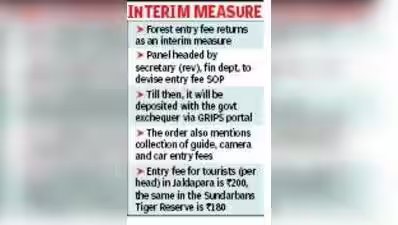

KrishnenduMukherjee@timesofindia.comKolkata: The state forest dept has, as an interim measure, reinstated entry fees for tourists visiting national parks and wildlife sanctuaries across the state. The move reverses a previous instruction issued under the Trinamool administration, which had abolished entry charges following directions from ex-CM Mamata Banerjee in Jan 2025.While the move is expected to bolster state revenue, the revised financial mechanism has drawn mixed reactions from officials and conservationists alike. Under the new directive, funds collected as entry fees must be directly deposited into the treasury-linked bank accounts. This marks a significant departure from the earlier model, where revenues were parked with the West Bengal Forest Development Agency (WBFDA), an undertaking under the forest dept.The latest order dated Sept 14, states that a high-level panel headed by secretary (revenue), finance dept, has been formed to devise an SOP on entry fee. “Till its recommendations come, the entry fee is reintroduced as a temporary arrangement. The collection will be operated through GRIPS portal under the finance dept. Concerned authorities will deposit the fees with the govt exchequer via GRIPS portal on and from Sept 15 till further orders,” the notice read.Officials and tourism stakeholders fear that routing funds through the central state treasury will introduce red tape and procedural bottlenecks. Under the previous system, funds maintained with the WBFDA provided immediate liquidity for emergency expenditures — such as repairing monsoon-damaged forest roads, maintaining tourist facilities, and responding swiftly to unforeseen wildlife management needs. Officials worry that awaiting treasury sanctions for routine operations could severely compromise emergency upkeep.The order also mentions collection of fees such as guide fees, car entry fees and camera fees, which were earlier collected directly by the guides or vehicle operators. “If this, too, gets deposited with the treasury, what will be the role of a guide then? Vehicle operators might discontinue giving their cars. Entire tourism may take a hit,” said a source.For tourism in tiger reserves, though, the money was routed through conservation foundation trusts of respective reserves. Though, there is no clarity if the trusts will continue to do the same.Adding to the controversy, the order remains silent regarding 40% revenue share previously allocated to Joint Forest Management Committees and Eco-Development Committees (EDCs). Historically, this share directly incentivised forest-fringe communities by funding local development projects and supporting livelihoods in exchange for their active participation in forest protection and conservation effort.Without clear guidance on community fund distribution, stakeholders fear that this risks alienating local dwellers, who form the first line of defence against poaching and habitat degradation.