









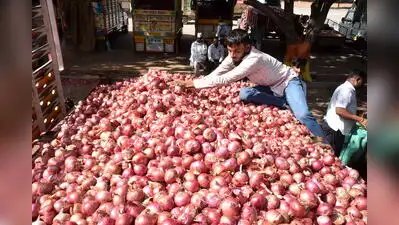
Rajkot: Mahuva, one of India’s hubs for dehydrated onion and garlic, could potentially double capacity utilisation of its dehydration units if Maharashtra’s onion crop is supplied on a large scale. Industry operators recently put forward a proposal to a delegation from Maharashtra that visited the region to study the dehydration industry and explore ways to improve returns for onion farmers.The move could extend the operating season of Mahuva’s dehydration plants from the current three months to six months a year. It could also create an additional market for Maharashtra’s onion growers and help them realise better prices.A delegation of industrialists, farmers and bureaucrats from Maharashtra, led by Maharashtra State Commission for Agricultural Costs and Prices chairperson Pasha Patel, visited Mahuva to study its dehydration industry and explore measures to improve returns for onion farmers. The delegation visited dehydration plants, auction facilities and warehouses and held discussions with farmers, traders and other industry stakeholders.The visit followed a meeting of the Gujarat-Maharashtra Onion Committee at the APMC market in Mahuva, where local dehydration plant operators proposed facilitating the movement of Maharashtra onions to the town.Mahuva in Bhavnagar district currently processes around 10 lakh tonnes of Gujarat onions and about 4.5 lakh tonnes of onions from Maharashtra. Dehydration units generally operate from Feb to April, coinciding with the Gujarat onion harvesting season.“Gujarat’s onion harvesting season generally runs from Feb to April, forcing dehydration plants in Mahuva to stop production once local onions become unavailable. Maharashtra’s onion harvesting continues from April to June, providing an opportunity to keep plants operational for three months more months,” said Vitthal Koradiya, a leading dehydration plant operator in Mahuva.However, Koradiya said Maharashtra would need to address several issues to make its onions more suitable and economically viable for dehydration in Mahuva.In a written representation to the delegation, Koradiya identified key challenges such as lower total soluble solids (TSS) content in Maharashtra onions, inadequate storage infrastructure and high transportation costs.“Gujarat onions have a TSS of 15-16%, compared with 11-13% in Maharashtra. Higher TSS is important for the dehydration industry because it improves recovery of the finished dehydrated product,” the representation stated.Industry operators urged the Maharashtra govt to work with agricultural universities to develop and promote high-TSS onion varieties suitable for processing. Such varieties, they said, could boost demand from dehydration units, create an additional market for farmers and help them secure better prices.Storage is another major concern. The representation pointed out that onions are highly perishable and farmers are often forced to sell their produce during bumper production periods, when prices can fall to as low as Rs 2-3 per kilogram.It suggested establishing cold-storage facilities at affordable charges, allowing farmers to store onions for two to three months and sell them when market prices improve.Transportation costs are also a significant hurdle. “Maharashtra farmers wishing to bring onions to Mahuva APMC for dehydration face transportation expenses of around Rs 2-2.50 per kilogram. The Maharashtra govt should provide assistance to make transportation to Mahuva economically viable for farmers,” Koradiya said.India currently exports around 1.5 lakh tonnes of dehydrated onion and garlic products annually, comprising approximately 1.2 lakh tonnes of dehydrated onion and 30,000 tonnes of dehydrated garlic. At an average export value of $2,500 per tonne, the sector earns around $375 million in foreign exchange annually, sources said.Mahuva accounts for around 80% of India’s dehydrated onion and garlic exports, making it a crucial centre for the country’s processing and export industry.Industry operators believe that establishing a reliable supply chain from Maharashtra to Mahuva could benefit both sides — enabling Mahuva’s dehydration units to operate for a longer period while giving Maharashtra’s farmers access to a larger processing market.Dehydrated onions are used extensively in the spice and hospitality industries and are exported to countries such as the US, Australia, Germany, Japan, the Netherlands, UK, Brazil, Poland, Austria and Russia. Products made from white onions include flakes, kibbled, minced, chopped, powder and granules, which are supplied to international markets.