








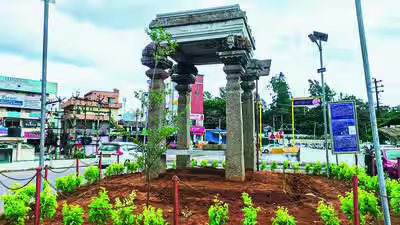
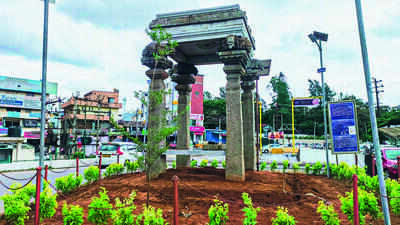
To the villagers of Marachandiram in Hosur, the 16th-century stone pillars at Ramanayakkan lake are more than a relic, they hold a lesson in water management.“They are proof of how our ancestors valued water,” says R Kumaresan, a farmer from the village in Hosur. “In a time of water scarcity, their methods should inspire us.”The intricately carved pillars, says M Rajendran, a resident historian, were built by Chandrashekhara Nayakkar, son of King Ramanayaka. “They were similar to a rainwater gauge and integral to the lake’s sluice system.”King Ramanayaka backed by the Vijayanagara empire held off invaders, and after victory, returned to Bagalur with rewards. To commemorate this triumph, his son dug the Ramanayakkan Lake (the city’s largest man-made lake) and erected the pillars, which became a symbol of Hosur’s legacy. “In Hosur, the lake’s water flowed into the moat of the fort. It shows just how important the pillars are,” says Rajendran.A few years ago, the stone pillar gate was removed for road construction, but thanks to the efforts of history enthusiasts, it was reinstalled and a park built around it. Hosur Corporation has begun beautification work around the monument, but villagers say that an information board must be installed to narrate its story. “Visitors ask about the pillars, but there is no plaque explaining the history. “If people knew its importance, they would take better care of Hosur’s heritage,” says M Rajesh, a shopkeeper near the lake.“When the gate was removed, many of us felt history was being erased,” says S Lakshmanan, a retired teacher. “In Hosur, groundwater is being depleted, lakes are being encroached and rainwater is wasted. The return of the pillars was a victory especially in the face of these water challenges.”