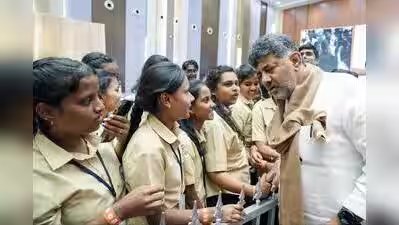











Bengaluru: Youth leaders and student activists who participated in recent Jantar Mantar protests gathered in Bengaluru Sunday to observe Gauri Day and Gen-Z Day, marking the death anniversary of journalist Gauri Lankesh. They called for systemic reforms in education, arguing that shortcomings in the sector lie at the root of several social and political problems in India.Ashutosh Ranka of the Cockroach Janta Party (CJP) questioned the narrative of India’s young population being a “demographic dividend”, warning that it could instead become a “demographic disaster” without systemic changes.“A lot of people, especially the ruling regime, talk about demographic dividend. I see it as a potential demographic disaster. If things are not changed, it’s an ensuing disaster,” Ranka said, describing the coming years as a “make or break” period for the country.He said education would be central to any wider reform. “We feel that education is the root cause of a majority of problems in this country,” he said. “Fundamentally, if there is one thing this country needs to fix, it’s education.”Ranka argued that schools did not sufficiently focus on foundational values such as civic sense and equality, linking these gaps to wider problems including civic negligence and corruption. “Where are we talking about civic sense? I was never taught about civic sense in my school. Where are we taught about the idea of equality?” he asked.Student leader Aishe Ghosh of the Students Federation of India (SFI) spoke about growing frustration among young people, referring to recent youth protests, including the 37-day Jantar Mantar agitation following controversies over alleged examination paper leaks.“Young people are being forced to choose the politics dictated by those in power, and that is very, very problematic,” Ghosh said.Reflecting on Gauri Lankesh’s legacy and its influence on younger activists, Ghosh said many young people were questioning the direction in which the country was headed.“As the younger generation, we feel ashamed, fearful, and frustrated that this can’t be the country we want to live in,” she said. She added that recent Gen-Z-led movements were moving beyond individual incidents to demand greater transparency and institutional accountability.“This protest of the Gen Zs has given us hope that speaking up matters,” Ghosh said.The speakers called for reforms in school curricula and higher education governance, saying education must equip young people with academic and professional skills while also fostering equality, civic responsibility and democratic participation.