









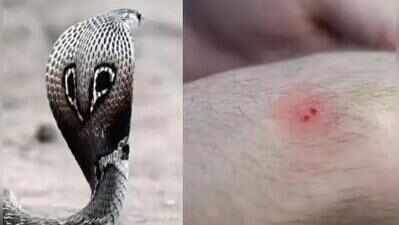
Chennai: Snakebite deaths in Tamil Nadu are concentrated in rural areas, where victims were largely farmers or daily-wage workers bitten in fields or after dark. Delayed treatment and unsafe first-aid practices—including tourniquets, herbal remedies and cutting the bite wound—were among reasons that caused death, an analysis by the Directorate of Public Health and Preventive Medicine found.Published in the peer-reviewed journal, Transactions of the Royal Society of Tropical Medicine and Hygiene, the analysis examined 56,664 snakebite cases reported in Tamil Nadu between Jan 2022 and May 2025. One hundred people died, a case-fatality rate of 0.18%. Men accounted for almost two-thirds of the cases, but women and older people were more likely to die relative to their share of cases. Women made up 36.3% of cases but 46% of deaths.Older people are at greater risk of mortality from snakebites, corresponding author K J Subhashini wrote, as they represented 10.2% of cases and 17% of deaths. Though the study did not determine which factors were responsible, the disparity may reflect greater physiological vulnerability, delays in reaching care or differences in treatment, they said.Analysis showed that the burden rose with the rains. Cases increased from June through Oct and consistently peaked in Oct, when farm work and snake activity often overlap. The heaviest reported caseloads were spread across 12 districts, including Tiruvannamalai, Villupuram, Trichy, Thanjavur, Kallakurichi, Dharmapuri, Krishnagiri, Tirupur, Coimbatore, Virudhunagar, Sivaganga and Ramanathapuram. Each recorded more than 2,000 cases during the study period.To examine the circumstances of deaths, researchers conducted verbal-autopsy interviews with relatives or caregivers in 40 fatal cases. Nearly 80% of those who died lived in rural areas, and half were farmers and 37.5% were daily-wage workers, the study said. More than half of the victims were bitten in fields, while nearly two-thirds of bites occurred between 6pm and 6am.Most victims first went to public hospitals or primary health centers, and only 80% of facilities had antivenom on hand. Though 62.5% of those who died reached a health facility within 30 minutes, 22.5% took more than an hour. Nearly one in three had tried some form of immediate intervention, most commonly applying a tourniquet. Delay in seeking appropriate medical care was a notable contributor to mortality, the authors wrote.The authors concluded that preventing snakebite deaths will require faster treatment, safer first aid and stronger monsoon-season preparedness in rural communities. They called for targeted awareness campaigns before the rains, prompt transport to facilities with antivenom, and better early management of severe cases at primary health centers.