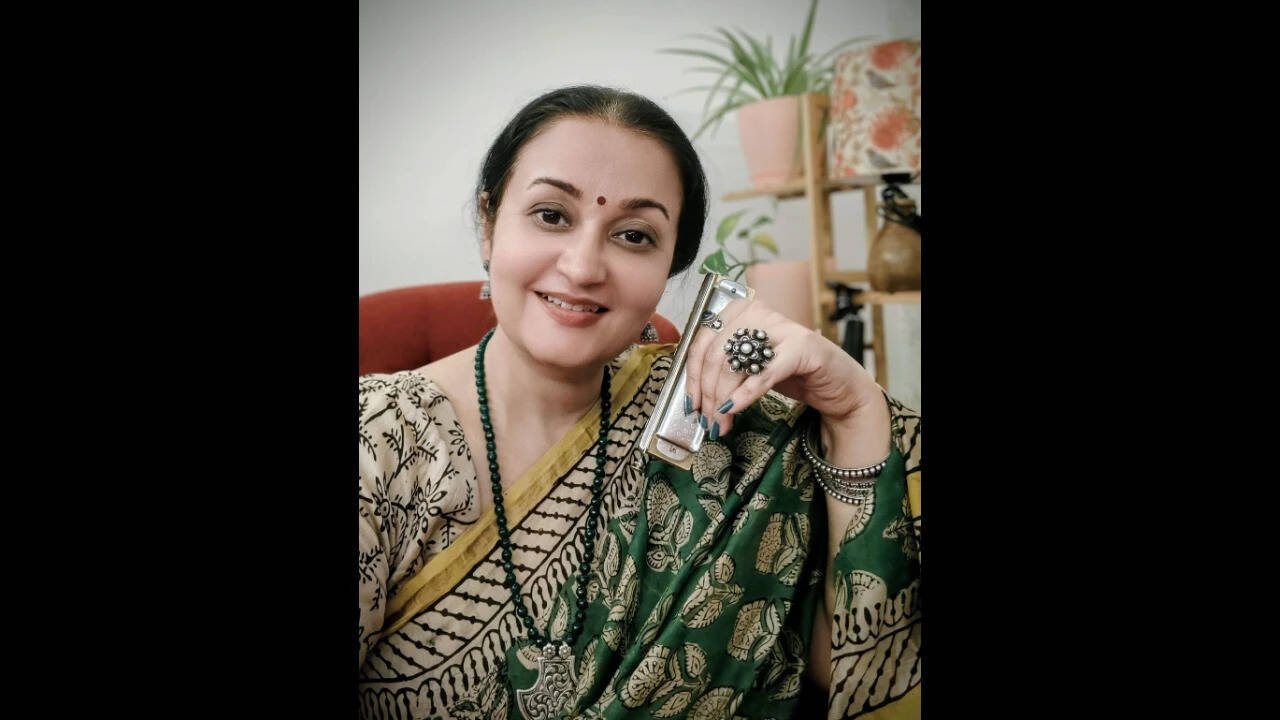




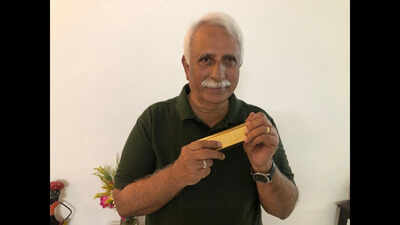
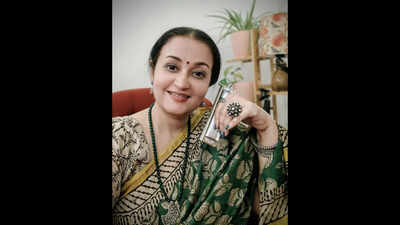
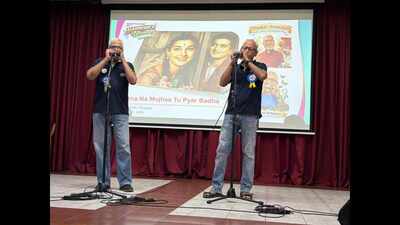
Divya Kumawat, 48, adds her own magic to ‘Do Dil Mil Rahe Hain,’ Kumar Sanu’s soulful hit, and her rendition transports her fellow members of the Bangalore Harmonica Club to another time. The mood turns even warmer when she plays the Sholay hit, ‘Ye Dosti Hum Nahi Todenge,’ sung by Manna Dey and Kishore Kumar. The predominantly older audience smiles, sings along, and reconnects with cherished memories.For Kumawat, the harmonica is more than music. A hobby singer, she now identifies more as a harmonica player. She discovered a renewed sense of self through the instrument and has spent the past six years honing her skills. “My knowledge of notes from singing helped me a lot,” says Kumawat, who is a psychologist and therapist.She chose the instrument partly for its simplicity. Compact, self-contained and requiring no accompaniment, the harmonica can travel wherever she goes. Yet its appeal goes beyond convenience. Kumawat is the only woman in the Bangalore Harmonica Club, and believes cultural perceptions, including portrayals of men playing the instrument in films, have contributed to the harmonica being seen largely as a male-dominated instrument.For members of the Bangalore Harmonica Club, the instrument is a way to keep music,m e m o r i e s , f r i e n d s h i p s and a sense of purpose alive, well into later life. The club informally came into existence in 2008 when founder members met at Cubbon Park on Sundays. The formal club was formed in 2012. And now it brings together 36 harmonica enthusiasts who meet mostly once every month on a Sunday. Retired computer teacher Ashok Sengupta, 61, says the club was born from a shared desire to bring harmonica players together. Meetings typically last two hours, combining discussions about upcoming events with practice and performances.“We handhold newcomers and give them tips to play harmonica,” says Sengupta. Members learn from one another, while additional rehearsals are held before special performances. Each month, they also pay tribute to a singer or composer, with film music forming an important part of their repertoire. Retired Isro scientist Krishna Prasad Anur and Kiran Mandanna mentor club members who want to learn harmonica.The club’s activities have grown steadily. Its first harmonica festival was held at Ravindra Kala Kshetra in 2013, and members have since performed across the country. Its online presence has also attracted a large audience. “Two of the performances by Anur got over 1 million views. There are quite a few performances that garnered over 5 lakh views,” says Sengupta, who oversees the club’s social media, including its Facebook page that has over 48,000 followers.For Raja Rao, 96, harmonica is both music and meditation. A member of the club for years, he has pursued the hobby since 1956. “While playing harmonica, you do pranayama and meditation simultaneously,” says the nonagenarian, who plays Hindi, Kannada and English songs, and believes the practice has helped strengthen his lungs.The club’s members are not limited to film melodies. Carnatic classical music also finds a place in its repertoire. In 2023, Hamsanada Foundation, in collaboration with the harmonica club hosted the 10th Indian Mouth Organ Players’ Meet, drawing more than 250 delegates from over 18 states.Experimenting With SoundFor some members, the harmonica is also an instrument of experimentation. Anand Godbole, 48, originally from Soraba, Shivamogga, discovered it during the pandemic after being inspired by his school physical education teacher, Wilson J Audin. He taught himself through online tutorials, and now has more than 250 performances on his YouTube channel covering Hindi, Kannada, Malayalam, Telugu and English songs.Giridhar Kamesh, a harmonica player from Hebbal, took a different route. Having learnt classical music in childhood, he progressed from a simple harmonica to diatonic, tremolo and eventually a chromatic harmonica, which, he says, opened up a wider range of musical possibilities, including classical compositions.After retiring, he revived his musical interests and began experimenting with an electronic harmonica. One such instrument, a rare handmade model requiring software on a computer, took him two and-a-half years to master.Music That Connects GenerationsFor Kiran Mandanna, 75, the harmonica has been a lifelong companion. His collection includes 15 instruments, each with its own sound and character. He learnt to play around the age of 10, inspired by a family friend.With no formal training, he taught himself by listening to Bollywood songs. The radio programme, ‘Binaca Geet Mala’, became an important source of his musical education. Even today, he spends about an hour a day playing, and listens to classic Hindi film songs. “Every night, before going to bed, I listen to classic Hindi film songs. They reconnect me with my childhood and youth,” he says.That connection with memory is central to the club’s appeal. Many performances are aimed at senior citizens, whose faces light up when familiar melodies transport them to their younger days. “Most of my performances are dedicated to senior citizens because these melodies take them back to their younger days,” says Mandanna. “Watching them smile,hum along, and relive those moments gives me immense satisfaction.”Sengupta says the club offers something equally important: companionship and purpose, particularly in later life. “We motivate them to restart their lives and enjoy it fully by engaging in music, laughter and lifestyle resets,” he says.The club also organises charity events, including programmes at the Bubbles School of Autism, and members continue to plan outings and performances together.The club has seen many individuals rekindle their musical passion with harmonica in their twilight years. Diwakar Srinivasan and Sheshadri Ramakrishnan discovered their passion much later in life. Kaushik Mukherjee, former chief secretary of Karnataka, and Lt Col Ramesh Ramaiah are active members of the club. All of them except Sheshadri are in their 70s.Then there is Naveen Shanbhag, the youngest member of the club. The 47-year-old loves to play Hindi, Marathi, and English songs on harmonica. Though most of the members of the group are senior citizens, the club welcomes young members whole-heartedly. “The present governing council members are youngsters,” says Mandanna, adding members play a group song in most of their meetings.………………………………………………………………………………………………………………………………..Building Bonds With TunesFor Kumawat, the greatest reward is the community she has found through an instrument she once simply wanted to learn. “Playing the harmonica has fostered a profound sense of community amongst us,” she says. “As a self-taught artist, I feel blessed to be part of this community, which is almost like a family.”In the hands of the club’s players, the harmonica is more than a mouth organ. It is a bridge to memory, friendship and self-expression and, for many, a reminder that it is never too late to begin again.