









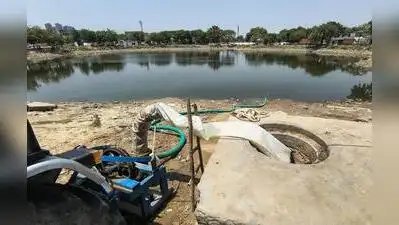
Gurgaon: Three piers of Gurgaon metro corridor are planned along the edge of Basai pond, with 20.9 square metres of land required for their construction, according to a response by GMRL to an RTI application. The proposal has raised concerns over safeguards for a traditional waterbody already facing multiple ecological pressures.The RTI, filed by Aseem Takyar and answered by GMRL public relations officer Mukesh Rawat on Aug 19, sought details of ponds, johads, lakes, wetlands, drains and natural streams within 500 metres of the proposed alignment, stations and depot. In its response, GMRL said the three piers would be constructed at the pond’s edge and that “only the edge of the Basai pond will be affected.” It classified the impact as temporary, adding that no waterbody would be permanently affected by construction of the corridor.GMRL said its Environmental and Social Impact Assessment (ESIA) examined Valued Environmental Components within 100 metres of the proposed alignment and stations, and identified Basai pond within this zone, along with two streams or nalas near Ashok Vihar and Cyber City. It said the metro project does not fall under Environmental Impact Assessment Notification, 2006, and therefore does not require statutory environmental clearance, though a detailed ESIA had nevertheless been carried out in line with practices generally followed for metro projects.Environmentalists disputed GMRL’s framing of the impact as temporary. “There is no such thing as temporarily affecting a waterbody,” said environmentalist Vaishali Rana, questioning how the pond’s edge would be protected in the absence of a buffer.Ecologist Sunil Harsan said the intervention could compound existing stress on the pond. “The waterbody is already affected and such work will affect it more. Restoration can’t happen naturally. The waterbody edge is very crucial for the waterbody’s existence. Catchment is the most important,” he said.The RTI response identifies the affected location in Basai village but does not separately demarcate the recorded pond area from the land proposed for the three piers.The proposed construction comes as Basai pond already faces sewage inflows, solid waste, livestock pressure and invasive vegetation. An independent seven-day assessment conducted in May by environmental researcher Gaurav Kumar recorded six fish mortality incidents across the pond, while water temperatures reached 32.5°C and pH levels peaked at 9.3. The study also found that 40-50 cattle and buffaloes enter the pond daily, and that invasive Congress grass occupies an estimated 70-80% of its perimeter.Kumar said the pond’s ecological importance has grown as the larger Basai wetland has disappeared. “What remains is Basai village Johad, a small community pond that now serves as one of the last open water sources in this landscape. The birds that once had access to hundreds of acres of wetland habitat are increasingly dependent on this remaining waterbody. Protecting and restoring this pond is no longer only about a village waterbody, it is about safeguarding the last refuge for biodiversity in a landscape that has already lost so much,” he said.