






Over the last nine years, Lalitpur district has undergone a significant transformation, emerging from the traditional challenges of water scarcity, weak connectivity, limited industrial activity and dependence on agriculture towards a more diversified development model. Located in the Bundelkhand region of Uttar Pradesh bordering Madhya Prades, Lalitpur has benefited from a sustained focus on irrigation, drinking water, infrastructure, healthcare, renewable energy, handicrafts and rural livelihoods. The transformation is particularly significant because development in Lalitpur directly addresses the structural problems that have historically constrained Bundelkhand.
Water security and irrigation
Water scarcity has traditionally been Lalitpur’s biggest development challenge. Consequently, irrigation and water conservation have been at the heart of the district’s development strategy. Major irrigation projects in Bundelkhand have sought to expand assured irrigation and reduce dependence on erratic rainfall.The Arjun Sahayak Project and other associated irrigation works have been particularly important. The wider group of Bundelkhand irrigation projects, including Arjun Sahayak, Ratauli Weir, Bhaoni Dam and Majhgaon-Chilli, is expected to provide irrigation to around 65,000 hectares in the region. The long-term impact is substantial: assured irrigation can enable farmers to shift from subsistence cultivation towards higher-value and more diversified agriculture.The Ken-Betwa River Linking Project represents another major opportunity. It is expected to provide irrigation to around 2.51 lakh hectares across Bundelkhand districts, including Lalitpur, while also improving drinking-water availability. These projects represent a fundamental shift in strategy—from managing recurring drought conditions to building permanent water-security infrastructure.
Har Ghar Jal and rural transformation
The Jal Jeevan Mission has added another important dimension to Lalitpur’s development. Rural drinking-water projects are expanding household tap-water coverage and reducing dependence on traditional sources. For rural families, reliable piped water means improved convenience, hygiene and health. It also reduces the burden of water collection, particularly for women.Together, irrigation and household water infrastructure are helping address two different dimensions of the district’s water challenge: water for productive agriculture and safe water for households.
Healthcare and medical education
Healthcare infrastructure has also expanded significantly. The development of the Government Medical College in Lalitpur is among the most important changes of recent years. In June 2026, the state government inaugurated and laid the foundation stones for 221 development projects worth approximately Rs 1,766 crore in the district, with healthcare infrastructure among the prominent components.A medical college can transform the district’s healthcare ecosystem. Besides providing access to specialist treatment, it creates opportunities for medical education, nursing and allied-health training, diagnostics, pharmaceuticals and related services. For a district that historically depended on larger urban centres for advanced healthcare, this represents a major improvement in local capacity.
Better connectivity
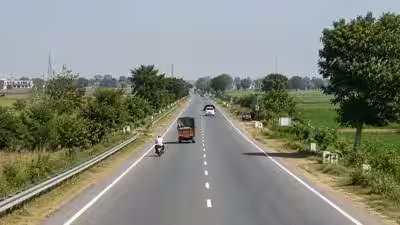
Improved connectivity is another defining feature of Lalitpur’s transformation. Road development has improved links between villages, towns, markets and neighbouring districts, while railway infrastructure is being strengthened.The Lalitpur-Birari railway doubling/flyover project is an important example of investment in rail infrastructure. Improved rail capacity can strengthen passenger connectivity as well as the movement of agricultural and industrial goods.The proposed development and expansion of Lalitpur Airport could further alter the district’s economic prospects. Better multimodal connectivity would make it easier for businesses, investors and tourists to reach Lalitpur and could reduce the geographical disadvantage traditionally faced by the district.
Lalitpur as an emerging energy hub
One of the most promising aspects of Lalitpur’s economic transformation is the emergence of the district as an energy centre. The proposed 600-MW Lalitpur Solar Park represents a major opportunity to position the district within Uttar Pradesh’s clean-energy economy. Bundelkhand has high solar potential, and large renewable-energy projects can generate investment, construction activity, employment and supporting services.Lalitpur already has a major thermal-power presence. A proposal to expand the Lalitpur Thermal Power Plant by another 2,400 MW would further strengthen the district’s position as an important power-generation centre.The combination of conventional power infrastructure and large-scale solar generation gives Lalitpur the potential to become a major energy hub while gradually increasing the contribution of renewable energy.
ODOP and traditional industries
Economic transformation has also extended to traditional crafts. The One District One Product programme has provided institutional support to Lalitpur’s traditional textile and handloom activities.Through training, toolkits, credit support, branding and market access, artisans are being connected with wider markets. District-level interventions have helped improve productivity and incomes among beneficiaries. The programme is important because it seeks to transform traditional craftsmanship from largely informal household activity into a viable component of the MSME economy.Lalitpur’s brass craft, particularly associated with Jakhora, also offers considerable potential. Linking handicrafts with tourism can create a complete local economic ecosystem in which visitors experience the district’s heritage while artisans gain access to new customers.
Rural housing, SHGs and livelihoods
The transformation is not restricted to large infrastructure projects. Rural welfare programmes have strengthened household-level economic security.The implementation of the Pradhan Mantri Awas Yojana-Gramin and Mukhyamantri Awas Yojana-Gramin has expanded access to ‘pucca’ houses. District-level data shows high completion rates for sanctioned rural housing projects. Self-help groups have also become an important instrument of rural economic empowerment. Greater access to bank credit and livelihood programmes enables women and rural households to undertake small businesses, livestock activities, food processing and other income-generating activities.MGNREGA continues to provide employment while also creating rural assets, including water-conservation infrastructure and other community works.
Agriculture and economic diversification
Agriculture remains central to Lalitpur’s economy, but the development trajectory is becoming increasingly diversified. Better irrigation can encourage crop diversification, while improved roads and connectivity can facilitate access to markets.The next major opportunity is to build an ecosystem around agro-processing, storage, cold chains, food processing and farmer-producer organisations. Such value addition can help farmers earn more from their produce rather than relying exclusively on the sale of raw agricultural commodities.At the same time, renewable energy, healthcare, handicrafts, tourism, construction and MSMEs are creating additional economic avenues.
Tourism and Bundelkhand identity
Lalitpur also possesses considerable tourism potential because of its historical, cultural and natural assets. Improved connectivity, heritage conservation and promotion of local crafts can help integrate the district into the wider Bundelkhand tourism circuit.The combination of historical sites, traditional crafts, rural landscapes and ecological attractions provides an opportunity to develop tourism based on heritage, culture and nature rather than relying on a single destination.The next phase should focus on converting infrastructure into large-scale employment and private investment through agro-processing, MSMEs, renewable-energy manufacturing, tourism and logistics.Lalitpur is therefore moving beyond its traditional image as a water-stressed agrarian district. With improving water security, expanding infrastructure, stronger healthcare and education facilities, traditional industries and major energy investments, it has the potential to become one of the important emerging growth centres of Bundelkhand and an increasingly integrated part of Uttar Pradesh’s wider economic transformation.