






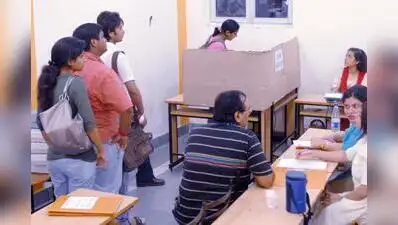
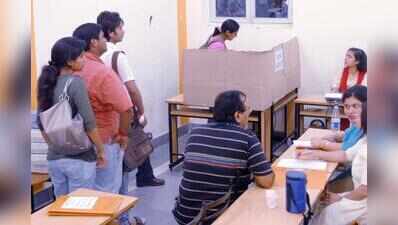
Bengaluru: As the country was swept up in the CJP’s protests recently, Bengaluru remained largely subdued. While Freedom Park —the city’s only designated venue for protests — witnessed spirited demonstrations, they lacked the scale and intensity seen in New Delhi, Patna and other cities.The silence on Karnataka’s campuses has deeper roots. It dates back 37 years, when the state govt banned campus politics in higher educational institutions. In 1989, the then Congress govt, led by chief minister Veerendra Patil, ended campus politics amid concerns over violence, political interference and disruption to academics. Though intended as a temporary measure, the ban continued for three-and-a-half decades. Elected student unions were replaced by nominated or advisory councils with little power, often existing largely in name.But prior to the ban, Karnataka’s higher educational institutions had vibrant campus cultures. Even before electronic voting machines (EVMs) were used in assembly elections, the technology was piloted in student elections at MES College in Bengaluru.Campuses at Mysore University, Karnatak University in Dharwad and Bangalore University once thrived on political and social discourse. Students debated land reforms, linguistic identity, social justice and reservation, while unions represented students before administrations and took up issues such as hostels, scholarships, transport, exams and the concerns of marginalised students. But by the late 1970s and early 1980s, things changed. Political groups gained ground on campuses, and university elections increasingly mirrored rivalries outside. Candidates received backing and funding from political parties, while outsiders and anti-social elements entered campuses. Many candidates were also barely engaged with academics.At the same time, ideological and caste divisions deepened, triggering clashes and violence. Police became regular fixtures on campuses, academic calendars were disrupted, and managements struggled to maintain order and discipline. It was against this backdrop that the govt decided to put an end to campus elections.But now, the Congress government, which itself faces a dearth of youth leaders, decided to reintroduce campus elections. In Dec 27, DK Shivakumar, deputy chief minister at the time, formed an 11-member high-power committee under the chairmanship of medical education minister Sharan Prakash Patil, asking them to submit a report on the same.The committee has recommended reintroducing student elections. “Student elections are important because they nurture leadership and give natural leaders a pathway into public life. Democracy must also be ingrained early. When students elect their representatives, they learn to stand up for their rights and interests. Otherwise, politics risks becoming the preserve of political families and the wealthy. Leadership should not be limited to those born into privilege,” said Patil.“However, we will not allow political interference. Students must contest elections independently, without the backing of any political party. Candidates must also be regular students of the college,” he added.The proposal is expected to be cleared by the cabinet at its next meeting and rolled out in the current academic year.Ashwathnarayan CN, BJP MLA and for higher education minister, said while initiating student elections is welcome, it should not allow politicisation and remain neutral.Political observer Sandeep Shastri said student politics is welcome as long as it does not compromise academic quality. However, he rejected any link between the subdued response to the CJP protests in Bengaluru and the absence of campus politics.“I wouldn’t subscribe to the argument that the CJP movement lacked traction in the state because we don’t have campus politics. They are two different issues. Protests by the younger generation in Bengaluru are generally low-key. The movement gained traction mainly in states where the party in power at the Centre was also in power in the state,” he said.QUotesAbhinandan Mirji, Mahanagara Secretary, Akhil Bharatiya Vidyarthi Parishad, BengaluruElected student bodies will strengthen student representation and help nurture future leaders. But political parties should not use campus elections to push their ideologies or bring political leaders onto campuses. There must be safeguards for fair elections, including a cap on campaign spending. The election process should also be time-bound so that regular classes are not disruptedKhalif Belthangady, political strategistThe impact of the absence of student leaders is evident in the state’s political leadership. Karnataka’s current and several former chief ministers have roots in campus politics. With student unions absent for decades, we are increasingly seeing nepotism in politics. Where will new political leaders emerge from if there are no student elections?Aratrika Dey, All India Students’ AssociationAISA is active in several colleges across Bengaluru and Karnataka, but we are not allowed to organise protests on university campuses. Students from marginalised communities continue to face discrimination. Elected student unions are needed to address these issues, not just in govt but also private colleges. Currently, student councils are largely chosen on faculty recommendations, making them less able to raise students’ concerns