








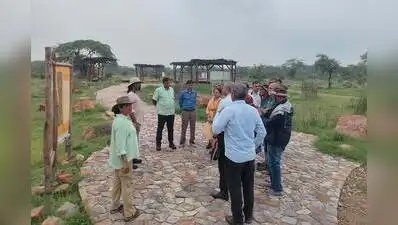
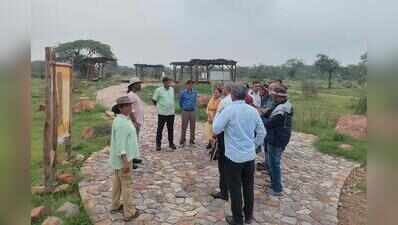


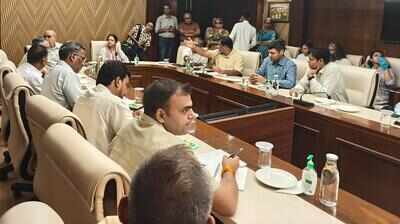
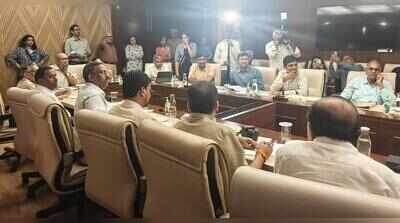
Gurgaon: The Supreme Court-appointed high-powered committee (HPC) examining Aravalis has been urged to expand the definition of the range and strengthen protection of its hills, foothills, valleys, vegetation and water bodies.The views were expressed during consultations with the panel in the city, which is examining issues relating to the definition, delineation and protection of Aravali hills and ranges.The consultations have brought out competing demands over the future of Aravalis, with environmentalists and local residents seeking greater participation in the consultation process.The five-member HPC is headed by Kanchan Devi, the director general of Indian Council of Forestry Research and Education. Devi said, “We are noting down all concerns and will present it to SC. We are here to listen to all stakeholders and carefully analyse the situation. We visited several areas in Aravalis.”The panel has been seeking inputs from a wide range of stakeholders, including environmentalists, conservationists, mining leaseholders, villagers, farmers, mine workers and local communities. It is required to submit its comprehensive report to SC by Aug 31.Mining stakeholders, however, argued that extraction of rare and important minerals should not be ruled out and that Haryana could consider allowing mining under conditions similar to those followed in Rajasthan.Forest analyst Chetan Agarwal said, “The exercise to define the Aravalis cannot be reduced to a single height criterion. The Forest Survey of India’s approach looks at the geomorphology of the range, including slope, foothills and the relationship between adjoining hills. That is important because a large part of the Aravalis consists of low-lying hills which are ecologically significant. Any new definition should expand protection, not take away areas that are already protected. If an area meets the new scientific definition but falls outside the existing legal framework, it should receive additional protection rather than becoming vulnerable to mining or construction. The Aravalis are not just hills on a map. They function as a barrier against desertification, recharge groundwater and provide some of the last remaining wildlife habitats in this region. Haryana has only about 3.6% forest cover, which makes protecting its Aravali landscape even more critical.”A key concern raised during the consultation was the limited participation of rural communities. Naresh Chaudhary, a villager from Kotputli in Rajasthan, said, “Rural districts had not been adequately consulted despite being among the stakeholders most directly affected by decisions concerning the Aravalis. Limited internet access in rural areas could make an online consultation inadequate and process needed greater representation from affected communities.”Several residents from Mangar, Anangpur and Damdama suggested that the panel should visit affected areas and interact with local experts and stakeholders to understand ground-level conditions. Several others agreed that the consultation needed to be more inclusive and structured.The participants compared the process with Western Ghats Ecology Expert Panel, saying its exercise had involved 40 consultations with civil society groups, eight with govt agencies, seven brainstorming sessions and 14 field visits.According to the participant, it involved preparation of 71 local, state and thematic plans through a process involving thousands of people, including rural communities.The need for a broader approach to defining Aravalis was also stressed during the consultation.Former PCCF of Rajasthan RN Mehrotra said, “Alternative building material needs to be explored so that mining pressure on Aravalis will be less. Since people need more roads and more houses, that is the reason this debate on definition has started.”Sunil Harsana, an ecologist, said, “In Haryana, gair mumkin pahar are addressed as Aravalis and this should be included as the definition. Also, rare vegetation, plants, waterbodies can be also taken into account as definition of Aravalis as they are part of the ecosystem.”Ecologist Vijay Dhasmana said, “We need to understand that Aravalis are formation of rocks and 50% of the Aravalis have already gone. We need to protect what is left.”Environmentalists also pointed out that Aravalis are interconnected and cannot be defined by height or slope alone. Valleys and foothills, they said, are equally important parts of the Aravali ecosystem.“Aravalis are ecosystem not isolated hills. They are under the earth and above as well. Mining should not be allowed in Aravalis and 99% of the hills ranges need protection,” said SS Oberoi, petitioner in the case.The consultation also brought into focus the contentious question of mining in Aravalis, with mining stakeholders arguing that the need for important minerals must be considered while framing any regulatory regime.A mining stakeholder, RS Yadav, geologist, said, “Minerals which are rare and important for the economy require extraction and that mining should not be completely excluded from the discussion. Instead, govt should explore regulated mining subject to environmental safeguards and local conditions.”Gopal Sharan Garg, another mining stakeholder, said, “In Rajasthan mining is permitted in parts of the Aravali region and that similar conditions could potentially be considered for Haryana.”The argument was that a regulated framework could address the requirement for minerals while imposing safeguards to protect ecologically sensitive areas. Garg also highlighted the economic benefits of mining, including employment and infrastructure development.The discussion also touched upon the possibility of importing minerals and govt’s role in ensuring that mineral requirements are met through environmentally responsible means.Gagandeep Singh, involved in mining, said, a balance path needs to be figured out for both mining and environment sustainability.Environmental concerns nevertheless remained central to the discussion. Participants referred to SC restrictions concerning mining near water sources and notified areas under Punjab Land Preservation Act and stressed the need to prevent irreversible ecological damage.The cultural importance of Aravalis was also highlighted. “Aravalis is home to paleolithic stone age ancient paintings and other heritage associated with protected areas. We need conservation efforts needed to involve local communities and be backed by stronger regulation,” said Chandramouli Basu, resident of Gurgaon.While environmentalists and local residents are seeking wider protection and greater participation in decision-making, mining stakeholders have argued for regulated extraction of important minerals under appropriate safeguards.HPC has already begun field surveys of Aravalis. Earlier this month, it visited Mangar Bani in Haryana, where members highlighted the need for stronger legal protection for the ecologically significant area. The panel’s field exercise is aimed at assessing the ecological and legal boundaries of the range and is expected to inform its recommendations on conservation, mining and development.Meanwhile, Aravali Bachao Citizens Movement has proposed the creation of an ‘Aravali Biosphere Reserve’ spread across approximately 1,43,577 sq km across multiple states, arguing that protection should take a landscape-level approach covering the hills, valleys, rivers, streams, aquifers, biodiversity and human health. In its submission to HPC, the group opposed a narrow legislative or judicial definition of Aravalis and said tribal and biodiversity protection should not take a back seat in the name of “sustainable mining”.