










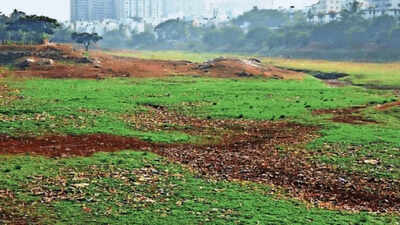
BENGALURU: With temperatures in Bengaluru crossing 35°C over the past week, several lakes across the city have dried up completely, while others have seen water levels drop by as much as 4-5 feet. While this may appear alarming amid concerns of a looming water crisis, lake activists say the phenomenon is natural — and, in fact, an opportunity to restore the city’s waterbodies.Activists point out most lakes in Bengaluru are seasonal, not perennial, and are expected to dry up during peak summer. They argue this annual cycle plays a crucial role in maintaining ecological balance, allowing lakes to reset before the monsoon refills them. Raghavendra Pacchapur, a lake activist from south Bengaluru, said, “Lake drying in summer is a natural ecological reset, but what we are seeing now is concerning because urban pressures and poor maintenance are compounding the problem. This is the best time to remove plastic and waste from lake beds — once the monsoon arrives, that opportunity is lost.”Echoing similar views, Ram Prasad from Friends of Lake said, “The real problem is when we artificially keep lakes filled, which leads to pollution and even ‘dead lakes’.”Balaji Raghotham, another lake activist from east part of the city, said, “In the eastern parts of the city, lake water levels have dropped by nearly 8 to 9 feet. While water in lakes is crucial for groundwater recharge, this process gets affected if silt is not cleared regularly from the lake bed. Summer is the right time to take up desilting, as it improves percolation once the rains arrive. At the same time, developing wetlands around lakes is equally important, as they support the ecosystem and help lakes function more sustainably.“Abhijit, a resident of Kasturi Nagar, added, “When the lake bed dries and gets exposed to sunlight, it helps break down contamination and improves the lake’s ability to recharge during rains. While traditionally this silt would benefit farmers, in Bengaluru, there is a concern that sewage contamination may limit its safe use.”Experts also caution against artificially maintaining water levels in lakes through treated water inflow, noting it can disrupt natural cycles and accelerate pollution if not properly managed. Allowing treated water can also affect the quality of soil/silt on the lake bed, which can’t be used for farming. No civic official to oversee lake management?During the erstwhile Bruhat Bengaluru Mahanagara Palike (BBMP), there was a dedicated lakes department with a commissioner and a specialised team overseeing lake management and related works across the city. Following the formation of Greater Bengaluru Authority, responsibility for lakes has been decentralised to individual city corporations. However, with no separate department exclusively handling lakes now, residents have to rely on their respective corporation helpline numbers to raise complaints or report issues related to lake maintenance.