









For decades, Uttar Pradesh was often described as a state of immense potential but unrealized opportunities. Blessed with India’s largest population, fertile agricultural land, a rich cultural heritage, and a strategic location in northern India, the state nevertheless struggled with inadequate infrastructure, poor industrialization, weak investment sentiment, and limited employment opportunities. Economic growth remained below its potential, and despite its size, Uttar Pradesh contributed less to India’s economy than its resources suggested it could.The last nine years with Yogi Adityanath as chief minister, however, have marked a significant shift in this narrative. Uttar Pradesh has embarked on an ambitious journey of economic transformation, driven by large-scale infrastructure creation, governance reforms, industrial expansion, agricultural modernization, urban development, and an improving investment climate. The result has been one of the fastest economic expansions among India’s major states.The numbers tell a compelling story. Uttar Pradesh’s Gross State Domestic Product (GSDP), measured at current prices, stood at approximately Rs 13.30 lakh crore in 2016–17. By 2025–26, it is projected to reach around rs 36 lakh crore, while the 2026–27 Budget Estimate places it at nearly Rs 39.8 lakh crore. In effect, the state’s economy has almost tripled within a decade—a remarkable achievement for India’s most populous state.Yet these numbers represent much more than statistical growth. They reflect a broad-based transformation touching nearly every sector of the economy and reshaping how the state is perceived by investors, citizens, and policymakers alike.
Building the infrastructure
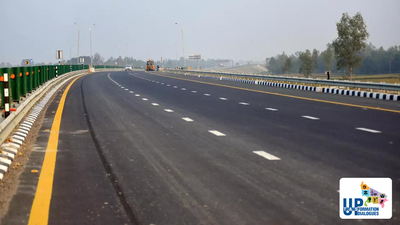
Infrastructure has emerged as the single biggest catalyst behind Uttar Pradesh’s economic rise. Since 2017, the state has invested heavily in expressways, airports, logistics infrastructure, industrial corridors, metro rail systems, urban mobility, and power generation. This unprecedented expansion has fundamentally changed the geography of economic opportunity.The Purvanchal Expressway, Bundelkhand Expressway, Gorakhpur Link Expressway, Ganga Expressway, Agra-Lucknow Expressway, Yamuna Expressway, and Lucknow-Kanpur Expressway have together created one of India’s largest expressway networks. It is because of these Expressways, the state of UP is described as ‘Expressway State’ . Travel times have reduced dramatically. Freight movement has become faster. Industrial clusters have become more accessible. Agricultural produce reaches markets more quickly. Logistics costs have fallen.For investors, improved connectivity has reduced the cost of doing business while opening previously underdeveloped districts to manufacturing and services. Airports in smaller cities and the expansion of existing ones have further integrated remote regions into the national economic mainstream, making Uttar Pradesh a more coherent and competitive economic unit than ever before.
Social climate in UP made conducive to investment
Economic expansion cannot occur without investment. Over the past nine years, Uttar Pradesh has focused on creating an investor-friendly ecosystem through policy reforms, digital governance, faster approvals, improved law and order, and proactive investment promotion.The Global Investors Summit attracted investment proposals worth tens of lakh crores across manufacturing, renewable energy, food processing, logistics, data centres, pharmaceuticals, textiles, electronics, tourism, and defence manufacturing. Although investment proposals do not immediately translate into completed projects, thousands of projects have already moved into implementation, creating employment and expanding productive capacity.Industrial parks, plug-and-play infrastructure, land banks, and sector-specific policies have further strengthened investor confidence. Today, Uttar Pradesh is no longer viewed merely as a large consumer market but increasingly as a preferred manufacturing destination capable of competing with more established industrial states.
Manufacturing sector boosted
Industrial development has become one of the defining features of Uttar Pradesh’s changing economy. Electronics manufacturing has expanded rapidly, particularly in the Noida-Greater Noida-Yamuna Expressway region, where global mobile phone manufacturers and component suppliers have established large facilities.The defence industrial ecosystem is also taking shape under the Uttar Pradesh Defence Industrial Corridor, with six nodes at Lucknow, Kanpur, Jhansi, Aligarh, Agra and Chitrakoot. Textiles, leather, food processing, engineering goods, chemicals, pharmaceuticals, renewable energy equipment, and MSMEs have also witnessed significant expansion.The state’s manufacturing ambitions have been supported by improved logistics, stable electricity supply, simplified approvals, and focused industrial policies. As manufacturing expands, it generates employment not only inside factories but also across transportation, warehousing, construction, hospitality, and services, creating a wider economic multiplier.
MSMEs: The foundation of growth
Micro, Small and Medium Enterprises remain central to Uttar Pradesh’s economy. The One District One Product (ODOP) initiative has revived traditional industries while helping artisans access modern markets, technology, branding, packaging, and exports.From Bhadohi carpets and Moradabad brassware to Lucknow chikankari, Mau textiles, Kannauj perfumes, Saharanpur woodcraft, and Banarasi silk, traditional industries have received renewed attention. Digital marketing, e-commerce integration, export facilitation, design support, and easier credit have helped many enterprises become globally competitive.The MSME sector now contributes significantly to employment generation while supporting rural industrialization and preserving the state’s rich craft heritage in a commercially viable form.
Agriculture a powerful growth engine
Although industrialization has accelerated, agriculture continues to play a vital role in Uttar Pradesh’s economy. The state remains India’s largest producer of several food grains, sugarcane, potatoes, milk, and horticultural crops.Government efforts have focused on irrigation expansion, mechanization, crop diversification, farmer welfare schemes, food processing, and market access. Commercial cultivation of fruits, vegetables, medicinal plants, dragon fruit, and floriculture has expanded in several districts. Ethanol production based on sugarcane has opened new income opportunities while strengthening the sugar economy.Improved rural roads and expressways have reduced transportation costs and enabled farmers to access larger markets. The integration of agriculture with processing industries has added value across the supply chain, moving the sector beyond pure production toward higher-value activities.
Urban centres
Urbanization has accelerated across Uttar Pradesh. Cities such as Lucknow, Kanpur, Noida, Greater Noida, Ghaziabad, Agra, Varanasi, Prayagraj and Gorakhpur have witnessed significant investment in roads, metro systems, housing, water supply, sewage treatment, digital governance, and public transport.New municipal corporations and expanding urban local bodies have created fresh opportunities for infrastructure investment and economic activity. Housing construction, commercial real estate, retail, hospitality, education, healthcare, and financial services have expanded alongside urban growth. The state’s cities are increasingly emerging as centres of innovation, entrepreneurship, and knowledge-based services.Law and Order Strengthens Investors ConfidenceEconomic development requires stability. One of the most frequently cited improvements by investors has been the strengthening of law and order. Measures aimed at faster policing, technology-driven crime monitoring, improved prosecution, anti-mafia action, and initiatives such as Operation Conviction have sought to create a safer business environment.Improved security encourages industrial investment, tourism, commercial activity, and urban development. While challenges remain, enhanced governance has contributed positively to investor confidence and everyday economic life.Public Investment The game ChangerCapital expenditure by the state government has increased substantially during the past nine years. Large investments in roads, bridges, airports, irrigation projects, medical colleges, educational institutions, urban infrastructure, power transmission, and digital governance have created significant multiplier effects.Construction activity has generated employment while improving long-term productivity. Infrastructure spending also stimulates demand for steel, cement, engineering products, transport, and services, creating benefits across multiple sectors of the economy.Tourism a New Economic ForceTourism has become an increasingly important contributor to Uttar Pradesh’s economy. Religious tourism has expanded dramatically following the development of Ayodhya, Kashi, Prayagraj, Mathura, Vrindavan, Chitrakoot, Vindhyachal, Naimisharanya, Kushinagar, and Shravasti.Improved connectivity, beautification projects, airport expansion, heritage conservation, and hospitality investments have encouraged record visitor numbers. Tourism supports hotels, restaurants, transport operators, artisans, guides, handicrafts, retail businesses, and local employment. As visitor spending increases, the benefits spread throughout local economies, particularly in smaller towns and rural areas.Digital Governance Multiplied EfficiencyTechnology has become an important pillar of economic growth. Online approvals, digital land records, electronic procurement, direct benefit transfers, integrated service delivery, and digital monitoring systems have improved administrative efficiency.Businesses today complete many regulatory processes online that previously required multiple physical visits. Digital governance reduces transaction costs, increases transparency, and improves ease of doing business, making the state more attractive to both domestic and international investors.
Human capital
Economic growth ultimately depends upon people. The expansion of medical colleges, technical education, skill development programmes, engineering institutions, nursing colleges, industrial training institutes, and digital education initiatives has strengthened the state’s human capital.Skill development programmes aligned with industrial requirements have attempted to prepare young people for emerging sectors including electronics, logistics, healthcare, manufacturing, renewable energy, and information technology. Better health and education contribute to long-term productivity gains across the economy.Regional Balance Begins to ImproveHistorically, economic development in Uttar Pradesh remained concentrated in western districts. Recent investments have increasingly extended towards Purvanchal, Bundelkhand and other previously underdeveloped regions.Expressways, defence manufacturing, irrigation projects, industrial parks, airports, tourism infrastructure, medical colleges, and educational institutions have helped spread economic activity beyond traditional growth centres. Districts once considered economically backward are now attracting investment across multiple sectors, gradually reducing regional imbalances.The Road to a Trillion-Dollar EconomyThe Uttar Pradesh government has articulated an ambitious vision of transforming the state of about 25 crore people into a one-trillion-dollar economy over the coming years. Achieving this goal will require sustained high growth in manufacturing, agriculture, services, exports, tourism, logistics, renewable energy, digital innovation, and infrastructure.Continued reforms in governance, judicial efficiency, urban planning, skill development, and investment promotion will be essential. The momentum created during the past nine years provides a stronger foundation than ever before.The near tripling of Uttar Pradesh’s Gross State Domestic Product represents far more than a rise in economic output. It reflects a structural transformation in the state’s development model—from one driven largely by agriculture and consumption to one increasingly powered by infrastructure, manufacturing, services, logistics, tourism, and technology.Expressways now connect regions that were once isolated. Industrial corridors are attracting domestic and global investors. Traditional industries are finding new markets through the ODOP initiative. Farmers have better market access, cities are expanding rapidly, and digital governance is improving the ease of doing business.The journey is far from complete, and important challenges remain. Yet the economic trajectory of the past nine years suggests that Uttar Pradesh has moved decisively from being viewed as a state with untapped potential to becoming one of India’s principal engines of growth. If the current pace of reforms and investment continues, the state’s aspiration of becoming a trillion-dollar economy will appear increasingly achievable, cementing Uttar Pradesh’s role at the centre of India’s economic transformation.