









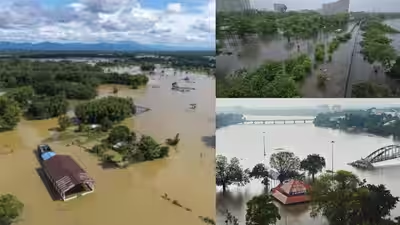
NEW DELHI: The southwest monsoon has triggered widespread devastation across Assam, Gujarat and Kerala, leaving more than 120 people dead and affecting lakhs of people. Assam was the worst-hit state, reporting the highest death toll and nearly 1.78 lakh people affected by floods. Gujarat faced severe flooding after heavy rainfall in July, while Kerala battled rain-induced landslides and flash floods.
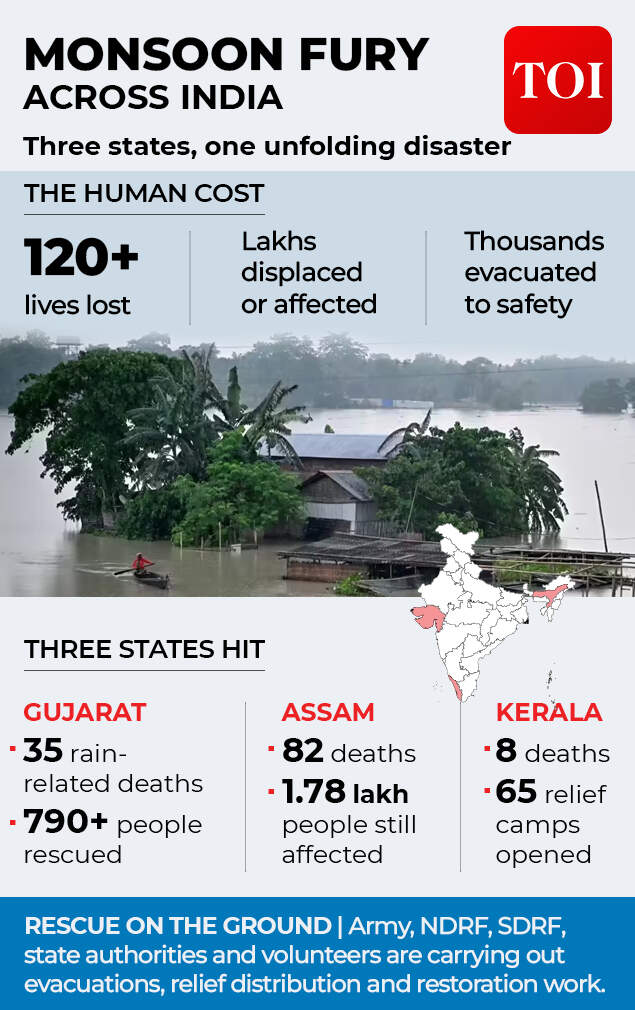
Moonsoon fury across India
Assam flood toll reaches 82, nearly 1.78 lakh affectedAssam witnessed widespread flooding as incessant rain and overflowing rivers inundated large parts of the state, leaving 82 people dead and affecting nearly 1.78 lakh people across seven districts.Although the flood situation has improved, with water levels receding in several areas, thousands of people remain displaced. Extensive damage has been reported to agriculture, infrastructure and public utilities.According to the Assam State Disaster Management Authority (ASDMA), the number of affected people has declined from over 1.92 lakh to around 1.78 lakh. However, 349 villages in Golaghat, Sivasagar, Charaideo, Jorhat, Bajali, Dhemaji and Sonitpur districts continue to remain affected.Charaideo is the worst-hit district, with more than 75,000 people affected, followed by Sivasagar, where over 58,000 residents continue to face the impact of the floods.
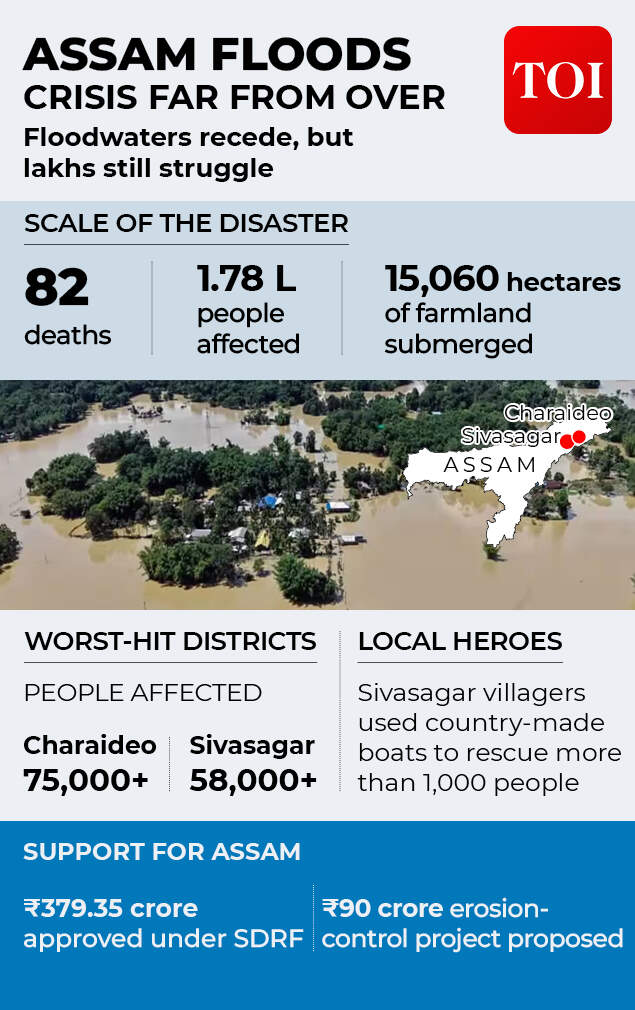
Assam floods
Nearly 15,060 hectares of agricultural land remain submerged, while thousands of livestock have been affected or washed away by floodwaters.Relief operations are continuing across the affected districts. The state government is operating 44 relief camps, providing shelter to around 15,000 displaced people. Another 17 relief distribution centres are supplying food and essential items to more than 5,500 people.Authorities have directed district administrations to identify affected families so that financial assistance can be released from August 3.One of the biggest rescue efforts was carried out by local residents in the Nepali Khuti area of Sivasagar district, where villagers used six country-made boats to rescue more than 1,000 people from five villages after floodwaters rose rapidly on July 19.Residents said many people were stranded on rooftops, raised platforms and trees as water levels continued to rise. Despite limited food and drinking water, volunteers continued rescue operations through the night and shifted stranded families to safer locations.Gujarat records 35 rain-related deaths as floods hit several districtsGujarat witnessed intense monsoon activity from July 21, with relentless rain lashing south and central parts of the state. The heavy rain caused rivers to overflow, flooded residential areas and forced thousands of people to leave their homes.The state reported 35 rain-related deaths in recent days, including 29 deaths in the worst-hit districts of Valsad and Navsari.
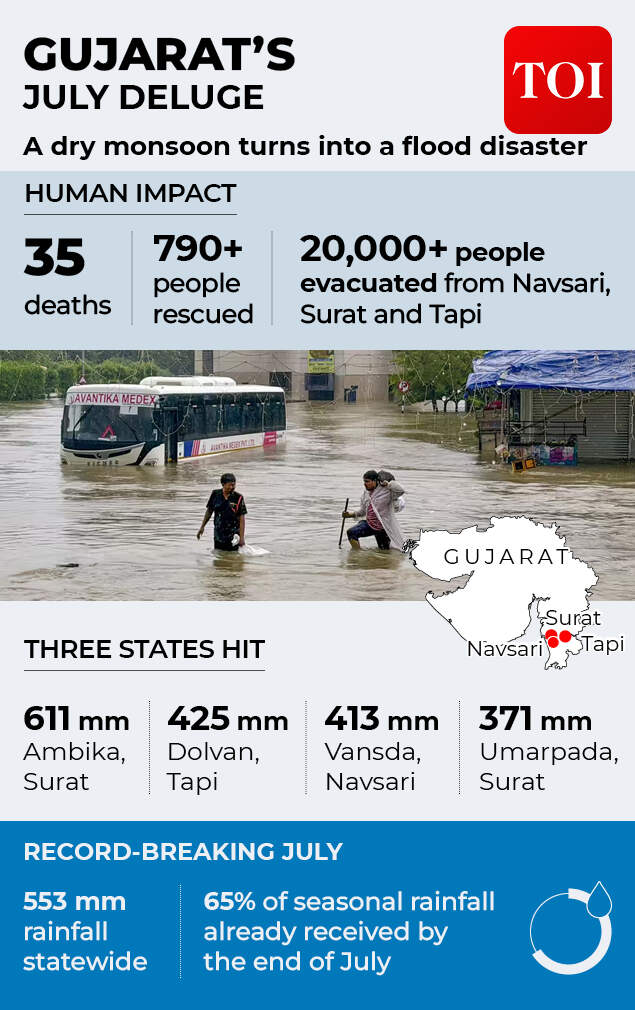
Gujarat july deluge
As the flood situation worsened, the Indian Army launched humanitarian assistance and disaster relief operations on July 23 to support rescue efforts. Army teams, along with the National Disaster Response Force (NDRF), the State Disaster Response Force (SDRF), the State Emergency Operations Centre (SEOC) and the civil administration, carried out rescue operations in Navsari, Valsad, Vapi, Silvassa and flood-affected areas of Ahmedabad, including Dholka and Rajoda.The joint operations rescued more than 790 stranded people from flooded and inaccessible areas. Medical teams provided immediate healthcare, while relief teams distributed food, drinking water and essential supplies to affected residents.Flooding intensified after rivers and creeks overflowed due to heavy rain and upstream inflows. The Kim river overflowed, inundating villages and agricultural land in Surat and Bharuch districts.Rescue teams evacuated workers trapped inside industrial units near Kim Cross Road after floodwater entered the Gujarat Industrial Development Corporation (GIDC) area.The Purna river also overflowed in Navsari, flooding low-lying residential areas and prompting evacuation operations. Authorities evacuated 11,590 people from Navsari, 1,567 from Tapi district and 7,311 from Surat as floodwaters spread.According to the State Emergency Operations Centre (SEOC), Gujarat received 553 mm of rainfall in July, the highest July rainfall in at least a decade. By the end of July, the state had received nearly 65% of its average seasonal rainfall.Kerala rain fury leaves 8 dead as landslides, floods hit stateKerala became the latest state to face the impact of the southwest monsoon, with heavy rain triggering landslides, flash floods, waterlogging and rough sea conditions across several districts.At least eight people died in separate rain-related incidents, while widespread damage to houses, roads and public infrastructure disrupted normal life. With heavy rain expected to continue, authorities remain on high alert as rescue and relief operations continue across the state.
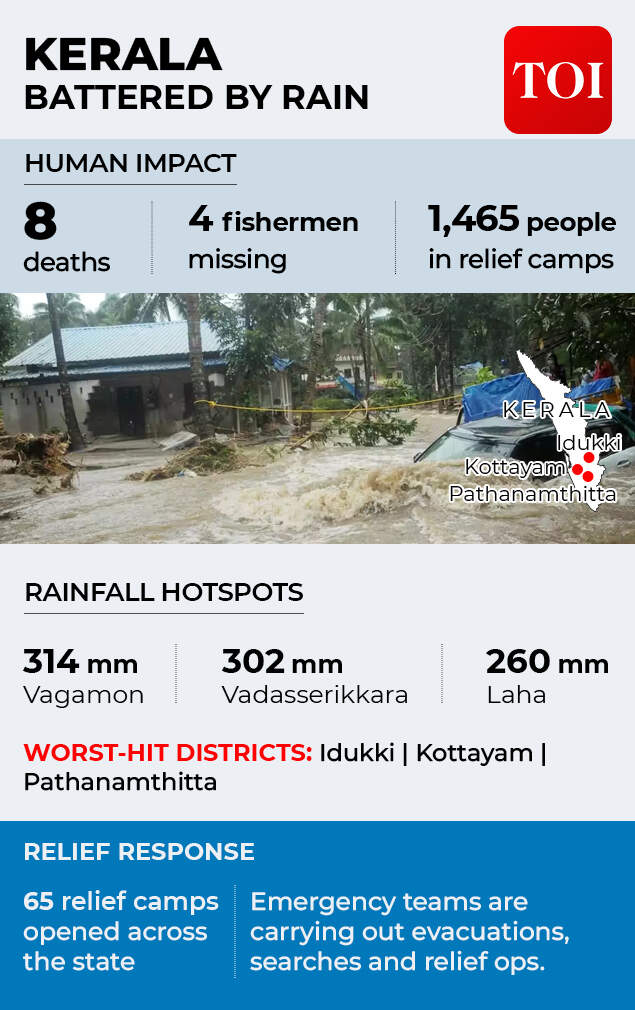
Kerala rain fury leaves 8 dead
The heavy rain triggered several landslides in Idukki district, damaging vehicles and disrupting traffic on the Kochi–Dhanushkodi National Highway near Chackochi Bend. Rising water levels also caused severe waterlogging along National Highway 183 near Vandiperiyar.In neighbouring Kottayam district, floodwaters inundated residential and commercial areas in Erattupetta, Kanjirappally, Koottickal, Erumeli and Pala.Several areas along the banks of the Pamba river in Pathanamthitta were cut off after water levels rose sharply, prompting rescue teams to deploy boats to evacuate stranded residents.Among those killed were a woman and her son after a landslide struck their house in Poonjar Thekkekara in Kottayam district.Separate landslides also claimed lives in Idukki and near Vagamon. An 11-year-old boy died after falling into a waterlogged pit near his house, while two young children drowned in separate incidents after being swept away by swollen water bodies. In Wayanad, a farmer died after being electrocuted while pumping water out of a pond.Search operations also continued for four fishermen who went missing after two boats capsized off the Thiruvananthapuram coast amid rough seas, strong winds and heavy rain. Several other fishermen were rescued.Heavy rain also caused flooding and minor landslides in Ernakulam, Thrissur, Kozhikode, Malappuram, Kannur, Kasaragod and Palakkad districts, disrupting transport and normal life in several areas.As reservoir levels continued to rise, authorities opened 14 of the 15 shutters of the Bhoothathankettu dam and also raised the shutters of the Malankara dam. A sluice gate of the Peringalkuthu dam was opened as a precaution following the steady rise in water levels.The continuing heavy rain also forced authorities to temporarily suspend visits to popular tourist destinations, including Athirappilly and Vazhachal, as a precautionary measure.According to the state government, 65 relief camps have been opened across Kerala, providing shelter to 1,465 people displaced by the rain.Officials said 17 houses were completely damaged, while another 127 suffered partial damage in rain-related incidents. Rescue and relief operations continue as authorities closely monitor the weather situation.