








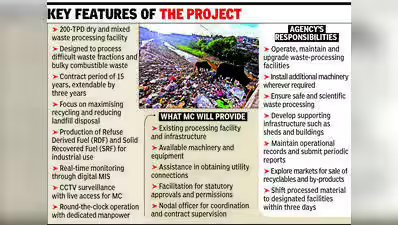
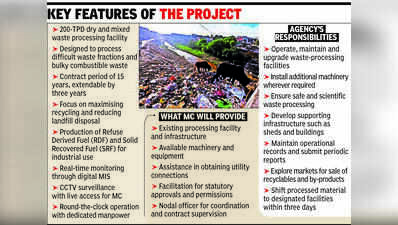
Chandigarh:In a first-of-its-kind move aimed at ensuring scientific processing of difficult waste fractions, the Municipal Corporation (MC) Chandigarh has approved a Request for Proposal (RFP) to hire an agency for operating a 200-tonne-per-day (TPD) dry and mixed waste processing plant.The proposal, cleared by the MC House on Friday, envisages the establishment and operation of modern dry and mixed waste facilities equipped with advanced technology to process difficult waste streams, including coconut shells, cloth and textile waste, mattresses, wooden waste, bamboo, wires, cables, rubber, leather, multi-layered plastics and other bulky combustible waste.The selected agency will operate and manage the facilities for 15 years, including a three-year extension, subject to satisfactory performance.According to the RFP, small fractions of construction and demolition (C&D) waste received along with municipal solid waste will be separated through mechanical and manual processes and transported to authorised C&D waste processing facilities.The document also mandates compliance with the Solid Waste Management Rules, 2026, Plastic Waste Management Rules, C&D Waste Management Rules, CPCB guidelines, CPHEEO manuals and directions issued by the Chandigarh Pollution Control Committee.The agenda note approved by the House states that the existing dry waste facility is currently being managed by an operations and maintenance agency under a contract valid until September 2027. However, the available machinery is inadequate for current processing requirements, necessitating a long-term solution for scientific treatment of dry and mixed waste.The MC plans to retain existing infrastructure while allowing the selected operator to augment capacity through deployment of additional machinery and equipment. The agency will also be required to maximise recovery of recyclable materials and minimise disposal of waste in landfills.Another key requirement is the production of Refuse Derived Fuel (RDF) and Solid Recovered Fuel (SRF) for use in cement plants, waste-to-energy facilities and other industries.The operator will be responsible for disposal and sale of by-products, maintaining digital records, submitting periodic reports, operating CCTV surveillance systems and deploying a real-time Management Information System (MIS) for monitoring plant operations.