








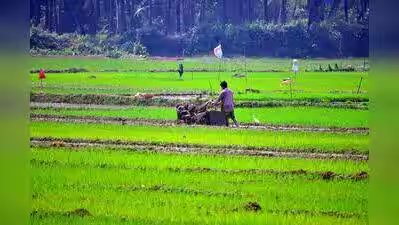
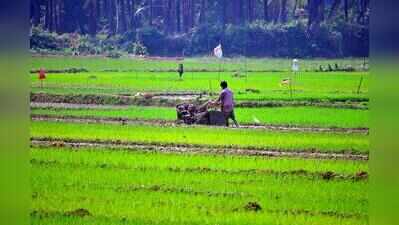
Margao: The Goa State Amritkal Agriculture Policy, 2025 (GSAAP-2025) has been defined, so far, by its ambitious targets — doubling pulses acreage, soil health cards, cold storage units. But a set of procedural recommendations in the policy’s Part B go to the heart of why farmers say the policy hasn’t translated into relief on the ground.Discharge of sewage into agricultural land and water bodies, and the near-total absence of usable roads to landlocked fields, are just two among several such issues that are shrouded in ambiguity.On sewage, GSAAP-2025’s land management chapter (Part B) states plainly that pollution caused by sewerage release into agricultural land or water bodies should be penalised by the Goa State Pollution Control Board (GSPCB). The provision is unambiguous in principle, but analysts point out a structural gap in how it’s framed.“The land being polluted falls under the agriculture department’s watch, while the penalising authority named in the policy is the GSPCB. The policy does not specify a joint inspection mechanism, a reporting timeline, or which department is expected to flag violations in the first place. In khazan and low-lying paddy areas, untreated sewage discharge compounds soil and water contamination, yet the body responsible for penalising it isn’t the one farmers actually deal with,” a source closely associated with the farming industry said.The second issue — road access to interior paddy parcels — is addressed more directly, if just as thinly. While the policy provisions call on panchayats and municipalities to provide “proper access for moving machinery to the fields”, the document also proposes that disputes arising when farm machinery must cross other people’s fields to reach a remotely located parcel be examined and resolved by village panchayats and the mamlatdar, backed by a taluka-wise survey and mapping exercise to streamline access.“The recommendation is a tacit acknowledgement of a problem that has shadowed Goa’s paddy cover for years — subdivided fields and interior plots that have no direct road frontage and depend on informal, often contested, rights of way across a neighbour’s land. Pooling fragmented fields for joint cultivation is difficult to sustain if machinery cannot reach those fields without a neighbour’s consent. The policy sets a direction — panchayat-mamlatdar mediation, followed by mapping-based planning — but stops short of a timeline or a funding mode for the access roads,” the source said.A year on, stakeholders say, these and other issues have remained largely unresolved.