









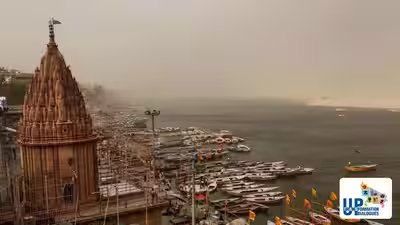
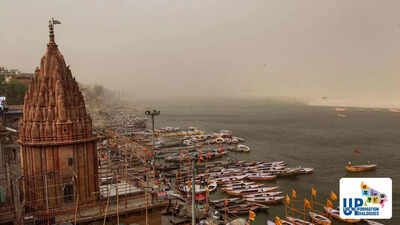
Uttar Pradesh has historically been religious, spiritual and cultural heartland of the country. For centuries its temples, ghats, forts, and sacred rivers have drawn seekers of faith and heritage. In recent years, however, the state has engineered a far more deliberate and ambitious transformation: a massive, decentralized tourism boom that is rewriting its economic map.By 2025 Uttar Pradesh had already consolidated its position as India’s leading destination for domestic tourism, welcoming an astonishing 137 crore domestic visitors and more than 3.66 lakh foreign tourists. This scale of growth is not merely a statewide statistic; it is a district-led economic transformation in which individual regions have become powerful, self-reinforcing growth engines.It is the ‘Divine Trinity’ of Ayodhya, Varanasi, and Prayagraj—the spiritual triangle that now drives the bulk of visitors volume.Ayodhya– This place has emerged as the undisputed beacon of religious tourism in India. After the consecration of the Ram Mandir, tourist footfall exploded from a modest 2.84 lakh in 2017 to figures exceeding 20 crore by early 2025, with full-year estimates climbing still higher. International-standard infrastructure—new roads, an upgraded airport, expanded hospitality capacity, and carefully planned visitor facilities—has turned the city into a world-class pilgrimage hub. Global events such as Deepotsav, which has repeatedly set Guinness records for the number of lamps lit, further amplify its appeal and keep the local economy humming year-round through hotels, transport, crafts, and food services.Varanasi- the eternal city of light, has successfully blended its ancient ethos with modern infrastructure. Since the inauguration of the Kashi Vishwanath Corridor, visitor numbers have multiplied dramatically, with reports of around 11.47 crore visitors in the first quarter of 2025 alone and annual figures continuing to rise. Cleaned and illuminated ghats, river cruises, improved pathways, and the grand Dev Deepawali festival have transformed Varanasi from a purely traditional pilgrimage site into a rich experiential destination. Devotees and cultural tourists now move more easily between the temple complex, the Ganga, and the city’s living heritage lanes, generating sustained demand for local services and artisanal products.Prayagraj– The seat of Mahakumbh, positioned at the sacred Sangam, remains the epicenter of massive spiritual congregations. The historic Mahakumbh 2025 became the single largest contributor to the state’s tourism spike, recording an awe-inspiring footfall of more than 66 crore devotees over 45 days. The logistical achievement of managing such numbers—temporary infrastructure, security, sanitation, transport, and hospitality—demonstrated both administrative capacity and the enormous economic multiplier effect of large-scale faith-based events.Beyond the Hindu spiritual core, Uttar Pradesh holds profound significance for global Buddhism. The state government’s focused development of the Buddhist Circuit has elevated specific districts onto the international map, particularly among pilgrims, monks, and researchers from Southeast Asia and the Far East.Kushinagar, the site of Lord Buddha’s Mahaparinirvana, and Sarnath (near Varanasi), where he delivered his first sermon, form the primary pillars of Buddhism. Targeted upgrades in connectivity, visitor amenities, museums, and interpretation centers have also benefited Shravasti, Kaushambi, and Kapilavastu in Siddharthnagar. Collectively these sites recorded millions of visitors in 2025, reinforcing Uttar Pradesh’s claim as a serious global Buddhist destination.While spirituality generates the highest volume, the state’s historical and cultural arc continues to attract foreign tourists and heritage enthusiasts. Agraand Fatehpur Sikri remain Uttar Pradesh’s strongest magnets for international visitors, with the Taj Mahal and Agra Fort as enduring symbols of Mughal grandeur. Lucknow, the capital, offers a contrasting Nawabi experience through the Bara Imambara, Rumi Darwaza, and its globally recognized Awadhi cuisine. Mathura-Vrindavan, the land of Lord Krishna, draws millions annually to temples such as Prem Mandir and Banke Bihari, as well as the vibrant Rangotsav Holi celebrations that have gained international attention.Uttar Pradesh is also deliberately expanding beyond traditional religious and heritage tourism into eco-tourism and adventure. Lakhimpur Kheri, home to Dudhwa National Park, serves as the state’s premier wildlife sanctuary, offering elephant rides, tiger spotting, and relatively untouched forest experiences. Chitrakoot, steeped in Ramayana associations, is undergoing rapid transformation through the development of the Kalinjar integrated route and the Ram Van Gaman Marg, blending mythology with nature trails and adventure tourism.This district-led growth is fundamentally reshaping Uttar Pradesh’s financial landscape through what is increasingly called the “temple economy.” Spiritual and heritage sites function as massive economic engines: they drive local commerce, create jobs in hospitality, transport, guiding, and food services, and revive traditional artisanal crafts. Under the Uttar Pradesh Tourism Policy 2022, substantial public and private investment has flowed into the sector. In 2025 alone the tourism department initiated development projects worth Rs 1,283.33 crore, while investment proposals totaling Rs 37,688.58 crore were received, signaling strong private-sector confidence.Improved connectivity—expressways, airports, rail links, and last-mile infrastructure—has been critical in converting footfall into longer stays and higher spending. Homestays, new hotels, and better visitor facilities have expanded capacity and distributed economic benefits more widely across districts. The result is a more resilient, multi-nodal tourism economy rather than one dependent on a handful of flagship sites.By transforming districts from mere points on a map into self-sustaining tourism hubs, Uttar Pradesh has demonstrated that culturally rooted, decentralized development can deliver both scale and sustainability. The model shows that faith, heritage, and carefully planned infrastructure can together form a powerful pathway toward the state’s broader ambition of building a trillion-dollar economy. What began as a revival of sacred geography is rapidly becoming one of India’s most compelling stories of regional economic transformation.