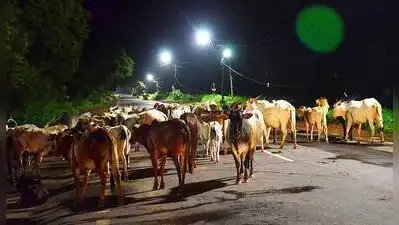








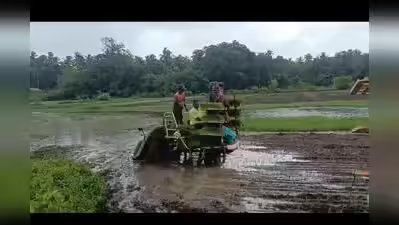
Panaji: Assolna’s fertile fields witnessed the return of agriculture to a landscape that had lain largely abandoned for 40 years. Locals formed a community farming group called the Assolna Xetkarancho Ekvott and launched the ambitious initiative on Sunday to reclaim nearly one lakh sqm of agricultural land in the village. The group intends to restore cultivation across nearly 10 lakh sqm of agricultural land in the village with the help of mechanised farming.“Agricultural tradition has existed in the village for over 200 years,” said biodiversity management committee member, Fredrick Borges. “Assolna has a beautiful lake system with naturally fertile soil. Paddy cultivation discontinued because standing crops were repeatedly destroyed by stray cattle, making farming unviable.”
CJP Jantar Mantar Protest Updates
The increasing cost and shortage of manual labour dealt another blow, forcing many farmers to abandon farming altogether.The turning point came with the installation of fencing around the fields this year with CSR-support providing farmers with much-needed protection against stray animals. With the fields finally secured, the villagers decided to form a community and embrace mechanised farming to overcome labour shortages and improve efficiency.Mechanised farming is being carried out with the assistance of Don Bosco Sulcorna’s, Fr George Quadros and his team, who have been engaged professionally to undertake land preparation and sowing of Jyoti variety of rice with the help of mechanised transplanting operations.“We tried cultivating manually, but it was difficult to sustain. Now, with mechanisation and proper protection, we are confident that farming can become viable again,” Borges said.The first phase covers nearly 50,000sqm, with another 50,000sqm to be cultivated shortly, taking the total area under revival to one lakh sqm.“The land does not require much manure because it is naturally fertile. Paddy grown in these fields is essentially organic and has always been known for its quality,” Borges said.The Assolna Xetkarancho Ekvott currently comprises 27 farmers, although nearly 94 cultivators are expected to join the initiative in the coming phases. Farmers are hopeful that the project could serve as a model for other villages struggling with abandoned farmland, labour shortages and other challenges.