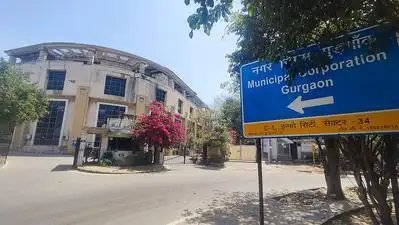








Gurgaon: Though both involved door-to-door visits by govt staff, the city’s Census house listing and Election Commission’s special intensive revision (SIR) of electoral rolls produced contrasting outcomes.While Census enumeration progressed largely on schedule, SIR required repeated deadline extensions as booth-level officers (BLOs) struggled to complete voter verification. Enumerators who participated in both exercises said the key difference lay in the nature of the task.Census house listing focused on recording houses and basic amenities, requiring minimal interaction with residents. In contrast, SIR demanded active participation from every registered voter, who had to receive, fill and submit verification forms.
CJP Jantar Mantar Protest Updates
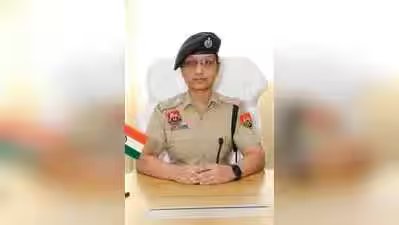
Enumerators said reluctance among residents, documentation requirements, high mobility within the city, restricted access to gated societies and the June-July holiday season made SIR significantly more difficult than the Census exercise, despite both following a similar approach.“The first phase of Census was essentially a house-listing exercise. We had to identify every structure, assign a house number and record details about the dwelling through 33 standard questions. The interaction with residents was limited,” said Sudesh Yadav, an enumerator who worked in both exercises.“Once we gained entry into a gated society, the remaining work was relatively straightforward. We only needed the name of the head of the household, while the rest of the questions related to the house and amenities, most of which were similar across apartment complexes,” Yadav added.Census work could often be completed even when residents were unavailable, another enumerator said. “If nobody was home, we could obtain the name of the house owner from the security staff or the RWA, since physical verification of the property was the primary requirement,” the enumerator said.SIR, however, required far more than a physical visit. “Every registered voter had to receive the verification form, fill it out and submit it, without which the process was incomplete,” said Anita, another enumerator.Anita said many residents were reluctant to engage with BLOs, making repeated visits necessary. “Several people postponed filling out the forms, while others wanted to understand why the exercise was being conducted. In many cases, we had to revisit the same household multiple times before completing the verification,” she added.Support from RWAs and security guards, sufficient for Census, could not substitute for individual cooperation during SIR, enumerators said.“For Census, access to the society was the biggest hurdle. Once inside, the work could proceed smoothly. During SIR, however, every individual voter had to cooperate. Security guards or RWAs could facilitate entry, but they could not complete the verification on behalf of residents,” a fourth enumerator said.Officials and field staff also pointed to city-specific challenges. A large migrant population, high tenant turnover, locked apartments, working professionals with irregular schedules and restricted access to gated communities meant BLOs often had to make multiple visits to the same address.Timing worked against the exercise too. Census was conducted from May 1 to May 30, when resident availability was comparatively better. SIR, on the other hand, coincided with the June-July summer vacation period, when many families were travelling outside the city.Deputy commissioner Uttam Singh said the SIR process was completed as per EC guidelines. “The form distribution was nearly 100%, BLO visited more than the mandatory three times to the voters, extended help in filling the form and provided support to everyone who showed interest in completing the process,” he said.Gurgaon continued to rank last among Haryana’s 22 districts in SIR exercise, with only 70.4% of enumeration forms digitised as of 4pm on Thursday, despite a 10-day deadline extension till July 24 and intensified efforts by the district administration.Official data showed that of the district’s 15.55 lakh electors, EFs of 10.95 lakh had been digitised, while 4.59 lakh forms (29.53%) were marked as ‘uncollectable’. Another 1,135 electors were still pending processing.Faridabad recorded 72.68% digitisation, Panchkula stood at 76.45%, while Sonipat and Panipat crossed the 80% mark. Fatehabad emerged as the best-performing district with 92.86% digitisation, followed by Mahendragarh (91.4%), Charkhi Dadri (90.58%), Sirsa (90.23%) and Bhiwani (90.1%).Across Haryana, 1.72 crore of the state’s over 2 crore electors have been digitised, taking the overall completion rate to 83.51%. The state has reported 3,259 pending electors.