








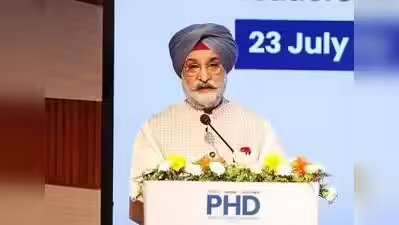

New Delhi: For schools, safety is no longer confined to CCTV cameras and fire exits. It now extends to protecting children from cyberbullying, online predators, mental health challenges, and emergencies ranging from earthquakes to bomb threats. These evolving risks dominated discussions at National Summit on Safe Schools Leadership 2026, held at PHD House Thursday.The summit, organised by PHD Chamber of Commerce and Industry (PHDCCI), was themed ‘Building Future-Ready Schools: Leadership, Governance and Safety Excellence’. It brought together stakeholders from govt, schools, academia, industry, emergency response agencies and civil society to deliberate on creating safer learning environments.The conclave focused on strengthening school safety governance, institutionalising safety frameworks and promoting the adoption of National Model School Safety Toolkit, launched by Delhi lieutenant governor TS Sandhu. Addressing the gathering, Sandhu said that while physical infrastructure, fire preparedness and emergency response remained critical, schools today must also address cybersecurity, mental well-being, transportation safety and preparedness for unforeseen crises.Developed under the aegis of PHDCCI Safety & Fire Committee, the toolkit is designed as an implementation framework to help schools institutionalise safety across five pillars of fire and infrastructure safety, cyber safety, transport safety, mental well-being and emergency preparedness.“As India moves towards the vision of Viksit Bharat by 2047, educational institutions will play a central role in shaping future citizens,” LG said. “Schools must, therefore, be centres not only of academic excellence, but also of responsibility and preparedness.” Delhi, given its dense urban environment and diverse population, has a special responsibility to lead by example in building safe, inclusive and resilient learning spaces, he added.Hemant Sapra, chair of the PHDCCI committee, said modern schools required an integrated approach addressing fire safety, cybersecurity, mental well-being, transport safety and disaster resilience rather than treating them as isolated concerns. Ranjeet Mehta, CEO and secretary general of PHDCCI, said parents entrusted schools with their “greatest responsibility” every day, making student safety the foremost obligation of educational institutions. The discussions assumed particular significance for Delhi, where school safety has become increasingly complex. Over the past few years, repeated hoax bomb threats have forced mass evacuations across schools, exposing gaps in emergency preparedness and communication systems. Simultaneously, educators are grappling with rising concerns over cyberbullying, children’s exposure to online risks and growing mental health challenges.Several experts argued that building safe schools began with understanding children’s emotional well-being. Recounting a recent case, medical expert Dr Jitendra Nagpal described how a child told a psychiatrist he no longer wanted to return home because of constant conflict between his parents. “The fundamental fabric is safety. Children need to feel secure at home, at school and even in the school bus.”Educationist Usha Ram warned that artificial intelligence was increasingly being exploited for cybercrime, making cyber hygiene an essential life skill. Digital literacy, she said, must go hand in hand with efforts to safeguard children’s mental and physical well-being.Experts also emphasised that teachers must be trained to recognise subtle behavioural changes in students. Oshima Mathur, principal of Navy Children School, Chanakyapuri, said simply asking a child whether they were happy was not enough. Comparing teachers to parents who instinctively learn to distinguish different kinds of a baby’s cry, she said educators too must develop the ability to identify emotional distress before it escalated.Former Delhi Fire Service director RC Sharma stressed that unobstructed escape routes, regular maintenance of electrical systems and awareness of fire hazards remained critical. Rajiv Mathur, vice-chairman (training and faculties) of International Council for Industrial Security, Safety and Management, said school transport safety must be approached through risk management rather than compliance alone.