










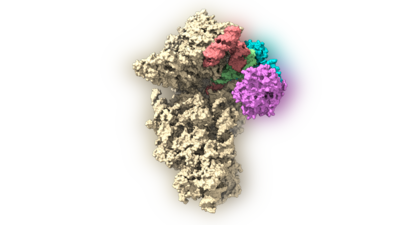

Bengaluru: Scientists from the Indian Institute of Science (IISc) have uncovered how a virus takes control of a host cell’s protein-making machinery to reproduce, a finding that could help researchers develop new antiviral treatments.The study, published in the peer-reviewed journal eLife, explains how the encephalomyocarditis virus (EMCV), which infects rodents and several other mammals, hijacks the cell’s ribosomes, the tiny structures responsible for making proteins. Viruses cannot make proteins on their own and must rely on the cells they infect to multiply.The researchers found that EMCV uses a structured stretch of its genetic material, called an Internal Ribosomal Entry Site (IRES), to seize control of the host’s protein-making system. Once inside the cell, the virus blocks the production of normal cellular proteins and redirects the machinery to produce viral proteins instead.Using cryo-electron microscopy, the team captured the virus at the moment it assembled a complex with the host cell’s ribosome. They discovered that the viral IRES directly binds to the cell’s 40S ribosomal subunit and the initiator transfer RNA (tRNA), a mechanism that has not been seen in other viruses.To obtain these images, the researchers first isolated the viral protein-making complex from rabbit reticulocyte cell extracts using a specially designed bait protein. After several unsuccessful attempts, they were able to capture the intact complex and determine its structure.“Nothing was known in terms of the details of how the virus captures the host ribosome and how exactly it does so biochemically,” Tanweer Hussain, associate professor at IISc’s department of developmental biology and genetics and the study’s corresponding author, said.According to the researchers, understanding this process is important because it identifies a possible weak point that could be targeted by future drugs. The same strategy is used by several related viruses, including the poliovirus, raising the possibility that treatments designed to block the IRES could work against more than one virus.The team said the findings provide one of the clearest pictures yet of how certain viruses take over a host cell’s protein-making machinery, offering a foundation for future studies aimed at preventing viral replication.