







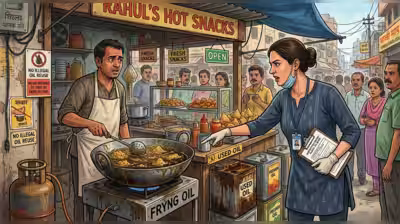
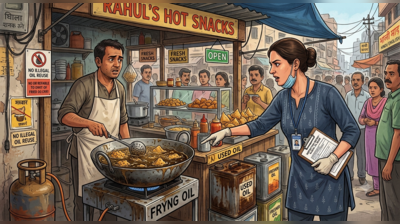
Bengaluru: When you bite into a fried snack, the oil it is cooked in matters just as much as the food itself. Karnataka’s food safety department has stepped up its crackdown on trans fats and repeatedly used cooking oil.Between 2024 and 2026, nearly 45.9 lakh litres of used cooking oil was collected across the state through four FSSAI-recognised agencies, which procure discarded cooking oil from food businesses and supply it to authorised biodiesel manufacturers under the Repurpose Used Cooking Oil (RUCO) initiative.According to food safety officials, many smaller eateries sell or hand over their used cooking oil to larger establishments or aggregators, which in turn channel it to these FSSAI-recognised agencies for safe disposal and conversion into biofuel instead of allowing it to re-enter the food chain. The large-scale collection has prompted the department to intensify inspections, laboratory testing and surveillance of food businesses across Karnataka.On the other side, the enforcement drive has already gathered pace. More than 52,000 food business professionals have been trained on safe food practices, while violations have led to penalties amounting to Rs 28.9 lakh.Used cooking oil samples were tested in a wide range of establishments, including roadside eateries, hotels, restaurants, fast-food outlets and fried snack stalls, as part of special inspection drives, said Srinivas K, commissioner, food safety and drug administration (FDA).“Sometimes, hotels sell their used cooking oil to roadside food stalls at very low prices after treating it with chemicals to make it look fresh. During inspections, we use a total polar compounds (TPC) meter to instantly check the quality. If the TPC level exceeds 25%, the oil is considered unsafe and must be discarded as it can pose serious health risks,” Srinivas said.The meter, which costs Rs 30,000-50,000, is used by commercial kitchens to measure the degradation of cooking oil used for deep frying.He advised households to avoid reusing cooking oil more than two to three times and to discard it once it becomes dark or changes colour.Beyond used oil, Karnataka is also strengthening its efforts to eliminate industrially produced trans fats from the food supply. The state plans to expand risk-based inspections, laboratory testing and enforcement across the food chain.As part of this effort, food safety officials, health inspectors, food business operators, edible oil manufacturers and industry experts participated in a state-level sensitisation programme on eliminating industrially produced trans fats in Bengaluru Tuesday.According to the department, industrially produced trans fats are linked to a higher risk of heart disease, coronary artery disease, obesity and metabolic disorders.Inset1:What is TPC?Total polar compounds (TPC) measures how much cooking oil has degraded after repeated heating. A higher TPC means more harmful compounds have built up in the oil, indicating it is no longer safe for use. Food Safety and Standards Authority of India (FSSAI) has set 25% TPC as the maximum permissible limit for used cooking oil in food businesses.Inset 2:How to dispose of used oil?Hand it over with your domestic hazardous waste during door-to-door collection or at designated domestic hazardous waste-collection centres