










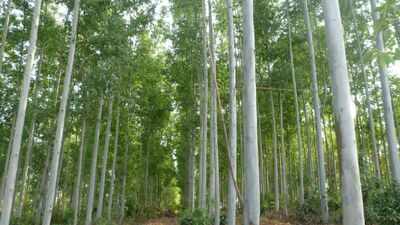
Scientists have compared the same invasive plant species in Europe and North America and found that they became 91% more productive after spreading to new habitats. The increase was seen only in the plants’ non-native ranges and not in the places where they naturally grow. The researchers say the findings help explain why some invasive plants spread so successfully after arriving in a new environment. They believe these plants may escape natural enemies such as herbivores and harmful soil biota, allowing them to grow much better than they do in their native habitats. The study compared five invasive plant species in Germany and the United States. While the plants produced much more biomass in their non-native habitats, they showed little or no increase in productivity in their native ranges, the study published by European Commision said.
Invasive plants matter
Alien invasive species are organisms that establish themselves outside their natural geographic range and cause environmental or economic harm. Some non-native plants spread rapidly, crowd out native species and reduce the habitat available for wildlife. According to the Intergovernmental Science-Policy Platform on Biodiversity and Ecosystem Services (IPBES), invasive species are one of the five main drivers of global biodiversity loss. Scientists have long known that invasive plants often increase net primary productivity (NPP), which measures the total amount of plant growth in an ecosystem. Since natural ecosystems are generally expected to make the best use of available sunlight, water and nutrients, this unusually high productivity has puzzled researchers. They wanted to find out whether invasive plants are naturally more productive everywhere or whether they gain this advantage only after moving into new habitats.
The experiment
Scientists from Germany and the United States studied five plant species. Four of them Linaria vulgaris, Hypericum perforatum, Tanacetum vulgare and Leucanthemum vulgare are native to Eurasia but invasive in North America. The fifth, Solidago canadensis, is native to North America but invasive in Germany.
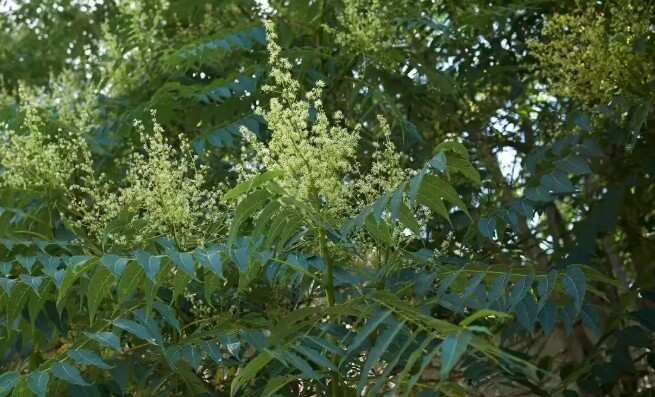
Invasive plants in Europe cause roughly €12 billion in environmental and socioeconomic damages annually. (Picture: Tree of Heaven)
The team carried out field experiments in Saxony-Anhalt, Germany, and Montana, US. They compared plots where the invasive plants were growing with nearby plots where the same species were absent. They also established garden plots with and without the target plants to check the results. During the peak growing season, the researchers collected and dried all aboveground biomass from small sample plots to estimate plant productivity.
What researchers found
The study found that in the non-native ranges, plots containing the invasive plants produced 91% more biomass than plots without them. In the garden experiments, productivity was 107% higher. All five plant species showed the same pattern. In their native habitats, however, productivity increased by less than 5% in field plots, while the garden experiments showed no meaningful difference. The researchers also found that the target plants were not naturally larger than surrounding plants in their native habitats. This suggests the higher productivity was linked to the new environment rather than the plants’ size.
Why plants perform differently
According to the researchers, invasive plants may become more productive because they escape natural enemies, including herbivores and harmful soil biota such as bacteria and fungi, that normally limit their growth in their native habitats. They also suggest the plants may rapidly evolve to become larger after establishing themselves in new environments. The researchers stressed that the findings should not be taken as a reason to introduce invasive plants deliberately. They said doing so would damage ecosystems over time and weaken the health, resilience and competitiveness of native species. The researchers, however, noted that they estimated productivity using aboveground biomass, which does not account for plant material already eaten by herbivores. If invasive plants are grazed less because local animals avoid them, they could appear more productive even if their actual growth is similar to native plants.