


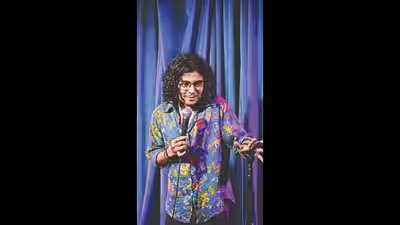
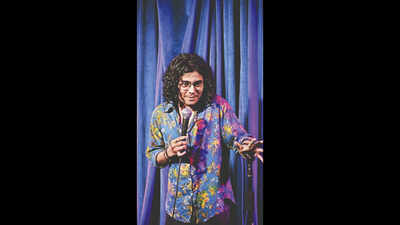
When Sarvagya Soni, 26, set out to be a stage artiste a short while back, he didn’t want to make it yet another space for punchlines. “Everyone is doing stand-up, but for me, the differentiator also had to factor in my gender identity. Comedy doesn’t always do justice to the sensibilities of different genders,” said Soni, a member of the LGBTQIA+ community, who performed in Chandigarh on Sunday.This “freshly written show,” as he called it, is a “hybrid of storytelling, stand-up, poetry and theatre.”He added, “The show draws from my life — a trans man growing up in a tier-three city, navigating institutions, understanding my identity and trying to build a life on my own terms. From a very vulnerable lens, I talk about how my family reacted, how I figured out my identity and how it shaped me. But my show is also broader. I want to show people more than the person they see on stage for a few hours.”What began as an entertainment piece gradually became political, said Sarvagya. “The show, which I started from my home ground in Delhi, was meant for entertainment, but with the disappointment around the Transgender Persons (Protection of Rights) Act, 2019, and the continuing attempts to erase marginalised stories, it also became a form of advocacy.”Through his own journey, Sarvagya hopes to create references for lives and realities that are often left out of mainstream narratives. “I believe art is political, and so is my existence,” he said, adding, “If our stories are not allowed to exist in public memory, who becomes our reference point? Where do people learn about lives like ours? And I think people are now over the awe of seeing a person from the LGBTQIA+ community; now let’s talk about the real issues that haunt us.”Ask him if he feels audience perception is changing towards the community and he says, “After eight back-to-back shows in Delhi, I began to see a shift in audience. People in their 50s, 60s and diverse ages, started coming in, not just from the LGBTQA+. I want to convey through the show that trans people are not defined by gender identity; we are artists and many other things too,” he said.