








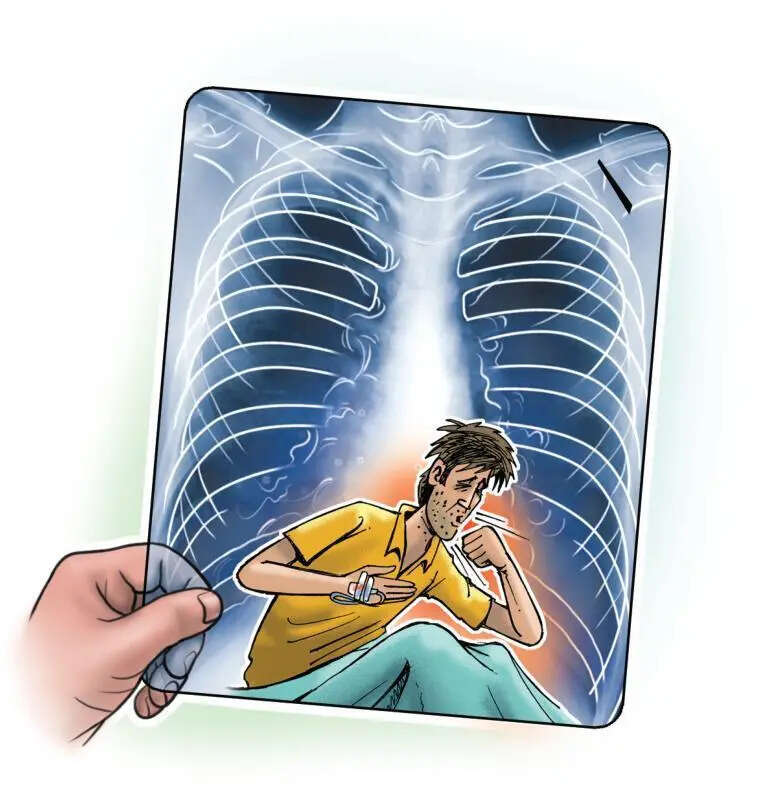
Chandigarh: Punjab’s ambition to eliminate tuberculosis (TB) by 2030 faces significant hurdles, with the Centre flagging a higher-than-national-average TB burden and gaps in screening, diagnosis, preventive treatment and patient care. It has also raised concerns over maternal mortality, immunisation coverage and non-communicable diseases.The Union ministry of health and family welfare, in the National Health Mission (NHM) Record of Proceedings for 2026-27, has outlined Punjab’s disease elimination roadmap, reviewed the state’s progress on Sustainable Development Goal (SDG) health indicators, and approved a National Health Mission resource envelope of Rs 1,332.6 crore for 2026-27 to strengthen public health services.According to the document, Punjab has committed to eliminating TB by 2030. However, the state’s TB incidence stands at 213 cases per one lakh population, higher than the national average of 187, while the TB mortality rate is 34 per one lakh population, compared with the national average of 21.To achieve the target, the Centre has asked the state to ensure annual screening of all vulnerable populations, universal NAAT testing for presumptive TB patients, chest X-rays for symptomatic individuals, 100% assessment of all notified TB patients for differentiated care, intensified management of high-risk cases, full coverage of TB preventive treatment for eligible household contacts, and timely delivery of Nikshay Poshan benefits. It has also stressed universal implementation of the Nikshay Mitra initiative to strengthen community support for TB patients.The Centre has also identified gaps in communicable disease surveillance. Punjab’s Annual Parasite Incidence (API) for malaria stands at 0.01 against the national API of 0.17. The report further notes that 35 units across Bathinda, Ferozepur, Sangrur and Hoshiarpur were classified as “never reported” on the Integrated Health Information Platform (IHIP) portal in 2025, directing the state to ensure timely disease reporting and surveillance.At the same time, the report acknowledges Punjab’s success in eliminating leprosy, with a prevalence rate of 0.11 per 10,000 population, well below the elimination threshold.The Centre also reviewed Punjab’s performance on SDG health indicators. The state has already achieved the SDG target for the neonatal mortality rate (NMR) at 12 per 1,000 live births and is better than the target for the under-five mortality rate (U5MR), recording 22 deaths per 1,000 live births against the target of 25. However, Punjab continues to lag on maternal health, with the maternal mortality ratio (MMR) at 77 per one lakh live births, above the SDG target of fewer than 70.The report also flags inadequate immunisation coverage. Full immunisation coverage stands at 85.2%, below the SDG target of 90%. The state has also been asked to intensify efforts to reduce premature mortality from non-communicable diseases by one-third through prevention, early diagnosis and treatment.To support these priorities, the Centre has approved an NHM resource envelope of Rs 1,332.6 crore for Punjab for 2026-27. This includes Rs 799.59 crore as the Centre’s share — comprising Rs 651.7 crore under the flexible pool, Rs 50.4 crore as a performance-based incentive and Rs 97.5 crore for infrastructure maintenance — while the Punjab govt will contribute Rs 533.1 crore.The largest allocation has been earmarked for human resources for health, with Rs 576.5 crore accounting for around 37% of programme expenditure. Other major allocations include Rs 186.1 crore for national disease control programmes, Rs 154.7 crore for health system strengthening, Rs 97.5 crore for infrastructure maintenance and Rs 91.8 crore for reproductive and child health. The Centre has also approved Rs 281.5 crore for drugs, Rs 69.6 crore for nutrition, Rs 63.6 crore for diagnostics, Rs 32.5 crore for non-communicable diseases, Rs 23.3 crore for information, education and communication activities, and Rs 7.7 crore for innovation initiatives. It has further sanctioned Rs 49 crore for the Janani Shishu Suraksha Karyakram (excluding transport), Rs 14 crore for the Rashtriya Bal Swasthya Karyakram and Rs 12.9 crore for immunisation, including Mission Indradhanush.