









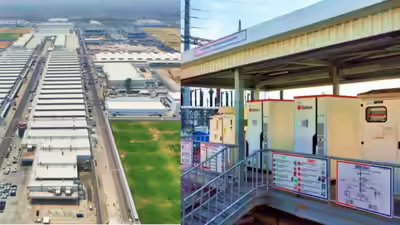
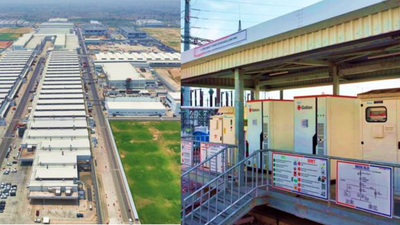
GURGAON: A battery-based energy storage system has been commissioned at a major automobile manufacturing facility in Haryana, enabling surplus solar power generated during non-operational hours to be stored and used later. The move highlights the growing role of energy storage in improving industrial energy efficiency and reducing carbon emissions.The 1 MWh Battery Energy Storage System (BESS), installed at the Kharkhoda manufacturing facility of Maruti Suzuki India Ltd, will store excess electricity generated by the plant’s 20 MWp solar power installation during periods of low demand, including factory holidays, and feed it back into the facility’s internal power network when required. The company said the project is expected to reduce nearly 54 tonnes of carbon dioxide emissions annually over its estimated 15-year lifespan.The development comes as industries increasingly adopt battery storage technologies to address one of the key challenges of renewable energy — the mismatch between power generation and consumption. Solar plants continue to generate electricity even when factories are shut, often leading to the underutilisation of clean energy. Battery storage allows industries to preserve this surplus power for later use, reducing reliance on conventional electricity while improving grid stability.The battery system has been integrated into the Kharkhoda plant’s internal electricity distribution network as a pilot project and is expected to help the company optimise the use of renewable energy as production at the facility scales up.Announcing the commissioning, Hisashi Takeuchi, Managing Director and CEO of Maruti Suzuki India Ltd, said, “Maruti Suzuki is strongly aligned with India’s focus on building self-reliant energy ecosystems. The introduction of the Battery Energy Storage System (BESS) at our Kharkhoda facility is part of these continued efforts. With a lifespan of about 15 years, BESS will help reduce nearly 54 tonnes of CO₂ emissions annually.“He added that the company intends to expand production without proportionately increasing manufacturing emissions. “Going forward, our production volumes will increase from current levels. Despite this, we remain committed to lowering Scope 1 and Scope 2 emissions not only in terms of CO₂ intensity but also in absolute CO₂ emissions from manufacturing,” Takeuchi said.The Kharkhoda facility already houses a 20 MWp solar power project commissioned earlier this year. According to the company, electricity generated during plant holidays previously remained unused because there was no demand. The battery storage system has been introduced to bridge this gap by storing excess renewable energy and making it available when production resumes.The initiative aligns with Suzuki Motor Corporation’s environmental roadmap, which targets a 42% reduction in Scope 1 and Scope 2 carbon emissions by FY2030-31 compared with FY2022-23 levels. Industry experts view battery storage as an increasingly important component of industrial decarbonisation, enabling manufacturers to maximise the use of renewable energy while enhancing energy reliability and reducing dependence on fossil fuel-based power.