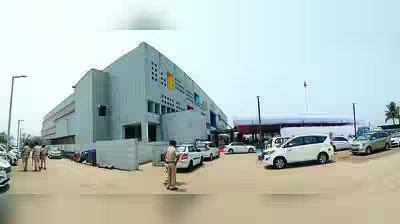









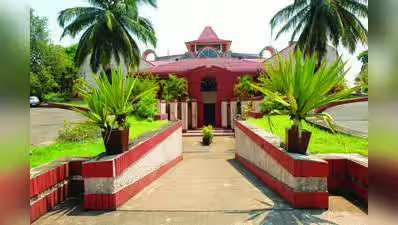
Panaji: Goa University has used the Rs 100 crore granted under the ‘Pradhan Mantri Uchchatar Shiksha Abhiyan (PM-USHA)’ or multi-disciplinary education and research university (MERU) scheme to expand its infrastructure, including a 500-seat auditorium, a computing system, a new academic block for the School of Earth, Ocean and Atmospheric Sciences, biochemistry laboratory, a futsal court, various equipments and additional hostel facilities.“This has made Goa University one of the few in the country to have the high power computing system, which is useful for any researcher when it comes to data,” said GU vice-chancellor Harilal Menon.Under the funds sanctioned, Rs 7.4 crore for audio-video and multimedia laboratories, software for library, smart boards and computers as well as for high performance computing facility were provided to Goa University.High performance computing has created an advanced computational facility supporting data-intensive research and emerging disciplines.He said that the academic infrastructure added through the use of the grants has put Goa University on track to become a multi-disciplinary education and research university.“The infrastructure allowed us to introduce programmes in new and emerging areas,” said Menon.As required by NEP, Goa is looking to raise the Gross Enrolment Ratio in Goa from 39% to 50% in higher education.Menon said that programmes have already been made skill-based and of multidisciplinary approach, as required under the NEP scheme.Under PM-Usha funding, Rs 9 crore was provided for furnishing the auditorium at the Manohar Parrikar School.A major chunk of Rs 82.3 crore was for construction of three new hostels, academic school buildings as well as for construction of research labs, sports facilities and infrastructure for distance learning.The funds were sanctioned in Feb 2024 and Goa University has been able to utilise it for the purpose it is sanctioned.“PM-USHA was not merely an infrastructure grant for Goa University; we converted it into an investment in the University’s future—creating the physical, technological and academic capacity required for a multidisciplinary, research-intensive university,” said Menon.