








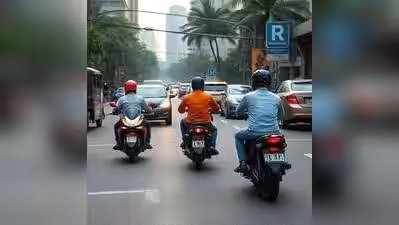
Mumbai: More than 38,000 challans were issued to city motorists found driving in the wrong direction between Jan and Nov this year, which was higher than the figures of the previous two years put together. Nearly 24,500 challans were issued for the offence in the years 2024 and 2025 combined. Police also registered over 1,500 FIRs between Aug and Nov 2026 for serious instances where driving in the wrong direction posed a grave risk or caused injury to road users. Activists have recommended that the crackdown continue.In July, an eight-year-old schoolgirl, Reva Pawar, walking to her coaching class with her mother, Nidhi, was hit by a motorcyclist riding in the wrong direction opposite Cafe Arfa at Jogeshwari. Reva was dragged onto the street and injured her head, hands, legs and waist. She lost consciousness and was in hospital for 10 days. “For a brief while, she had lost her hearing and we were terrified. She is better now but her medication and consultations with a neurologist continue,” her father, Vikas, said. After the crash, Reva had to stay home for two months to recover. “But police intensified nakabandis at the stretch and the civic body pruned plants that were blocking vision. Instances of wrong side driving have reduced as a result. The nakabandis should continue and no other child should have to face the ordeal that our daughter did,” Vikas added.Police checks showed more instances of wrong-side driving in the suburbs than the island city. More two-wheeler riders were intercepted as compared to any other vehicle. “Wrong side driving is observed more during peak hours when there is greater congestion on the roads,” said a police officer.Joint commissioner, traffic, Satya Narayan, said they had sent driving licences of 329 offenders to Regional Transport Offices (RTOs) for cancellation between mid-Aug and mid-Nov this year. “All 41 traffic divisions in the city have been instructed to take strong action,” he said.A transport expert said that while issuing challans is a welcome move, it will only work as a deterrent when there is a mechanism in place to recover fines. “Right now, unpaid fines are piling up.” Activist Mohammad Afzal said courts could order community service or make offenders spend a day watching awareness videos in the traffic police headquarters, which will act as a deterrent.