







Meet Dr Alberto Cruz: The palaeontologist who found a new Ice Age toad hiding in a 1950s La Brea fossil collection |

PC: California’s La Brea Tar Pits & Museum A small Ice Age toad hidden in the collections of California’s La Brea Tar Pits has emerged as a new species to science, giving researchers another way to read the environmental history of ancient Los Angeles. ‘Spea labreae’, the extinct spadefoot toad, was identified when Dr Alberto…
Read More

In 1980, conservationists began eradicating feral sheep to restore California’s Santa Cruz Island; by 1987 numbers fell from 21,500 to under 100, then 12 lambs were rescued to save the breed

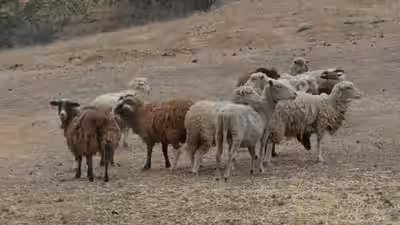
In 1980, conservationists began an ambitious ecological restoration programme on Santa Cruz Island, off the coast of Southern California. The main goal was to remove tens of thousands of feral sheep whose uncontrolled grazing was damaging native plants and threatening wildlife habitats. Over the next seven years, organised eradication efforts dramatically changed the island’s landscape….

Read More

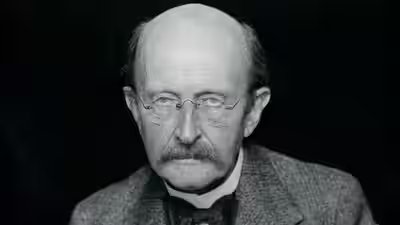
Quote of the Day by Max Planck: “The search for the absolute is the noblest task of science” |

Max Planck, the German physicist whose work helped lay the foundation for quantum theory, believed that science was ultimately a search for deeper and more fundamental truths. His reflections on scientific discovery reveal how strongly he valued the pursuit of universal principles rather than simply solving individual problems. In his Scientific Autobiography, Planck wrote about…

Read More

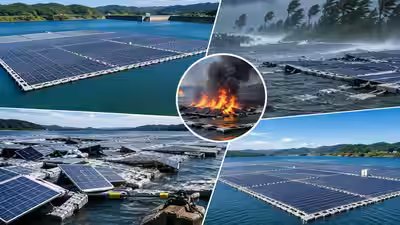
In 2018, Japan opened a floating solar farm with more than 50,000 panels; 18 months later, Typhoon Faxai’s 120mph winds tore modules loose and around 50 panels caught fire

Representative Image (AI-generated) Japan’s push to generate renewable electricity from reservoirs took a dramatic turn in 2019 when a powerful typhoon damaged one of the country’s largest floating solar farms. The project at Yamakura Dam in Ichihara, Chiba Prefecture, began operating in March 2018 with thousands of solar panels spread across the reservoir. According to…

Read More

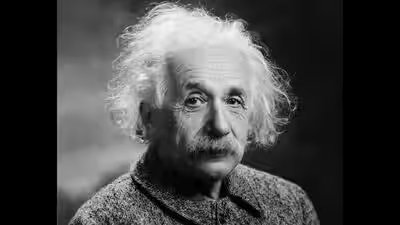
Quote of the Day by Albert Einstein: “Try not to become a man of success, but rather try to…” – powerful lesson about success and value |

Quote of the day by Albert Einstein (Image: Wikipedia) Albert Einstein‘s famous words offer a genuinely different way of looking at achievement. In a world where success is often measured through money, job titles and public recognition, this line asks people to look beyond what they have actually achieved and think honestly about what kind…

Read More

Japanese students began testing a natural system on a school pond plagued by algae; the experiment eliminated the outbreaks and later expanded to 8 sites |

BIO-ENGINE introduced in the pond. Image Credit: Hatena Blog Japanese students at Nakui Agricultural High School in Aomori Prefecture developed a natural water-cleaning system after years of research, and tested it on a pond where recurring algae outbreaks had caused unpleasant smells. According to Japan for Sustainability(JFS), the experiment worked. The pond’s algae outbreaks were…

Read More

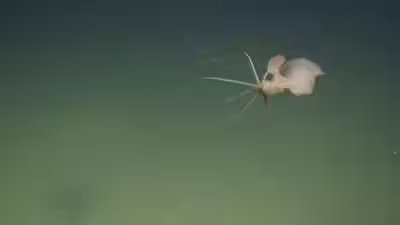
Scientists sent a robot two miles below California and found a bigfin squid; it was the first live Northeast Pacific sighting

Photo credit: Monterey Bay Aquarium Research Institute Two miles below the surface of the Pacific Ocean, off the coast of California, in a world of near total darkness and crushing pressure, a remotely operated vehicle glided silently through the water. Its cameras were scanning the deep for the strange and the seldom-seen when something extraordinary…

Read More

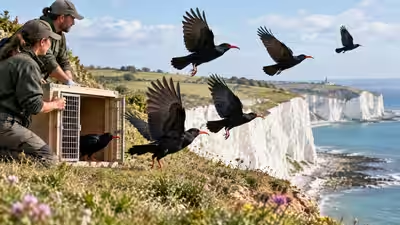
In 2019, conservationists brought red-billed choughs back to Kent after 200 years; 35 birds are now living there |

Red-billed choughs are re-establishing themselves in Kent, with the county’s population now standing at 35 birds following a summer in which eight wild-born chicks successfully fledged. Kent Wildlife Trust confirmed the figure this week, noting that the latest additions take the total number of wild-born choughs to nine since the species returned to the county….

Read More

All known life uses 4 DNA letters; UC San Diego showed an existing bacterial enzyme can accurately read and transcribe 8, doubling the genetic alphabet with synthetic letters

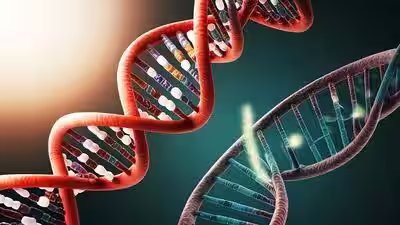
Representative image of DNA All life on Earth, from bacteria to blue whales, writes its genetic instructions using the same four-letter alphabet. These four DNA bases, usually referred to as A, T, C and G, pair up in predictable ways to store and pass on the information needed for life. Now, researchers at UC San…

Read More