








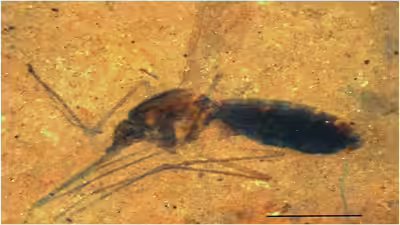
Biological gold: The 46-million-year-old mosquito caught red-handed with a belly full of blood |

Scientists discovered a 46-million-year-old mosquito fossil in Montana. This ancient insect was perfectly preserved in shale, not amber. Its abdomen held its last meal, confirmed by chemical tests. Image Credits: Hemoglobin-derived porphyrins preserved in a Middle Eocene blood-engorged mosquito study by PNAS Fig 1 For decades, the notion of a prehistoric mosquito entombed in a…
Read More

In 2023, a professor browsed an online archive from his couch and found a mislabeled £10 million masterpiece |

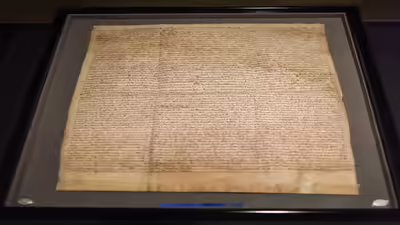
A forgotten document, purchased for a mere $27.50 by Harvard in 1946, has been identified as an original 1300 Magna Carta manuscript by Professor David Carpenter. (Representative Image) Image Credit: Foreign and Commonwealth Office, via Wikimedia Commons The most significant discoveries in history are not necessarily made using dust, ancient tombs, or even multimillion-dollar purchases….

Read More

In 1971, Alexander Mckee followed a Victorian map and found the Tudor world hidden beneath the waves |

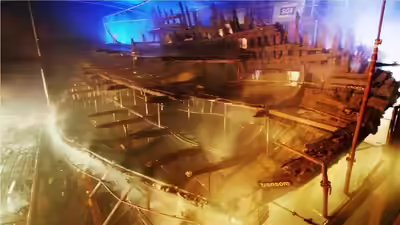
In 1971, historian Alexander McKee led a dive that uncovered the remains of the Tudor ship, the Mary Rose, buried in Solent mud. This remarkable find, preserved for centuries, yielded thousands of artifacts offering insights into 16th-century life. Image Credit: Mary Rose Trust, via Wikimedia Commons History is not just neatly stored in books lined…

Read More

In 1985, Mel Fisher followed a sixteen-year dream to uncover the world’s richest sunken treasure |

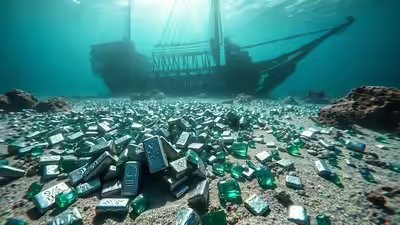
After a grueling 16-year quest, Mel Fisher’s relentless pursuit culminated in the monumental 1985 discovery of the Spanish galleon Atocha. Beneath the Florida Keys’ treacherous waters, his team unearthed a “silver reef” of immense value, estimated at $400 million. “Today is the day.” Sixteen years, to be precise, Mel Fisher woke up hearing those exact…

Read More

Earth’s tectonic plate is cracking beneath Cascadia Subduction Zone – scientists spot a ‘slow-motion train wreck’ |

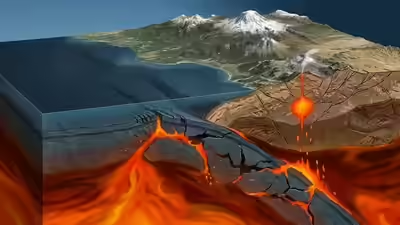
A groundbreaking study in Science Advances reveals that Earth’s tectonic plates are breaking apart under the Cascadia subduction zone. Geologists from Louisiana State University and the Lamont-Doherty Earth Observatory used high-resolution seismic imaging, similar to an ‘ultrasound’ of the Earth. They noticed the Juan de Fuca plate is fracturing into smaller pieces as it sinks…

Read More

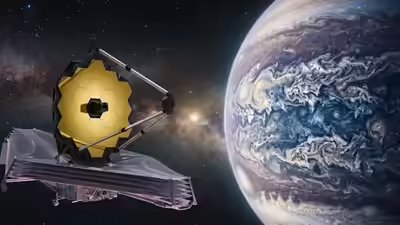
NASA’s James Webb Space Telescope peers inside a ‘Super-Jupiter’ and finds frozen cloud |

The James Webb Space Telescope recently managed to capture a direct image of Epsilon Indi Ab, a ‘Super-Jupiter’ just a dozen light-years away, marking a significant step forward in our understanding of planets outside our solar system. Using its Mid-Infrared Instrument, an international team of researchers found signs in the atmosphere that strongly suggested patchy…

Read More