









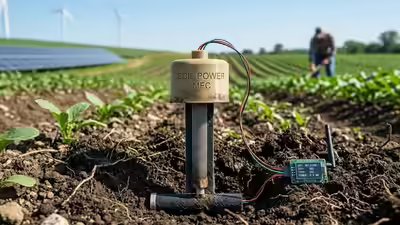
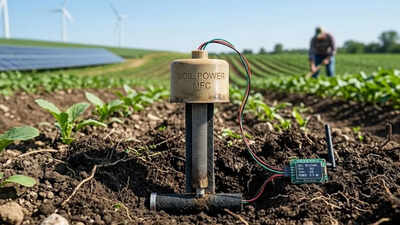
The researchers have developed a new type of microbial fuel cell (MFC) that provides a reliable and constant source of electricity generated by soil-dwelling microorganisms. The focus of this study was to create a sustainable, long-term power source for precision farming and remote sensing that could replace standard batteries that are often toxic to the environment. The prototype utilises a unique perpendicular configuration of the anode and cathode, which allows for optimal operation in a wide range of conditions, including deserts and fully submerged environments. The device converts the energy from microbes that are decomposing organic matter into electricity for use as a sustainable, low-maintenance power supply for all of the new Internet of Things (IoT) devices, as noted in the study at Northwestern University.It is anticipated that this technology will be capable of producing electricity indefinitely, provided that organic carbon continues to be available. The prototype represents a significant step forward toward developing environmentally friendly decentralised power systems, which do not rely on long, complicated, and often conflict-prone global supply chains. This advancement offers a robust, carbon-neutral alternative for powering remote infrastructure, effectively bridging the gap between biological processes and modern technological needs.
Newly developed microbial fuel cell technology
As a result of past failures related to microbial fuel cell (MFC) design in low moisture environments, this new biofuel cell (BFC) design features physical improvements to the arrangement of the anode (below grade) and cathode (above the soil) in the soil environment, which not only maintains an adequate oxygen supply at the cathodes through both air and soil moisture vapor flow but also ensures that the anodes remain properly hydrated as noted in a study at Northwestern University. These design features enable the BFC to function effectively across a range of soil moisture conditions, including during flooding situations. According to the study published in the Proceedings of the ACM on Interactive, Mobile, Wearable and Ubiquitous Technologies, the prototype generated 68 times more power than required for basic sensor operations.
This development empowers communities through sustainable computing
Beyond enabling reliable operation of the BFC through its unique design, the BFC research team has also developed a goal of reducing the negative environmental impacts associated with conventional batteries (such as lithium, heavy metal and other toxic chemicals found in standard batteries) related to e-waste on a global scale. The BFCs use natural, biological microorganisms for sustained power delivery to environmental monitoring sensors, providing a biodegradable alternative to powering those sensors.The BFC research team has made their designs, tutorials, and simulation programs publicly available to the public for continued development and use. The purpose of this open-source project is to provide affordable computing resources to underdeveloped communities through the use of locally sourced materials and supply chains, thereby avoiding the vulnerability inherent in the global supply chain for electronic components.
The road to a biodegradable future
According to Northwestern University, the research team went through a tough two-year development and testing period, which included testing four separate design iterations and studying 9 months of performance data before finalising the prototype in order to ensure reliability. The final design also included a protective 3D-printed cap that prevents debris from obstructing airflow while simultaneously allowing the system to ‘breathe.’ This design was tested outdoors to guarantee it would handle the elements well. Following this success, the team is now working on the next phase of innovation: fully biodegradable fuel cells by replacing even more of the current elements with earth-friendly materials (creating a truly circular energy system for the rapidly growing IoT with zero residual waste left in nature).